


China's five-year plan enters final year: How much has it delivered?
With its 14th Five-Year Plan nearing completion, China is preparing to set priorities for 2026-30. Here's a breakdown of what was achieved
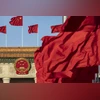 "china, china flag, Politburo")
14th Five-Year Plan enters final stretch; China sets stage for 2026-30 | Image: Bloomberg
Listen to This Article
China is entering the final stretch of its 14th Five-Year Plan, the country’s blueprint for economic and social development. With just months to go before the plan wraps up in 2025, the Chinese Communist Party is preparing to chart the course for the next five years.
On Wednesday, state media announced that the Party will hold a key meeting in October in Beijing to set priorities for the 15th Five-Year Plan (2026–2030). The upcoming Fourth Plenary Session will bring together more than 370 senior officials.
As global growth slows and tensions with the United States persist, China is using this moment to assess where it stands—and where it’s headed next.
What are five-year plans, and why do they matter?
In China, Five-Year Plans are more than just paperwork. Since 1953, these policy roadmaps have guided nearly every corner of the country’s development — from steel production to school reform, internet regulation to green energy.
The plans are drafted by the National Development and Reform Commission (NDRC), reviewed by the Communist Party leadership, and approved by the National People’s Congress. Though China now operates a market economy, the plans remain central to its long-term strategy.
Also Read

 "Shanghai")
 "Apple, Apple Inc, Apple intelligence, Siri")
 "Kiren Rijiju, Kiren, Rijiju")
 "thailand, cambodia, thailand cambodia border")
 "Apple iPhone 16E")
China’s current five-year plan 2021-25
The current 14th Plan, adopted in 2021, came with a long list of goals. It aimed to grow the economy steadily, boost homegrown innovation, cut carbon emissions, and improve people’s lives, while also keeping the country secure and stable in a rapidly changing world.
What China set out to do by 2025
According to the official plan document, the 14th Five-Year Plan (2021–2025) focused on eight big areas:
- Grow smarter, not just faster – Shift from high-speed to high-quality development.
- Rely more on domestic innovation – Invest in science and technology to reduce foreign tech dependence.
- Boost local demand – Rely less on exports, more on consumer spending at home.
- Go green – Cut emissions and lead in clean energy.
- Keep reform going – Modernise the economy while still opening up to the world.
- Make life better for people – Improve jobs, health care, education, and social security.
- Balance the rural-urban divide – Reduce gaps between cities and the countryside.
- Strengthen security – Safeguard China’s economic and national interests.
China’s scorecard: What’s been achieved
Now in its fifth and final year, how close has China come to meeting those goals? According to a recent NDRC briefing and official data released by state media Xinhua, progress has been strong across most areas. A separate report by the US Chamber of Commerce, released in May 2025, also presented its own evaluation of China’s economic strides. Here is what the reports say:
Economic growth
China’s economy expanded by an average of 5.5 per cent from 2021 to 2024.
Evaluation: In line with the goal of stable and high-quality growth, especially considering pandemic-era disruptions and global economic headwinds.
US Chamber perspective: The US Chamber of Commerce acknowledged China’s industrial advances, but cautioned that overcapacity and inefficiencies have weighed on productivity, contributing to a slower and less balanced growth model.
Technological self-reliance
Research and Development spending rose by nearly 50 per cent, totalling over 1.2 trillion yuan. Breakthroughs were reported in chips, AI models, and robotics.
Evaluation: Clear progress toward the goal of reducing dependency on foreign technology, though external sanctions continue to pose constraints.
US Chamber perspective: The Chamber’s assessment agreed that China made strides in emerging sectors like robotics and AI, but emphasised ongoing vulnerabilities in semiconductors, advanced machinery, and biopharmaceuticals — sectors where foreign dependence remains high.
Domestic demand and economic restructuring
Consumption contributed 56.2 per cent to GDP growth, an increase of 8.6 percentage points from the previous plan period.
Evaluation: Achieved intended rebalancing from investment-driven to consumption-led growth.
US Chamber perspective: The report added that despite these structural shifts, China’s industrial policies continue to favour producers over consumers, limiting the potential for stronger domestic demand and creating persistent imbalances.
Green transition
Energy consumption per GDP unit fell by 11.6 per cent. Installed renewable energy reached 2.09 billion kW. New energy vehicles surged to 31.4 million.
Evaluation: Exceeded targets. China remains a global leader in renewable capacity and electric vehicle deployment.
US Chamber perspective: The Chamber recognised China’s technological edge in clean energy, but noted that massive state-driven capacity—particularly in solar panels and EVs—has begun to distort global markets and escalate trade tensions.
Reform and opening-up
Despite geopolitical tensions, foreign trade and investment levels remained stable. The number of private enterprises surpassed 58 million.
Evaluation: Mixed success—private sector growth and trade continued, but foreign investment sentiment remains uneven due to policy unpredictability.
US Chamber perspective: The report mentioned that foreign firms continue to face market access restrictions, discriminatory procurement rules, and forced localisation, challenging China’s narrative of openness and reform.
Employment and welfare
Over 12 million new urban jobs are created annually. Social insurance coverage remains above 90 per cent.
Evaluation: On track. Employment and social welfare targets were largely met despite economic pressure.
US Chamber perspective: The report observed that most policy benefits favoured state-backed industrial firms over household welfare, limiting broader livelihood gains and contributing to rising inequality.
Urban–rural integration
Urbanisation, average life expectancy, and food/energy production exceeded projections.
Evaluation: Progress exceeds expectations. Income disparities persist but are narrowing, according to NDRC metrics.
US Chamber perspective: While not a primary focus, the US Chamber of Commerce report noted that industrial policies have led to uneven regional outcomes, with wasteful duplication in some provinces and underinvestment in others.
National security and stability
Enhanced food and energy security, maintained social stability during the pandemic and economic restructuring.
Evaluation: Strong performance in stability and self-sufficiency areas. China continues to build capacity for crisis response and strategic autonomy.
US Chamber perspective: The Chamber added that the push for self-sufficiency is rooted in national security concerns, but warned it risks exacerbating global fragmentation, retaliation, and supply chain decoupling.
China’s 15th five-year-plan (2026-30)
Officials say the gains made during the 14th FYP lay a strong foundation for the upcoming 15th Plan. With geopolitical tensions rising and global economic uncertainties deepening, the next plan is expected to prioritise technological independence, demographic policy, and large-scale industrial AI integration.
“We are entering a phase of industrial transformation, and the foundation laid over the past four years will support sustainable growth in the next cycle,” said Hu Qimu, deputy secretary-general of the Forum 50 for Digital-Real Economies Integration, speaking to the Global Times.
More From This Section
 "Australian rocket")
 "Donald Trump, Trump")
 "Russia earthquake")
 "Tesla, Tesla logo")
 "Thailand")
Don't miss the most important news and views of the day. Get them on our Telegram channel
First Published: Jul 30 2025 | 4:57 PM IST