


China's defence expansion in Southeast Asia fuels new superpower rivalry
On Wednesday, Xi will host the Russian president again, along with North Korea's leader, Kim Jong Un, at a parade to mark the 80th anniversary of the end of World War II
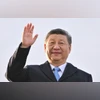 "Chinese President Xi Jinping")
Over the weekend, Xi Jinping welcomed India’s Narendra Modi and Russia’s Vladimir Putin in Tianjin at the Shanghai Cooperation Organisation | Photo via Reuters
Listen to This Article
By Karishma Vaswani
China is expanding its defense networks in Southeast Asia, and that risks carving the region into rival camps: one aligned with Beijing, the other friendly to Washington. Left unchecked, the Chinese — and by extension, Russian — presence will become even more deeply embedded, setting the stage for a dangerous new round of superpower competition in the Indo-Pacific.
These findings, outlined in the Sydney-based Lowy Institute’s latest report,come as President Xi Jinping is forging ever stronger international partnerships. Over the weekend, he welcomed India’s Narendra Modi and Russia’s Vladimir Putin in Tianjin at the Shanghai Cooperation Organisation. Xi and Modi pledged deeper cooperation in the face of the US trade war, and Modi announced the resumption of direct flights between the two countries. Xi said relations would flourish if they remained partners rather than rivals.
Also Read

 "Vikram Misri, Vikram, Misri")
 "Narendra Modi, Xi Jinping")
 "us tariffs")
 "India China")
 "PM Modi, Xi Jinping")
On Wednesday, Xi will host the Russian president again, along with North Korea’s leader, Kim Jong Un, at a parade to mark the 80th anniversary of the end of World War II.
These moves highlight a subtle but significant shift in power in the region that is challenging for Washington. To avoid a further erosion of influence, the US and nations like Australia, India, Japan, and South Korea must strengthen their alliances. But these relationships are under pressure as the White House recalibrates its global defense strategy.
For decades, Southeast Asia has managed a delicate dance between the superpowers. Security guarantees came from the US, while China has grown to be the most important economic partner. That’s not changing yet — but Beijing is closing the gap.
Washington is still the most influential player, as Lowy notes. The US is a treaty ally of the Philippines and Thailand, and a close strategic partner to Singapore. It also has the largest number of agreements, dialogues, and combined military exercises with countries in the region, according to the report.
Beijing ranks eighth — but is systematically stepping up diplomacy through joint exercises, weapons sales, and military training programs. It has found most success in mainland Southeast Asia, becoming a key security collaborator for Cambodia and Laos. For governments that sometimes bristle at Western lectures on democracy and human rights, China’s non-interference approach is a welcome change. Investment through its ambitious infrastructure program, the Belt and Road Initiative, has also boosted ties.
Moscow, though second from bottom on the list, has complemented China’s efforts by supplying arms to Vietnam and Myanmar. Together, they’re creating an appealing alternative among the smaller, poorer states.
The risks for the US and the 10-country Association of Southeast Asian Nations are considerable. Asean already suffers from threats to unity, such as Cambodia siding with China against several fellow members on claims over the South China Sea. Increasing fractures make it more challenging for the bloc to mediate crises or maintain credibility.
More worryingly, this trend could mean that the weaker countries could become even more dependent on China for security needs, giving Beijing a larger voice in their domestic politics and hence in the bloc, which has historically been a bedrock of regional and mostly pro-American stability.
President Donald Trump’s tariff policies and cuts to international aid programs are also hurting confidence. Trips by senior American officials could help, but the messaging is often inconsistent.
Secretary of State Marco Rubio’s visit to Malaysia in July coincided with many Asean members receiving letters from the administration declaring new tariff levels. While he was there, the State Department laid off around 1,300 staffers, including the Office of Multilateral Affairs in the Bureau of East Asian and Pacific Affairs, which helped lead US diplomacy in the region.
All is not lost. Washington still has strong partnerships and should build on them. One solution could come from Australia, India, South Korea and Japan. Since 2017, they’ve steadily increased defense engagement with Southeast Asian countries. They share concerns about China’s rising dominance and, as trade-dependent economies, want to protect freedom of navigation. Boosting security engagement with the region and each other might avoid over-dependence on any single actor.
Southeast Asia is a vital strategic theater, connecting oceans, economies and great powers. Its future depends on choices being made now. The region has been able to navigate rivalry before — but that balance could easily tip, and with it, the stability of the Indo-Pacific.
(Disclaimer: This is a Bloomberg Opinion piece, and these are the personal opinions of the writer. They do not reflect the views of www.business-standard.com or the Business Standard newspaper)More From This Section
 "China, China banks")
 "Volodymyr Zelenskyy, Zelenskyy")
 "Rudy Giuliani")
 "Accident, road accident")
 "US President Donald Trump")
Topics : Donald Trump India China relations India china trade India China border row Xi Jinping Southeast Asia China
Don't miss the most important news and views of the day. Get them on our Telegram channel
First Published: Sep 01 2025 | 7:23 AM IST