


Decades of AIDS vax research imperiled by Trump's withdrawal of US funding
The US cut HIV vaccine funding, forcing IAVI to halt work and lay off staff, while the South African Medical Research Council will receive only $9 mn of its planned $45 mn for multi-country trials
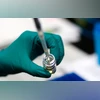 "HIV, Vaccine, vaccination")
With USAID support evaporating, scientists are now rushing to secure alternative funding | Image: Bloomberg


Listen to This Article
By Jason Gale, Ashleigh Furlong and Janice Kew
After decades of failed attempts, scientists were optimistic that a new generation of HIV vaccine candidates would finally succeed — changing the course of a pandemic that’s claimed more than 42 million lives since 1981. But that hope is now dimming as the US moves to pull vital funding.
A leaked document detailing the fate of more than 6,200 USAID programmes lists two leading HIV vaccine efforts among 5,341 projects earmarked for termination. The 281-page file, reviewed by Bloomberg News and first reported by The New York Times, outlines the Trump administration’s plan to cut almost $28 billion in support for a wide range of global health initiatives — including Gavi, the vaccine alliance that immunizes hundreds of millions of children against deadly diseases such as measles and malaria.
“The speed, scale and inhumanity of this administration’s approach to dismantling health programmes is staggering,” said Mitchell Warren, the executive director of AVAC, a New York-based organization that advocates for HIV prevention research. “The targeted disruption of HIV vaccine development is particularly perverse — it’s undoing decades of progress.”
The largest HIV vaccine programme on the chopping block is a long-running effort led by the International AIDS Vaccine Initiative, IAVI, which had been promised more than $319 million in US support dating back to 2016. While nearly $238 million had already been disbursed, IAVI said it had expected an additional $22 million through mid-2026. A stop-work order last month forced the organization to wind down operations and lay off staff.
Also Read

 "Supreme Court, SC")
 "World Aids Day")
 "dr reddy's laboratory , dr reddy , drl pharma sector")
 "market, stocks, stock market trading, stock market")
 "Elon Musk, DOGE, Tesla CEO")
Another major casualty is a $45 million award to the South African Medical Research Council, intended to fund HIV vaccine trials across multiple countries. Only about $9 million of that funding will ultimately be received.
“We think it would be a tragedy not to continue the work,” said Glenda Gray, the council’s chief scientific officer. Researchers had proposed scaling back the study to include only South Africa — excluding Kenya and Uganda — in hopes of making it “more attractive to funders,” she said in an interview.
With USAID support evaporating, scientists are now rushing to secure alternative funding, hoping the US National Institutes of Health will step in to prioritize the work. But it’s unclear whether NIH — part of the Department of Health and Human Services — will be spared from broader austerity.
Job Cuts
HHS Secretary Robert F. Kennedy Jr. announced plans Thursday to slash 10,000 jobs and shrink the agency’s budget by $1.8 billion, part of the Trump administration’s push to dramatically reduce the federal workforce and realign government with what it calls core priorities, including “reversing the chronic disease epidemic.”
“These programmes don’t have on/off switches,” AVAC’s Warren said. “The science, infrastructure, and community relationships built over the last two decades are being erased in just weeks.”
Researchers estimate that hundreds of millions of dollars are still needed to bring an effective HIV vaccine to the finish line — a sum unlikely to come from any single donor.
“For the first time, based on work that’s come out over the past few years, we know what the goal is and we have a good idea about how to achieve that goal,” said Mark Feinberg, IAVI’s president and chief executive officer, in an interview before the proposed funding cuts came to light. “We really need an HIV vaccine if we’re going to end this epidemic.”
In response to the wave of cuts, the activist group ACT UP is organizing a protest march in New York City on Saturday, targeting the sweeping healthcare freezes enacted by President Donald Trump, Kennedy, and Elon Musk — the billionaire running Trump’s federal cost-cutting drive. The demonstration aims to spotlight billions of dollars in halted funding for lifesaving medications and global health programmes.
More From This Section
 "US flag, US, united states")
 "King Charles III")
 "Red Sea, US airstrike, airstrike, Houthis, Yemen")
 "Australia flag")
Don't miss the most important news and views of the day. Get them on our Telegram channel
First Published: Mar 28 2025 | 9:10 AM IST