


Trump dines out in Washington DC, declares city 'safe zone' amid crackdown
Accompanied by JD Vance, Donald Trump visits Joe's Seafood as National Guard patrols the city; nearly 2,200 arrests are reported, while protests and standoffs continue against his actions
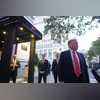 "President Donald Trump speaks to reporters before he enters a restaurant near the White House")
President Donald Trump speaks to reporters before he enters a restaurant near the White House | AP
Listen to This Article
US President Donald Trump’s federal crackdown on crime is making waves in Washington, and at local eateries. On Tuesday, Trump dined at a seafood restaurant near the White House, promoting his deployment of the National Guard and his efforts to turn the capital into what he calls a “safe zone”.
Trump’s motorcade made a rare stop at Joe’s Seafood, Prime Steak & Stone Crab on 15th Street in northwest Washington. The visit follows weeks of him boasting about mobilising federal authorities and the military to make the national capital safer.
In an interaction with reporters in front of the restaurant, Trump said, “I wouldn’t have done this [eating in a restaurant] three or four months ago or certainly a year ago.” He said the capital was one of the most unsafe cities in the country, but now it is as safe as it can be.
Also Read

 "trade, import, export, container, shipping")
 "Donald Trump, Trump")
 "Congress, Congress flag")
 "Portfolio allocation")
 "Donald Trump")
“I am standing here in the middle of Washington DC, and it is a very, very safe place now.” Accompanied by Secretary of State Marco Rubio, Defense Secretary Pete Hegseth and Vice President JD Vance, Trump thanked the National Guard for their “amazing work”. He praised the mayor, and said the city was seeing “some spectacular outcomes”.
Restaurants see fewer reservations amid protests
Local restaurants in Washington have reported drops in reservations since Trump announced the federal crackdown on August 7, as protesters regularly take to the streets against his actions. The increased military and police presence has occasionally sparked standoffs with residents in normally quiet neighbourhoods.
Trump, however, has repeatedly said he’s heard from friends that local restaurants are full and that crime has noticeably dropped. He also said people appreciate crews removing the homeless encampments as part of the crackdown.
Last week, when asked about dining outside the White House, he said, “I love the White House food, but after a while, I could see going to a nice restaurant. It’s safe.”
Trump rarely dines out in Washington, a practice that has become even less common since he sold the hotel bearing his name a few blocks away, which had served as a key meeting point for officials and supporters during his first term.
The White House reported Tuesday that nearly 2,200 arrests have been made since the crackdown began in the capital.
Federal deployments extend beyond Washington
Beyond Washington, Trump deployed the National Guard to Los Angeles in June and has threatened to send troops to other largely Democratic cities, including Baltimore, New Orleans, and Chicago, where local authorities are already preparing for increased immigration enforcement.
On September 6, Trump posted a parody image on social media inspired by the movie Apocalypse Now, showing helicopters flying over a fiery city skyline. “I love the smell of deportations in the morning,” he wrote, adding, “Chicago is about to find out why it’s called the Department of WAR.” The post referenced his executive order last week seeking to rename the Defense Department as the ‘Department of War’, a move that requires congressional approval and follows his months-long campaign for the Nobel Peace Prize.
Democratic Illinois Governor JB Pritzker responded by calling Trump a “wannabe dictator”, joining other state and city officials and many Chicago residents in denouncing the proposed federal crackdown as unnecessary.
[With inputs from AP]
More From This Section
 "Nepal Balendra Shah")
 "china factory, factory, china, factory activity, china economy")
 "Claudia Sheinbaum, President of Mexico")
 "National Australia Bank, NAB")
 "John Roberts")
Don't miss the most important news and views of the day. Get them on our Telegram channel
First Published: Sep 10 2025 | 9:29 AM IST