


Trump's reciprocal tariffs to threaten defence ties, Pentagon supply chains
In a statement delivered at the White House, US President Donald Trump described the imposition of reciprocal tariffs as 'a declaration of economic independence'
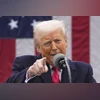 "Donald Trump, Trump")
The executive order would ease rules related to the export of military equipment | (Photo: PTI)
Listen to This Article
US President Donald Trump imposed reciprocal tariffs on several nations on Thursday (IST). Along with these ‘discounted’ tariffs, he announced imposing a baseline 10 per cent tax on all imports.
In a statement at the White House, he described these measures as “a declaration of economic independence”. However, a Politico report suggests that these tariffs are not just an economic disruption, but also a security one. It further stated that if the Trump administration goes ahead with its plan of implementing these tariffs, it could mix up the global supply chains that the Pentagon has spent decades establishing.
“The Pentagon has spent decades building, funding, and nurturing a global web of suppliers and companies that now face tariffs,” the Politico report mentioned.
Impact on US weapons
The move, the report suggests, would make US weapons more expensive, thereby complicating international efforts to counter China, including the joint ventures with the United Kingdom and Australia, to build submarines.
It could further force some of the US’s sceptical partners to look elsewhere for partnership, the report added, citing lawmakers and officials. It is worth noting that this comes at a time when another report by Reuters indicated that the Trump administration is planning an order to increase its weapons exports. The executive order would ease rules related to the export of military equipment.
Also Read

 "stock trading")
 "Trump tariffs")
 "Asian Development Bank (ADB)'s Chief Economist Albert Park")
 "Chris Wood of Jefferies expects a waterfall decline in the US stock markets")
 "Myanmar earthquake")
A former Pentagon official believes that there is going to be a shortage of supplies, with allies and other partners retaliating. Some of the potential key supplies are either going to cost a lot more or they are just not going to be available, the report citing official added.
Effects of tariffs on defence deals
President Trump has imposed 20 per cent tariffs on imports from the European Union and 10 per cent on goods from Australia and the UK, a move which is also likely to topple the defence collaborations between the countries, which were considered successful joint ventures.
These programmes include fighter jets, plane as the F-35, which is used by at least 20 countries, in a partnership which allows the participating countries to manufacture along with the crucial air defence and rocket projects.
Such projects are also crucial to defence in Europe and the Indo-Pacific, where the US allies are trying to stay ahead of Russia and China.
A European official noted that they have been counting on the US for their best equipment. The industrial capacity in Europe has increased drastically, which means there could be more investments in European manufacturing to reduce their reliance on US component parts and supplies for weapons.
An initiative between the US, UK, and Australia to build nuclear-powered submarines and share technologies, could end if the prices for these parts soar too high.
More From This Section
 "Elon Musk, X")
 "BP Chairman Helge Lund")
 "Sr Lanka, Sri lanka flag")
 "Real Estate, office spaces, Commercial Real Estate")
 "Laura Loomer")
Don't miss the most important news and views of the day. Get them on our Telegram channel
First Published: Apr 04 2025 | 3:17 PM IST