


Global leaders vow countermeasures as Trump imposes 'reciprocal tariffs'
Goods from Canada and Mexico are not currently subject to reciprocal tariffs because Trump's prior 25 per cent fentanyl-related duties remain in place on their goods
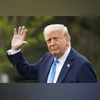 "Donald Trump, Trump")
President Donald Trump unveiled on Wednesday a new baseline 10 per cent tariff on goods from all countries plus reciprocal tariffs (Photo: PTI)
Listen to This Article
Governments around the world pledged counter measures on the US after President Donald Trump unveiled on Wednesday a new baseline 10 per cent tariff on goods from all countries plus reciprocal tariffs on those that his administration says have high barriers to US imports.
Here is what some governments said about what they would - and would not - do in response.
European Union
European Commission President Ursula von der Leyen said the EU is finalising a package of measures in response to US
tariffs on steel and is "now preparing for further countermeasures to protect our interests and our businesses if negotiations fail". Trump targeted the EU with a 20 per cent reciprocal tariff.
China
Also Read

 "Market, Stock market, NSE, National Stock Exchange")
 "Pharma stocks")
 "China, chinese market, china economy")
 "Gold, Gold jewellery")
 "US President Donald Trump")
China's commerce ministry said Beijing "firmly opposes" the reciprocal tariffs and "will take countermeasures to safeguard its own rights and interests," after Trump imposed a 34 per cent reciprocal tariff on the country.
Japan
Japanese Trade Minister Yoji Muto called the reciprocal tariffs "extremely regrettable" and said Tokyo would urge the US to exempt Japan from tariff measures. Tokyo faces a 24 per cent reciprocal tariff.
South Korea
Acting President Han Duck-soo ordered emergency support measures for affected businesses, including automobiles, the industry ministry said, after Trump's tariff announcement included a 25 per cent rate on South Korea.
Canada
Prime Minister Mark Carney said Canada was "going to fight these tariffs with countermeasures" and would "act with purpose and with force."
Goods from Canada and Mexico are not currently subject to reciprocal tariffs because Trump's prior 25 per cent fentanyl-related duties remain in place on their goods, along with 10 per cent for Canadian energy and potash. A tariff exemption for goods compliant with the US-Mexico-Canada Agreement on trade will continue indefinitely.
Mexico
President Claudia Sheinbaum said on Wednesday that Mexico would not pursue a "tit-for-tat on tariffs" but would rather announce a "comprehensive program" on Thursday.
Australia
Prime Minister Anthony Albanese said Australia would seek to negotiate with the US to remove the tariffs without resorting to a dispute resolution mechanism in the two countries' Free Trade Agreement.
He said his government would not impose reciprocal tariffs as this would increase prices for Australian households.
"We will not join a race to the bottom that leads to higher prices and slower growth," Albanese said.
Brazil
The government of Latin America's largest economy Brazil, which Trump slapped with a 10 per cent tariff, said it was "evaluating all possible actions to ensure reciprocity in bilateral trade, including resorting to the World Trade Organization." Earlier in the day, Brazil's Congress approved a bill that establishes a legal framework for Brazil to respond to potential unilateral trade measures targeting its goods and services, including countermeasures such as tariffs.
(Only the headline and picture of this report may have been reworked by the Business Standard staff; the rest of the content is auto-generated from a syndicated feed.)
More From This Section
 "penguins")
 "Netanyahu, Benjamin Netanyahu")
 "Bill Gates")
 "US President Donald Trump")
 "US China flag, US-China flag")
Don't miss the most important news and views of the day. Get them on our Telegram channel
First Published: Apr 03 2025 | 1:13 PM IST