


ICC is flawed but worth fighting for in a world turning away from justice
The belief that the ICC can act as a deterrent against future atrocities is an unproven hypothesis
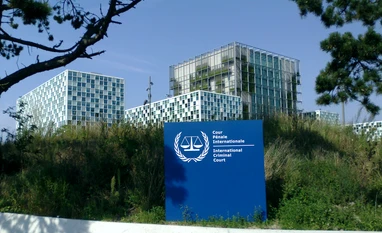 "International Criminal Court, ICC")
The true benefit of the ICC, Crawshaw says, is as a catalyst for countries to pursue alleged war criminals in their own courts. | Photo: Wikimedia commons


Listen to This Article
By Marc Champion
A former colleague from my days covering the collapse of the former Soviet bloc has published a new book on the long and difficult road to the creation of the International Criminal Court. It’s an unabashedly optimistic account, released on the very day US President Donald Trump announced sanctions to destroy it.
Steve Crawshaw’s Prosecuting the Powerful is the well-told story of the ebb and flow of a movement – heroic or meddling, choose your prejudice - to limit the atrocities of war. But it’s also a timely tale of America’s uniquely conflicted relationship with idealism and empire, at a moment when it has chosen to side with the Kremlin and the likes of North Korea over Russia’s illegal invasion of Ukraine, leaving the 80-year-old transatlantic alliance an empty shell .
The book reaches back to 1474, long before Europeans colonised the Americas, with the trial of one Peter van Hagenbach by a court of the Holy Roman Empire. A tribunal held the bailiff of Upper Alsace esponsible for the rape and slaughter of civilians committed by his forces as they put down a rebellion against his tyrannical rule. Yet what emerges from Crawshaw’s narrative is that the very idea of having global treaties to regulate the conduct of warfare, let alone an international court to prosecute leaders who break them, was barely conceivable until the 20th century, and with it the rise of the US, from former colony to superpower.
Without the US, there would have been no Nuremberg trials, the proof of concept for the proposition that holding war criminals to account could ever amount to more than victor’s justice. Britain initially favored summary executions; so, too, the then Soviet Union. They only differed over how many Nazis to kill. Joseph Stalin offered 50,000, Winston Churchill, a few dozen.
Also Read

 "Jay Shah at FILA 2025")
 "Australia cricket team")
 "Pakistan Cricket Board, PCB")
 "India vs Pakistan match")
 "ICC Champions Trophy")
Stalin came around quickly, because he’d had good experience at home with the mass show trials he expected Nuremberg to be. Churchill resisted because he feared the same, a “farce.” And the process was, indeed, imperfect. Prosecutors avoided charging anyone with the deliberate bombing of civilians in cities, for instance, because allied air forces were significantly more guilty of that particular war crime than the Luftwaffe.
And yet there was a surprising level of due process, resulting in three acquittals at the main trial of top Nazis, as well as the 19 convictions (12 received death sentences and the others jail time). This, writes Crawshaw, was largely down to the determination of US lawyers.
In addition, without America’s so-called unipolar moment after the end of the Cold War, there probably could also have been no ICC. And yet, American leaders have tried to block, weaken, and delegitimize the court at almost every turn.
Henry Kissinger described the very idea of holding leaders to account over the hard choices they make in war as “judicial tyranny.” Under President Bill Clinton, the US joined the select group of China, Iraq, Israel, Libya, Qatar, and Yemen in voting against the court’s creation. (Israel objected due to an insertion by Arab states that made it a crime to expel populations from occupied territories, a topical clause today).
Clinton in the end signed the ICC’s Rome Statute, chastened by the 1994 Rwanda genocide, though with a string of caveats. His successor, George W. Bush, promptly unsigned it. So in his hostility to the court and other perceived international constraints, Trump is an aberration, only in the sense that he’s no longer conflicted.
Realism, the belief that great nations will always do what it takes to achieve a balance of power, is the foreign policy zeitgeist of our day. Values-based institutions such as the ICC, the European Union, or 2005’s quickly forgotten Right to Protect principle can seem, at this moment, quaint and out of time. All were built to mitigate the consequences of realism’s rule of the powerful.
There are, of course, plenty of reasons to criticize the ICC. The institution employs 900 staff and will this year cost just shy of €195.5 million ($205 million) to run. In its 22 years in existence, it has heard just 32 cases and made 11 convictions. Only one head of state – former Ivory Coast President Laurent Gbagbo – has been brought to tria. He was acquitted in 2019.
At the same time, the belief that the ICC can act as a deterrent against future atrocities is an unproven hypothesis. And when the court finally showed it wasn’t just a neo-colonial project to impose justice on African nations while exempting the West and its friends, Israel, the world’s only Jewish state, became the test case. That’s further polarizing attitudes toward the court, regardless of the merits of the prosecution.
Crawshaw sees all this as a glass half full, despite today’s darkening horizon for individual rights and protections. A former journalist who went on to work with Amnesty International, Human Rights Watch and Freedom From Torture, he identifies passionately with the self-described Don Quixotes who pressed relentlessly for accountability in war. These were extraordinary figures who embody his belief in the power of ordinary people to bend history. “I thought they were dreamers. They thought they were dreamers,” Crawshaw told me. “But it happened.”
The true benefit of the ICC, Crawshaw says, is as a catalyst for countries to pursue alleged war criminals in their own courts. Without it, the drive to end impunity for powerful men who order or commit mass murder will fade away. You might say the same of US AID, the World Health Organization, the United Nations, the Paris climate change accords, the G20, Nato and the rest of the international architecture that the US led in building and is now moving with such speed to undermine.
All of these institutions are flawed. All waste money and should do better. The same is true of national governments, corporations and non-profits. Yet they also have important roles as catalysts and enablers in the fights against disease, poverty, territorial predation, and the warming of the planet. None of these threats respect borders or fantasy conspiracy theories. None benefit free markets and trade, or reduce the drivers of mass migration.
I sympathise with Crawshaw’s optimism about the future of bodies like the ICC, but I can’t share it. We both began our careers as journalists by covering the collapse of the Soviet bloc and its extraordinarily hopeful aftermath, but many of the gains made have been thrown into reverse. Like alliances and the rule of law, international institutions are incredibly hard to create and as easy to break. We aren’t building a new “multipolar” world order. We’re just destroying the one that, for all its failings, we did have.
(Disclaimer: This is a Bloomberg Opinion piece, and these are the personal opinions of the writer. They do not reflect the views of www.business-standard.com or the Business Standard newspaper)
More From This Section
 "US President Donald Trump")
 "Tiktok")
 "Muhammad Yunus, Yunus")
 "Seven & i")
 "china Flag, China")
Topics : ICC Criminal Justice justice criminal cases
Don't miss the most important news and views of the day. Get them on our Telegram channel
First Published: Mar 03 2025 | 11:00 AM IST