


Midnight Hammer to True Promise, major military operations in West Asia
The US struck Iran's Fordow, Natanz and Isfahan nuclear sites in Operation Midnight Hammer on June 22, its biggest Mideast air offensive since 2003, using over 125 aircraft and bunker-busting bombs
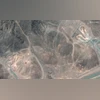 "Fordow underground complex")
A closer satellite view shows the tunnel entrances to Fordow underground complex, after the US struck the underground nuclear facility, near Qom, Iran on June 22. (Photo: Reuters)
Listen to This Article
The United States launched ‘Operation Midnight Hammer’ early Sunday, striking Iran’s heavily reinforced nuclear facilities at Fordow, Natanz, and Isfahan. In what is being described as the biggest American air offensive in West Asia since the 2003 invasion of Iraq, more than 125 aircraft — among them seven B-2 stealth bombers — paired with submarine-launched Tomahawk missiles to pound the underground sites. The raid also marked the combat debut of the GBU-57 “bunker-buster”, a precision weapon designed to pierce deeply buried targets.
Washington’s latest action adds another chapter to a rapidly expanding ledger of high-profile military actions operations in the region.
Operation Midnight Hammer
Operation Midnight Hammer was a meticulously coordinated US military strike against Iran’s underground nuclear facilities, executed on June 22, 2025. The operation involved seven B-2 Spirit stealth bombers flying a 37-hour round-trip from Missouri to Iran, supported by more than 125 aircraft, including fighter escorts, aerial refuelling tankers, and surveillance planes. The mission’s primary targets were the heavily fortified nuclear sites at Fordow, Natanz, and Isfahan.
President Donald J. Trump Delivers Address to the Nation, June 21, 2025 https://t.co/yutRDvtWv0
— The White House (@WhiteHouse) June 22, 2025
Also Read

 "Benchmark indices dropped as much as 2 per cent before recouping half the losses, as uncertainty around the tightly contested US Presidential election, sustained selling by foreign portfolio investors (FPIs), and earnings disappointments weighed on t")
 "Vladimir Putin, Putin")
 "Stock Market, Market, Crash, Funds, up, Stock, Lost, decline, statistic, Crisis, Capital, BSE, NSE")
 "A 3D printed miniature model of U.S. President Donald Trump, Israel and Iran flags are seen in this illustration")
 "Satellite image show damage done by US airstrikes over Iran nuclear facilities in Isfahan, Natanz, Fordow, Iran, nuclear facility")
A sophisticated deception plan was employed: while the real bombers flew east in radio silence, a decoy group headed west toward Guam to mislead Iranian and international observers. As the bombers neared Iranian airspace, a US submarine launched over two dozen Tomahawk cruise missiles to suppress air defences, while fighter jets and decoys swept ahead to clear the path. The B-2s then dropped 30,000-pound bunker-buster bombs, causing what US officials described as “extremely severe damage” to all three sites. The operation is considered the largest B-2 strike in history and a significant blow to Iran’s nuclear programme.
Operation Rising Lion
Launched on June 13, Israel’s Operation Rising Lion sought to eliminate what Jerusalem called an existential danger from Tehran’s advancing nuclear programme. Israeli forces hit suspected enrichment facilities, missile factories, command hubs, and senior personnel, arguing they had to stop Iran from reaching a “point of no return”.
The push came even as International Atomic Energy Agency (IAEA) inspectors maintained there was “no evidence of Iran developing nuclear weapons”. On June 20, IAEA chief Rafael Grossi told the UN Security Council the agency could guarantee, “through a watertight inspections system, that nuclear weapons will not be developed in Iran”. Two days later, the United States carried out Operation Midnight Hammer.
Operation Iron Wall
Operation Iron Wall began on January 21 as Israeli forces swept into the occupied West Bank, initially targeting the Jenin Brigades before widening the push to Tulkarm and other Palestinian cities. Israeli leaders cast the assault as a response to the “Iranian axis” — Tehran’s presumed backing of militant groups — and as a move to protect Israeli settlements.
Operation Days of Repentance
On October 26, 2024, Israel executed Operation Days of Repentance, branding it “a measured act of retaliation” after Iran fired a missile salvo toward Israel. Precision strikes hit several Iranian military installations, including missile-production sites. The Israel Defense Forces later confirmed all participating aircraft returned safely.
Operation True Promise
Iran’s Islamic Revolutionary Guard Corps (IRGC) launched Operation True Promise following Israel’s April 1, 2024 strike on the Iranian embassy in Damascus. Since then, waves of drones and missiles — at one point more than 300 aerial threats — have targeted Israel. On June 20, the campaign entered its third phase, True Promise-3, as the IRGC mounted its 18th wave of Shahed-136 drones and precision-guided missiles against Israeli logistics hubs.
Operation Poseidon Archer
Launched in January 2024, Operation Poseidon Archer brought together US and UK forces — backed by Australia, Canada, and the Netherlands — to blunt Houthi attacks on commercial vessels in the Red Sea. The coalition employed targeted airstrikes and naval missile launches that degraded Houthi capabilities, though sporadic assaults continue.
More From This Section
 "High temperatures")
 "Oil field")
 "JD Vance, JD Vance in India, JD Vance India")
 "Donald Trump, Trump")
 "operation midnight hammer")
Don't miss the most important news and views of the day. Get them on our Telegram channel
First Published: Jun 23 2025 | 2:26 PM IST