


Nuclear talks with US now 'meaningless', says Iran after Israeli airstrikes
After Israel carried out a preemptive strike on Iran, Tehran launched missile strikes on Israeli targets and called nuclear talks with the US 'meaningless', accusing Washington of complicity
 "Iran-Israel war")
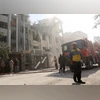
Rescuers work at the scene of a damaged building in the aftermath of Israeli strikes, in Tehran on June 13. (Photo/Reuters)
Listen to This Article
Iran has declared that further negotiations with the United States over its nuclear programme are "meaningless" in the wake of Israel’s strike.
“The other side (the US) acted in a way that makes dialogue meaningless. You cannot claim to negotiate and at the same time divide work by allowing the Zionist regime (Israel) to target Iran's territory,” Foreign Ministry Spokesperson Esmaeil Baghaei told Tasnim News Agency.
Baghaei argued that Israel “succeeded in influencing” the diplomatic process and insisted the assault would not have occurred without Washington’s approval. Iran had already accused the United States of complicity, a charge US officials rejected at a United Nations Security Council meeting where they urged Tehran that it would be “wise” to resume talks on its atomic activities.
Prospects for Muscat talks in jeopardy
A sixth round of US–Iran discussions, scheduled for Sunday in Muscat, now hangs in the balance. Iranian officials have not confirmed whether their delegation will attend following the Israeli strikes.
Also Read

 "Iran, Iran flag")
 "Israel Flag, Israel")
 "flights, planes")
 "Oil price, oil, crude oil, oil container, oil export")

Trump urges Iran to strike deal swiftly
US President Donald Trump on Friday issued a sharp warning to Iran, urging its leaders to negotiate a deal to prevent further violence. In a post on Truth Social, Trump claimed Iranian hardliners “are all dead now” and warned of more devastating attacks. “I gave Iran chance after chance to make a deal. I told them, in the strongest of words, to ‘just do it’, but... they just couldn’t get it done,” he wrote.
Trump emphasised the military superiority of the US and Israel, stating that their arsenal is unmatched. “They are all DEAD now, and it will only get worse!” he added. Calling for de-escalation, Trump urged Iran to act quickly: “No more death, no more destruction, JUST DO IT, BEFORE IT IS TOO LATE.”
Israel-Iran conflict
Iran carried out a new round of missile strikes on Israel early Saturday, targeting the northern parts of the country and the Israeli-controlled Golan Heights. Air-raid sirens were activated throughout the region, prompting authorities to advise residents to take shelter.
The missile barrage followed a major escalation a day earlier, when Iran launched more than 100 drones at Israel in retaliation for a pre-dawn Israeli offensive on Friday. That Israeli strike reportedly hit sites inside Iran and resulted in the deaths of several senior figures, including Hossein Salami, the commander of the Revolutionary Guards.
According to two US officials, American missile defence systems and a Navy destroyer were involved in intercepting some of the Iranian projectiles on Friday.
Israeli Defence Minister Israel Katz accused Iran of breaching a critical threshold by attacking civilian targets and cautioned of “severe consequences”. In response, Iran’s Supreme Leader Ayatollah Ali Khamenei warned that Israel should “expect severe retaliation” for its actions.
Meanwhile, Israel’s ambassador to the UN, Danny Danon, claimed that intelligence indicated Iran was nearing the capability to produce several nuclear weapons. He framed Israel’s military reaction as “an act of national preservation".
Israel's strike caused radioactive contamination: IAEA
Rafael Grossi, director general of the International Atomic Energy Agency (IAEA), told the United Nations Security Council on Friday that Israel’s latest airstrike on Iran’s Natanz nuclear facility has caused “radioactive and chemical contamination.”
“Israel destroyed the above-ground part of the Natanz nuclear facility,” Grossi said during the briefing. He added, “There are no indications of damage to the underground enrichment facilities at the site, but the power outage may have affected the centrifuges. There is radioactive and chemical contamination at the site.”
(With agency inputs)
More From This Section
 "Protest, Immigration Protest")
 "White House")
 "Donald Trump, Trump")
 "Iran-Israel war")
 "Shopping")
Topics : Benjamin Netanyahu Donald Trump Israel Iran Conflict BS Web Reports United States US-Iran tensions
Don't miss the most important news and views of the day. Get them on our Telegram channel
First Published: Jun 14 2025 | 2:01 PM IST