


What JFK files reveal: CIA warnings, mafia plots, and a second shooter
Newly released JFK files by the Trump administration reveal CIA warnings on Oswald, possible mafia links, and fresh second shooter evidence, raising questions about the 1963 assassination
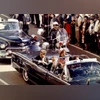 "John F Kennedy")
John F Kennedy (Photo/X)
Listen to This Article
The Trump administration released thousands of documents on Wednesday regarding the 1963 assassination of President John F Kennedy.
According to a statement from the office of Director of National Intelligence (DNI) Tulsi Gabbard, approximately 80,000 pages of previously classified records have now been made public without redactions.
President Trump is ushering in a new era of maximum transparency. Today, per his direction, previously redacted JFK Assassination Files are being released to the public with no redactions. Promises made, promises kept. https://t.co/UnG1vkgxjX pic.twitter.com/XBbkQfz4Bx
— DNI Tulsi Gabbard (@DNIGabbard) March 18, 2025
Key findings from the newly released documents
John F Kennedy, the 35th US president, was assassinated on November 22, 1963, during a visit to Dallas. As his motorcade moved through downtown, shots were fired from the Texas School Book Depository building. Authorities arrested 24-year-old Lee Harvey Oswald, who was stationed on the sixth floor as a sniper. Two days later, nightclub owner Jack Ruby fatally shot Oswald while he was being transferred from jail. Oswald, a former Marine, defected to the Soviet Union before returning to Texas.
CIA involvement
One of the most striking revelations suggests potential US Central Intelligence Agency (CIA) involvement in the period leading up to Kennedy’s assassination. A newly disclosed memo from November 1963 shows that a CIA officer had expressed serious concerns over Oswald’s activities, including his visits to the Soviet and Cuban embassies in Mexico City weeks before the assassination. However, senior officials reportedly ignored these warnings. While the documents do not conclusively prove CIA orchestration, they raise questions about whether the agency was negligent or complicit.
Other previously released documents have also offered insights into intelligence operations at the time, such as internal CIA communications discussing Oswald’s visits to these embassies.
Read: Donald Trump releases classified JFK files: Why now, and how to access them
Also Read

 "Nasa, Sunita Williams, SpaceX")
 "Benjamin Netanyahu")
 "John F Kennedy")
 "Statue of Liberty, US-France, US France, France US, US flag, America Franch")
 "Donald Trump")
Operation Mongoose
Newly released files also shed further light on ‘Operation Mongoose’, a covert CIA-led operation against Fidel Castro’s regime, which was personally authorised by Kennedy. According to a report by The Times of India, these documents highlight the extent of Cold War tensions and how they intersected with Kennedy’s presidency.
The KGB’s perspective
Among the documents is a 1991 memo from the CIA’s St Petersburg station detailing an encounter with a US professor who had ties to a KGB officer. The KGB official had reviewed extensive files on Oswald and was reportedly confident that he was never under KGB control. The KGB, which operated as the Soviet Union’s primary intelligence agency from 1954 until the USSR’s collapse in 1991, closely monitored Oswald while he was in the Soviet Union.
The memo also described Oswald as an erratic and difficult individual to control. Interestingly, it noted that he had demonstrated poor shooting skills while practicing in the USSR — contradicting the theory that he single-handedly executed the assassination.
Second shooter theory
One of the most debated aspects of the Kennedy assassination is whether Oswald acted alone. The Warren Commission concluded that he fired three shots within 8.6 seconds. However, the newly declassified files include ballistic reports and witness statements that challenge this narrative.
Some documents suggest that another shot may have come from the grassy knoll, a small hill overlooking Kennedy’s motorcade route. This aligns with the findings of the House Select Committee on Assassinations (HSCA) in 1979, which concluded that there was a ‘high probability’ of a second shooter based on acoustic evidence. New witness accounts in the released files reinforce this possibility, with reports of suppressed testimony from a Dallas bystander who was allegedly pressured into silence by government agents, The Guardian reported.
Possible mafia links
Wiretap transcripts suggest that organised crime figures may have played a role in the assassination plot. Some mob leaders were reportedly recorded discussing the need to ‘eliminate Kennedy’. According to ABC7 Chicago, one document even connects Chicago mob bosses to Cuban militiamen training operations.
The files hint at a potential collaboration between organised crime figures, anti-Castro Cuban exiles, and rogue CIA operatives — possibly driven by resentment over Kennedy’s handling of the failed Bay of Pigs invasion.
JFK files: Oswald’s fate
One of the more alarming findings is an FBI memo detailing a phone call received before Oswald’s death, predicting that he would be killed by Jack Ruby. This suggests that certain individuals may have had prior knowledge of the impending attack.
Another document reveals that CIA officer George Joannides authorised a $25,000 transfer to an anti-Castro group connected to Oswald, raising further questions about the CIA’s potential involvement. Additionally, the files confirm heightened CIA surveillance of Oswald’s Cuban intelligence contacts, yet no action was taken to intervene.
Trump’s transparency initiative
The release of these documents fulfills a commitment made by Donald Trump to promote government transparency. While the disclosure faced initial delays, Trump positioned himself as an advocate for revealing long-hidden government records. The director of national intelligence (DNI) Tulsi Gabbard stated, “President Trump is ushering in a new era of maximum transparency.”
What remains classified?
Despite the large-scale declassification, it is estimated that around 3,000 assassination-related files remain either partially or fully undisclosed. Additionally, the FBI recently uncovered approximately 2,400 more records, which are expected to be released through the National Archives. However, certain sensitive documents, including personal tax records, remain exempt from public disclosure.
More From This Section
 "Federal Reserve")
 "Typhoon Gaemi, cyclone, flood, waterlogging, rains")
 "Man going to office")
 "Nasa, Sunita Williams, SpaceX")
 "Jensen Huang")
Topics : Donald Trump Donald Trump administration John F Kennedy assassination documents Tulsi Gabbard United States
Don't miss the most important news and views of the day. Get them on our Telegram channel
First Published: Mar 19 2025 | 11:56 AM IST