


Meet Mark Carney, Canada's new PM who once likened Trump to 'Voldemort'
As Mark Carney is all set to replace Justin Trudeau as Canada's next Prime Minister, the former banker will have to decide when to call a federal election
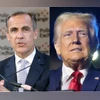 "Mark Carney, Donald Trump")
Mark Carney and Donald Trump
Listen to This Article
Mark Carney, a former Goldman Sachs banker, is set to become the Prime Minister of Canada. Carney, who served as the governor of the Bank of Canada and later the Bank of England, hasn’t hesitated to criticise US President Donald Trump, even comparing him to the Harry Potter series villain 'Voldemort.'
As the Liberal Party members voted on Sunday (March 9), Carney stood out as the favourite. Carney, who played a key role in steering Canada through the 2008 financial crisis during his tenure as governor of the Bank of Canada, is widely regarded as the leader best equipped to handle Trump, The New York Post reported citing polling data.
Who is Mark Carney?
Mark Carney (59) was born on March 16, 1965, in Fort Smith, Northwest Territories, and grew up in Edmonton, Alberta.
He served as the Governor of the Bank of Canada from 2008 to 2013 and later led the Bank of England from 2013 to 2020. After playing a key role in helping Canada navigate the 2008 financial crisis, he became the first non-British individual to head the Bank of England since its establishment in 1694.
In 2020, Carney was appointed as the United Nations' special envoy for climate action and finance.
Also Read

 "Canada")
 "Mark Carney, Canada PM-elect")
 "Mark Carney, Canada PM-elect")
 "Justin Trudeau, Canada PM")
Before his central banking career, he spent 13 years at Goldman Sachs, working in London, Tokyo, New York, and Toronto. He joined the Bank of Canada as deputy governor in 2003. Despite his extensive financial experience, he has not held a political position.
Carney earned a bachelor's degree in economics from Harvard University in 1988, followed by a master's and a doctorate in economics from Oxford University. As a student, he played ice hockey and was a backup goalie for Harvard. He holds Canadian, UK, and Irish citizenship but has indicated plans to retain only Canadian citizenship, a move considered politically prudent.
What Mark Carney said about Donald Trump
Last month, Mark Carney reacted to Donald Trump’s suggestion that Canada could become the 51st state of the US. “When you think about what’s at stake in these ridiculous, insulting comments of the president, of what we could be, I view this as the sort of Voldemort of comments,” Carney had said.
“Like I will not even repeat it, but you know what I’m talking about,” he told a crowd of supporters.
Carney has taken a firm stance on trade, advocating for retaliatory tariffs on the US. “Canada will not bow down to a bully,” he said last week.
“In the trade war — just like in hockey — we will win,” he added, referring to the politically charged 4 Nations final between Canada and the US two weeks ago.
The road ahead for Liberals
As Carney is all set to replace Trudeau as Canada’s next Prime Minister, the former banker will have to decide when to call a federal election.
While Canada typically holds elections every four years — currently scheduled for October — the Prime Minister has the authority to dissolve Parliament and call an early vote.
Under Trudeau’s leadership, the Liberals had struggled in the opinion polls, trailing the Conservatives for most of the past two years, often by double-digit margins. However, with new leadership and a surge of national pride sparked by Trump’s tariff policies and annexation remarks, recent polling indicates a significantly tighter race, according to The New York Post report.
Trudeau stepped down in January following a turbulent period in Canadian politics, during which his former finance minister accused him of not taking tariff threats seriously.
More From This Section
 "Donald Trump, Volodymyr Zelenskyy")
 "Syria, civil war")
 "Foxconn")
 "Nissan")
 "People gather to celebrate the Syrian government fall at Faith mosque in Istanbul, Turkey")
Don't miss the most important news and views of the day. Get them on our Telegram channel
First Published: Mar 10 2025 | 2:27 PM IST