


Nasa's SWOT satellite unveils most detailed ocean floor map yet: Watch
More precise maps created using data from the SWOT mission can enhance underwater navigation and provide deeper insights into the movement of heat and marine life across the world's oceans
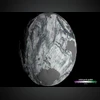 "Surface Water and Ocean Topography (SWOT) Vertical Gravity Gradient")
Surface Water and Ocean Topography (SWOT) Vertical Gravity Gradient (Source: Nasa/@nasascientificvisualizatio5842)
Listen to This Article
For centuries, much of the ocean floor has remained a mystery. Now, thanks to data from NASA’s SWOT satellite, scientists have created one of the most detailed maps ever, revealing hidden underwater mountains and deep-sea features like never before.
Working on the project, a NASA-backed research team, using advanced data from the SWOT (Surface Water and Ocean Topography) satellite, offers unprecedented insights into the world's underwater landscapes.
While ship-based sonar has provided direct measurements of only 25% of the ocean floor, SWOT's satellite data bridges the gap, allowing scientists to map vast areas more efficiently.
To gain a comprehensive global view, scientists have increasingly turned to satellite data, which allows for broader and more efficient mapping of the Earth's underwater terrain.
The animation showing the varying surface heights of the planet's oceans and freshwater lakes and rivers was created using data from the SWOT satellite.
Also Read

 "Chennai High court, Madras High Court, Madras HC")

 "PRIVATE SPACE ODYSSEY")
 "Donald Trump, Trump, Volodymyr Zelenskyy, Zelenskyy")
 "Sunita Williams, Kalpana Chawla")
While mapping the seafloor isn’t the primary goal of the SWOT mission, the satellite—launched in December 2022—is designed to measure water height across nearly all of Earth’s surface, including oceans, lakes, reservoirs, and rivers. By analysing variations in water height, scientists can create topographic maps of both freshwater and seawater surfaces. This data plays a crucial role in monitoring sea ice changes, tracking flood movements, and improving our understanding of global water dynamics.
“The SWOT satellite was a huge jump in our ability to map the seafloor,” said David Sandwell, a geophysicist at Scripps Institution of Oceanography in La Jolla, California. He’s used satellite data to chart the bottom of the ocean since the 1990s and was one of the researchers responsible for the SWOT-based seafloor map, which was published in the journal Science in December 2024.
Watch the animation here
How was the most detailed ocean floor map created?
Scientists used a simple principle: underwater features like seamounts and abyssal hills are heavier than the surrounding seabed. Because of this extra mass, they exert a slightly stronger gravitational pull, causing tiny, measurable bumps on the ocean’s surface. By studying these small changes in gravity, researchers can estimate what kind of seafloor feature lies beneath.
According to Nasa, SWOT covers about 90% of the globe every 21 days through repeated observations — the satellite is sensitive enough to pick up these minute differences, with centimeter-level accuracy, in sea surface height caused by the features below. Sandwell and his colleagues used a year’s worth of SWOT data to focus on seamounts, abyssal hills, and underwater continental margins, where continental crust meets oceanic crust.
Scientists have long known about giant underwater mountains, called seamounts, that rise more than 3,300 feet (1 kilometre) from the ocean floor. However, the SWOT can now detect much smaller seamounts, less than half that height.
This could greatly increase the number of known seamounts from 44,000 to 100,000. These hidden peaks play an important role in the ocean, shaping deep-sea currents and gathering nutrients along their slopes. This attracts marine life, turning them into thriving underwater oases in an otherwise empty seafloor.
The new detailed map gives researchers new insights into the geologic history of the planet. It is like a time machine for scientists, revealing hidden clues about Earth's ancient past and how its landscapes have changed over millions of years.
Scientists have gathered nearly all the seafloor details they expected from the SWOT satellite. Now, they are working on measuring the depth of these underwater features to create a clearer picture of the ocean floor.
This effort supports a global project to map the entire seafloor using ship-based sonar by 2030. While this goal may not be fully reached in time, SWOT’s data will help fill the gaps, bringing scientists closer to completing the map.
More about SWOT
The SWOT satellite was developed by NASA and CNES, with support from the Canadian and UK Space Agencies. NASA led the US effort, providing key instruments, including the Ka-band radar interferometer (KaRIn). CNES contributed to satellite operations, with Thales Alenia Space developing key components. The Canadian Space Agency supplied the KaRIn high-power transmitter, while the UK Space Agency supported the radio-frequency system.
More From This Section
 "Donald Trump, Trump")
 "Bank of England, England")
 "War, Israel-Gaza war")
 "crypto")
 "Benjamin Netanyahu, Benjamin, Netanyahu, Israel PM")
Topics : NASA swot Satellite Ocean Earth's geologic history
Don't miss the most important news and views of the day. Get them on our Telegram channel
First Published: Mar 20 2025 | 3:46 PM IST