


Pope Francis (1936-2025): The Argentine pontiff who led with mercy, reforms
Pope Francis passed away at 88. As the first Latin American and Jesuit pope, he was renowned for his humility, advocacy for the marginalised, and efforts to reform the Catholic Church
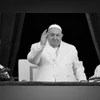 "Pope Francis")
Pope Francis (Photo: @Pontifex)
Listen to This Article
Pope Francis, born Jorge Mario Bergoglio on December 17, 1936, in Buenos Aires, Argentina, passed away on April 21, 2025. He was 88. He passed away at his residence in the Vatican's Casa Santa Marta. Francis had been in critical condition recently due to a prolonged lung infection.
As the 266th pontiff of the Roman Catholic Church, he was the first pope from South America and the first from the Jesuit order, known for its commitment to social justice and the vision of “finding God in all things.”
His life was characterised by unwavering faith, humility, and dedication to the marginalised. Emphasising God’s mercy, his motto was Miserando atque eligendo, a Latin phrase meaning “by having mercy, by choosing him,” which also appeared on his papal coat of arms.
Known for his work among the poor, he advocated for social justice and a more inclusive Church. He often stated, “My people are poor and I am one of them.” According to the Holy See, Francis avoided the luxuries of high office, often taking public transportation, living in an apartment rather than the archbishop’s palace, and cooking his meals.
Calling to the priesthood and rise in church leadership
According to The Holy See (the central governing body of the Catholic Church), growing up in Buenos Aires, Francis developed a deep empathy for the poor. He studied chemistry before discerning a religious vocation, entering the Society of Jesus (Jesuits) in 1958. He was ordained a priest in 1969 and took his final Jesuit vows in 1973.
Also Read

 "Pope Francis")
 "Pope Francis")
 "JD Vance, Vance")

 "Pope Francis")
He became archbishop of Buenos Aires in 1998 and a cardinal in 2001. Following the unexpected resignation of Pope Benedict XVI in 2013, Bergoglio was elected pope on March 13, 2013. He was the first non-European pope in over 1,200 years and the first from the Jesuit order. He took the name Francis in honor of St. Francis of Assisi.
A reformist supreme pontiff
During his 12-year papacy, Francis prioritised outreach to the poor, interfaith dialogue, and addressing pressing global issues such as climate change, migration, and economic inequality.
He introduced significant reforms within the Vatican, seeking greater transparency in Church finances, addressing corruption, and restructuring the Roman Curia, the central administrative body of the Catholic Church, in 2022 to streamline its operations.
His encyclicals (circular issued by the Pope) shaped moral discourse beyond the Catholic Church. For example, Laudato Si’ (2015) called for environmental stewardship, stating, “The book of nature is one and indivisible and includes the environment, life, sexuality, the family, social relations, and so forth.” Similarly, in Fratelli Tutti (2020), Francis promoted global fraternity and love for each person, regardless of physical proximity.
Francis sought to make the Church more inclusive and welcoming. He encouraged a pastoral approach to issues like divorce, same-sex relationships, and the role of women, emphasising compassion over rigid doctrine. His outreach to the LGBTQI+ community and his remark, “Who am I to judge?” on July 29, 2013, at a press conference on the papal plane returning from World Youth Day in Brazil, marked a significant shift in tone from previous papacies.
Additionally, he took steps to address the clergy sex abuse crisis by holding Vatican summits, enforcing stricter accountability, and removing abusive clerics.
Despite his widespread popularity, Pope Francis faced strong opposition from conservative factions within the primary church in Vatican City. Some cardinals and bishops openly criticised his leadership, fearing he was undermining Church traditions.
A voice for global peace
Pope Francis was an advocate for refugees, economic justice, and nonviolence. He frequently condemned war, the arms trade, and consumerism, urging nations to choose diplomacy over violence and calling attention to the suffering of civilians in conflict zones. His visits to conflict zones, refugee camps, and neglected communities reinforced his commitment to peace and human dignity.
During his later years, Pope Francis continued his mission despite declining health. Even as mobility issues required him to use a wheelchair, he remained an active and outspoken leader, traveling extensively.
He will be remembered as a pope of the people, a leader who redefined the papacy for the modern world.
Rest in peace, Pope Francis.
More From This Section
 "Pete Hegseth, US defence secretary")
 "Mark Carney")
 "Donald Trump, Trump")
 "Photo: Shutterstock.com")
 "Drones, Mysterious objects in US")
Topics : Pope Francis BS Web Reports Church VATICAN Christianity
Don't miss the most important news and views of the day. Get them on our Telegram channel
First Published: Apr 21 2025 | 1:36 PM IST