


Pope Francis passes away: Here is how the Vatican selects a new pontiff
The death of a sitting pope initiates a profound period of mourning and transition within the Roman Catholic Church, marked by a meticulously structured process to elect a new pontiff
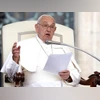 "Pope Francis")
Pope Francis (Photo: Reuters)


Listen to This Article
(This is an updated version of the report) The Vatican on Monday said that Pope Francis, who had been suffering a long asthmatic respiratory crisis, died. The 88-year-old pontiff had been recently hospitalised with pneumonia and a complex lung infection.
The death of a sitting pope initiates a profound period of mourning and transition within the Roman Catholic Church, marked by time-honoured rituals and a meticulously structured process to elect a new pontiff.
This period, known as 'sede vacante' (Latin for "the seat being vacant"), encompasses specific ceremonies and administrative procedures that ensure both the dignified farewell to the deceased pope and the seamless selection of his successor.
Confirmation of pope's death and initial rituals
Upon the pope's passing, the Cardinal Camerlengo, who administers the Church during the sede vacante, officially confirms the death. Historically, this involved gently tapping the pope's head with a silver hammer and calling his baptismal name three times; if there was no response, the death was declared. However, this ritual has not been observed in recent times.
Also Read | Pope Francis (1936-2025): The Argentine pontiff who led with mercy, reforms
Following confirmation, the Camerlengo retrieves the Ring of the Fisherman—a symbol of the papal office—and ceremonially destroys it, along with the papal seal, to prevent any unauthorised use. The pope's private apartments are then sealed.
Also Read

 "Pope Francis")
 "Pope Francis")
 "JD Vance, Vance")

 "Pope Francis")
Period of mourning and funeral rites
The Church observes a nine-day mourning period called 'novendiales,' during which the deceased pope's body lies in state, allowing the faithful to pay their respects. The funeral is traditionally held in St Peter's Basilica, followed by interment in its crypt.
Recently, Pope Francis approved new funeral rites that simplify these rituals and permit burial outside the Vatican, reflecting his personal wishes for a modest ceremony. He had expressed a desire to be buried in the Basilica of Santa Maria Maggiore in Rome, underscoring his devotion to the Virgin Mary and commitment to a humble papacy.
Governance during sede vacante
During the sede vacante, the College of Cardinals assumes responsibility for the Church's governance, albeit with limited authority. The Cardinal Camerlengo oversees the Church's temporal affairs, while the Major Penitentiary continues in his role. All other heads of the Roman Curia cease their duties.
The College convenes in General Congregations to discuss and arrange the forthcoming conclave and address essential administrative matters.
How a new pope is elected
The conclave, the secretive assembly of cardinal electors tasked with choosing the new pope, must commence between 15 and 20 days after the pope's death, allowing time for all eligible cardinals worldwide to arrive in Vatican City. Only cardinals under the age of 80 are permitted to vote, with their number not exceeding 120.
The cardinals are sequestered within the Vatican, traditionally in the Sistine Chapel, to prevent external influence. They take an oath of secrecy, and any breach results in severe ecclesiastical penalties. The election process involves a series of ballots—up to four per day—until a candidate achieves a two-thirds majority.
After each voting session, the ballots are burned; chemicals are added to produce black smoke (fumata nera) if the vote is inconclusive or white smoke (fumata bianca) to signal the election of a new pope.
Announcement and inauguration of new pope
Once a cardinal secures the necessary majority and accepts the position, he chooses a papal name. The senior cardinal deacon then announces to the public from the balcony of St Peter's Basilica: "Habemus Papam!" (We have a Pope), introducing the new pontiff by his chosen name. The pope then imparts his first blessing, "Urbi et Orbi" (To the City and the World"), to the gathered faithful.
Who are next in line to succeed Pope Francis?
Discussions regarding Pope Francis' potential successor were ongoing when he was critically ill. The situation prompted the College of Cardinals to engage in preliminary considerations about future leadership. Potential candidates include:
Cardinal Pietro Parolin (70, Italy): Vatican's Secretary of State, viewed as a political moderate and a continuation of Francis's legacy.
Cardinal Fridolin Ambongo Besungu (65, Democratic Republic of Congo): President of the Symposium of Episcopal Conferences of Africa and Madagascar; conservative, opposed to progressive doctrines.
Cardinal Matteo Zuppi (69, Italy): A key insider in Francis's Vatican, highly favoured by the current pope.
More From This Section
 "Donald Trump, Trump")
 "Emmanuel Macron, French President, France")
 "Kash Patel")
 "FDA")
 "DOJ, Department of Justice HQ")
Topics : Pope Francis VATICAN Church christian BS Web Reports
Don't miss the most important news and views of the day. Get them on our Telegram channel
First Published: Feb 23 2025 | 9:56 AM IST