


Trump AI czar Sacks defends reversal of chip export curbs to China
Allowing Nvidia to resume H20 chip shipments will help the US compete globally and curb Huawei's efforts to expand its share in the international tech market, Sacks said
 "David Sacks")
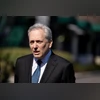
White House AI adviser David Sacks. Image: Bloomberg


Listen to This Article
By Brunella Tipismana Urbano and Ed Ludlow
White House AI adviser David Sacks defended the Trump administration’s decision to allow Nvidia Corp. and Advanced Micro Devices Inc. to resume sales of some artificial intelligence chips to China, reversing export curbs imposed by the US earlier this year.
In an interview Tuesday, Sacks said that allowing Nvidia to restart shipments of its H20 chips would position the US to compete more effectively abroad and blunt efforts by Chinese tech giant Huawei Technologies Co. to gain a bigger slice of the global market.
“We are not selling the latest and greatest chips to China, but we can deprive Huawei of having this giant market share in China that they can then use to scale up and compete globally,” Sacks said on Bloomberg Television. “The policy is nuanced and it makes a lot of sense.“
Also Read

 "Donald Trump, Trump")
 "Donald Trump, Trump")
 "US President Donald Trump, Chinese Premier Xi Jinping")
The move is seen as a win for Nvidia’s Chief Executive Officer Jensen Huang, who met last week with President Donald Trump after spending months arguing for a letup in US restrictions on sales to Chinese customers. “Jensen has been making the case publicly for competing in China and there are a lot of merits to the argument,” Sacks said.
Revived sales of the H20 promise to restore billions in revenue for Nvidia this year, according to the company. The H20 was originally designed to comply with export controls imposed under the Biden administration, but in April, the Trump administration tightened those rules to block sales to China of the H20 and AMD’s MI308 chip without a license.
The tighter curbs prompted Nvidia to announce a $4.5 billion writedown on H20 chip inventory in its fiscal first quarter and warn of an additional potential loss of $8 billion in sales. AMD said it would take an $800 million charge for its second quarter of 2025.
Sacks pushed back on criticism that allowing H20 sales to China poses a security risk, calling the H20 “a deprecated chip.” He warned that other countries are choosing between US and Chinese technology. “If you don’t let these countries buy American tech, you’re pushing them into China’s arms,” he said.
Trump officials had previously insisted the H20 chip sales curbs weren’t up for negotiation. Sacks said the policy shift fits into what he described as a broader push to establish an “American AI stack” — encompassing chips, operating systems, and the AI models that run on them.
“It’s a zero-sum game,” he said. “We want it all to be American-made and American-powered. If we hobble our own companies, we’re handing an advantage to China.”
The reversal follows months of diplomacy between Washington and Beijing. As part of a trade truce unveiled last month, the US has eased some restrictions on exports, including chip-design software, in exchange for greater Chinese cooperation on sales of rare-earth minerals — a key input for many high-tech products.
Earlier Tuesday, Treasury Secretary Scott Bessent acknowledged that restrictions on Nvidia’s H20 chips were part of US-China talks in London, despite his own earlier assertions that there was no such quid pro quo tying semiconductors and rare earths.
“You might say that that was a negotiating chip that we used in Geneva and in London,” Bessent said in an interview on Bloomberg Television. “It was all part of a mosaic. They had things we wanted, we had things they wanted.”
More From This Section
 "SpaceX, Elon Musk")
 "Bank of England Governor Andrew Bailey")
 "WHO, World Health Organization")
 "flood, tsunami, flash food")
 "Donald Trump, Trump")
Topics : Donald Trump Artificial intelligence Nvidia
Don't miss the most important news and views of the day. Get them on our Telegram channel
First Published: Jul 16 2025 | 8:57 AM IST