


15% tariff for 150 days: Trump admin prepares 'Plan B' after court ruling
Provisions under the rarely used US Trade Act of 1974 allow the Trump administration to impose short-term tariffs of up to 15% for 150 days to address trade imbalances
 "Donald Trump, Trump")
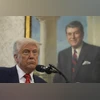
Trump admin prepares ‘Plan B’ after court ruling | Photo: President Donald Trump by PTI
Listen to This Article
The Trump administration is preparing a legal ‘Plan B’ to maintain its sweeping tariffs after a US court ruled that the president overstepped his authority by using emergency economic powers to impose them. The new approach would rely on provisions under the Trade Act of 1974, starting with a temporary 15 per cent tariff for 150 days, followed by more targeted duties using a separate clause aimed at unfair trade practices, The Wall Street Journal reported on Friday.
The backup plan comes after a federal appeals court on Thursday allowed the existing tariffs to remain in place while the administration challenges the lower court’s ruling. However, because the legal basis for the policy is uncertain, officials are now looking at other ways to protect the president’s trade agenda.
Trump admin’s ‘Plan B’ follows a two-step approach
To do this, the Trump administration would need to apply a two-step approach. The first move would involve invoking a never-before-used provision: Section 122 of the Trade Act of 1974. This Act permits short-term tariffs of up to 15 per cent for 150 days to address trade imbalances.
This stopgap would buy time to implement a longer-term solution under Section 301, which requires a more detailed process but is seen as more legally sound.
Officially, no new announcement on tariffs has been made; however, White House officials have confirmed that alternatives are being considered. Press Secretary Karoline Leavitt said the administration is weighing other legal avenues as it appeals the court’s decision, though she did not elaborate.
Also Read

 "cargo ship, flight, US flight, plane, airplane")
 "Elon Musk, Musk")
 "US China flag, US-China flag")
 "Boeing")
 "Harvard University")
Peter Navarro, senior trade adviser, appeared to confirm the two-pronged approach and also suggested the administration could explore other trade laws, including the Smoot-Hawley Tariff Act of 1930 and provisions linked to national security.
15 per cent tariffs for 150 days possible under US law
Legal experts confirmed to The Wall Street Journal that the proposed Plan B is more “defensible” than the existing approach, which was based on the International Emergency Economic Powers Act (IEEPA), a law never before used to impose tariffs.
The US Court of International Trade on May 28 ruled that Trump’s use of IEEPA to address trade deficits was unlawful. The court found that the law does not permit the president to levy wide-ranging import duties without congressional approval. However, on May 29, a federal appeals court allowed the tariffs to remain in place temporarily while the Trump administration appeals the decision.
Despite the court setback, the administration believes shifting to other statutory tools could preserve tariff continuity and maintain leverage in ongoing trade negotiations. Some analysts say the court ruling might even open the door to a broader US–EU trade deal by removing one of the major points of tension.
More From This Section
 "US Treasury Secretary, Scott Bessent")
 "Pete Hegseth")
 "oil tankers, sea shore, trading")
 "US flag, US, united states")
 "Shooting, Gun")
Topics : Trump administration Trump tariffs trump tariff Donald Trump administration US President Donald Trump BS Web Reports Trump trade policies Trump trade war
Don't miss the most important news and views of the day. Get them on our Telegram channel
First Published: May 30 2025 | 9:15 AM IST