


US drops Colombia as drug war partner, puts it on rogue nation list: Petro
The move is likely to hit foreign investment, multilateral funding and tourism, as a long-time ally of Washington now finds itselfin the same rogue category as Venezuela, Bolivia and Myanmar
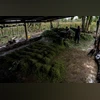 "Coca crops in San Miguel, Putumayo, Colombia")
Coca crops in San Miguel, Putumayo, Colombia | Image: Bloomberg


Listen to This Article
By Matthew Bristow
Colombia President Gustavo Petro said the US has “decertified” Colombia as a partner in the war on drugs amid the biggest cocaine boom in history.
The move is likely to hit foreign investment, multilateral funding and tourism, as a long-time ally of Washington now finds itselfin the same rogue category as Venezuela, Bolivia and Myanmar.
“The US is decertifying us,” Petro said in a televised cabinet meeting on Monday evening. “After dozens of deaths, police, soldiers, common people, trying to avoid cocaine from getting to them.”
The US hasn’t separately confirmed the news.
Also Read

 "Colombia car bomb")
 "exporters, trade, tariff")
 "Alvaro Urive, ex-President of Colombia")
 "US flag, US, united states")
 "Gustavo Petro, Colombia President")
Colombia has been among the biggest recipients of US aid this century, receiving about $14 billion, including military assistance to battle drug cartels and Marxist insurgents. However, relations between President Donald Trump and Colombia’s leftist president quickly soured, with the two leaders having very different approaches to the war on drugs, migration and relations with Venezuela.
The decision could potentially slash tourism revenue by as much as $1 billion per year if the US were to intensify its travel warnings for Colombia, according to a study by the Colombian-American Chamber of Commerce published in August.
It could also lead to reduced bilateral cooperation, a fall of as much as 60 per cent in access to credit from multilateral lenders, and might spook foreign investors, the study found.
Even so, the economic damage is limited by the fact that US aid is no longer as significant for Colombia as it was at the start of the century, according to Adam Isacson, who studies US-Colombia policy at the Washington Office on Latin America.
Since taking office in 2022, Petro has sought “total peace” through negotiations with guerrillas and the private armies of drug traffickers. The strategy has so far failed to yield significant demobilizations, though talks are far advanced with some groups.
Colombia now produces more than six times as much cocaine as it did in 1993, the year when Pablo Escobar was gunned down. Cultivation of coca bushes in Colombia rose 10 per cent last year to 253,000 hectares — enough to produce more than 2,600 tons of pure cocaine, which is far more than the output of Peru and Bolivia combined.
More From This Section
 "US Senate, US congress, white house, US Capitol")
 "Radoslaw Sikorski, Poland FM")
 "JD Vance, Vance")
 "Blue Blue Origin, space, earth")
 "Shehbaz Sharif, Pakistan PM")
Don't miss the most important news and views of the day. Get them on our Telegram channel
First Published: Sep 16 2025 | 7:54 AM IST