


US and Taiwan hold secret defence talks in Alaska as Trump courts China
The Pentagon-Taipei meeting signals quiet engagement, but Donald Trump's focus on China trade talks raises doubts in Taiwan about US reliability
 "US-Taiwan, US, Taiwan")
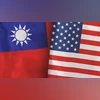
Taipei worries about Washington’s reliability as US and Taiwan officials held secret defence talks in Alaska | Photo: Shutterstock


Defence officials from the United States and Taiwan held a quiet meeting in Alaska last week, a sign of Washington’s attempt to keep channels open with Taipei while avoiding friction with Beijing, the Financial Times reported on Friday.
The session, led by a senior Pentagon Indo-Pacific official and Taiwan’s deputy national security adviser, came after a more high-profile meeting in Washington was abruptly cancelled earlier this year. The cancellation was tied to US military action in Iran, but the report argues that many in Washington and Taipei saw it as a calculated move to avoid upsetting Chinese President Xi Jinping at a time when trade talks with Beijing were gaining momentum.
By shifting the venue to Anchorage and limiting the seniority of participants, the Trump administration signalled that it wants to maintain contact with Taiwan without derailing negotiations with China.
Last month, the Trump administration extended its truce with China for another 90 days following trade talks in London and Stockholm. US officials have reportedly been told to put new restrictions on hold while trade discussions continue as Washington seeks a summit with Xi.
Taiwan’s unease in US talks
For Taipei, this balancing act is deeply unsettling, the report said. Trump’s unpredictable style, his personal indifference to Taiwan’s concerns, and the influence of his isolationist support base have raised doubts about how reliable US backing really is. To counter these fears, Taiwan has announced a record 23 per cent jump in defence spending, taking the budget above 3.3 per cent of GDP. Officials hope this will convince Washington that Taipei is serious about its own security.
Also Read

 "Nasa acting administrator, Sean Duffy, Nasa")
 "The military parade to mark 80 years since Japan's defeat in World War II held at Tiananmen Square in Beijing, on Sept. 3")
 "Marco Rubio")
 "US President Donald Trump")
 "Chinese President Xi Jinping")
The worries are not without precedent. In 2019, Washington delayed approving the sale of F-16 fighter jets to Taiwan until after it had concluded trade talks with China. That decision, like the downgraded Alaska meeting, reinforced the perception that negotiations with Beijing take priority over visible support for Taipei.
The result is a relationship that remains functional but fragile. The United States continues to engage Taiwan, but often in ways designed to avoid headlines. For Taipei, the question is whether quiet diplomacy will be enough to safeguard its security at a time when China is showing off growing military strength on the global stage.
China holds military parade
Xi Jinping’s military parade in Beijing, which saw Russian President Vladimir Putin and North Korean leader Kim Jong-un in attendance, was a global show of China's military strength. During the parade, Trump wrote on social media, “Please give my warmest regards to Vladimir Putin and Kim Jong Un, as you conspire against the United States of America.”
Xi used the ‘victory day’ celebrations and the Shanghai Cooperation Organisation to draw other nations closer. While the Xi-Putin-Kim alliance may be fragile and based on expediency rather than shared vision, the display put up by the leaders highlights a growing shift away from US dominance, exacerbated by Trump’s foreign policy.
More From This Section
 "Volodymyr Zelenskyy, Zelenskyy")
 "An Afghan man walks next to a damaged house following a deadly earthquake that struck Afghanistan's Kunar and Nangarhar provinces, in Nurgal district, Kunar province, Afghanistan, September 4, 2025 | REUTERS")
 "John Bolton")
 "US President Donald Trump")
 "Trump, White House dinner, tech CEOs")
Don't miss the most important news and views of the day. Get them on our Telegram channel
First Published: Sep 05 2025 | 10:44 AM IST