Coronavirus outbreak: A 21-day lockdown may have cost India Rs 8 trillion

The sectors that have been most impacted are transport, hospitality, and real estate
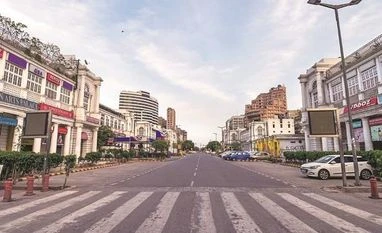
lockdown, coronavirus, road
With the intent to contain the spread of Covid-19, Prime Minister Narendra Modi with effect from March 25 announced a nationwide complete lockdown that brought as much as 70 per cent of economic activity, investment, exports and discretionary consumption to a standstill.
Agencies New Delhi
4 min read Last Updated : Apr 14 2020 | 1:33 AM IST
The world’s biggest lockdown that shut a majority of the factories and businesses, suspended flights, stopped trains and restricted movement of vehicles and people, may have cost the Indian economy Rs 7-8 trillion during the 21-day period, analysts and industry bodies said.
 
With the intent to contain the spread of Covid-19, Prime Minister Narendra Modi with effect from March 25 announced a nationwide complete lockdown that brought as much as 70 per cent of economic activity, investment, exports and discretionary consumption to a standstill. Only essential goods and services such as agriculture, mining, utility services, some financial and IT services and public services were allowed to operate.
 
Stating that the pandemic came at the most inopportune time for India whose economy was showing signs of recovery after bold fiscal/monetary measures, Centrum Institutional Research said the country again stares at the possibility of low single-digit growth for FY21 (April 2020 to March 2021).

“Nationwide complete lockdown is likely to shave off at least Rs 7-8 trillion,” it said. Acuite Ratings & Research earlier this month estimated that the lockdown will cost the Indian economy almost $4.64 billion (over Rs 35,000 crore) every day and the entire 21-day lockdown will result in a GDP loss of almost $98 billion (about Rs 7.5 trillion).
 
The rapid spread of Covid-19 has not only disrupted the global economy but also triggered a partial shutdown in many parts of India from early March and an almost complete shutdown from March 25.
 
“While the countrywide shutdown is scheduled to be lifted from April 15, 2020, the risks of prolonged disruption in economic activities exist depending on the intensity of the outbreak,” the credit rating agency said.

The sectors that are most severely impacted are transport, hotel, restaurant, and real estate activities.

Prime Minister Modi is likely to detail the post-lockdown scenario in an address to the nation on Tuesday morning.

All India Motor Transport Congress (AIMTC) Secretary-General Naveen Gupta said the accumulated losses to truckers during the first 15 days of lockdown were about Rs 35,200 crore given an average Rs 2,200 loss to per truck per day.

“More than 90 per cent of the about one crore trucks in the country are off roads during the lockdown as truckers with only essential commodities are on the move,” he said. “Even if the lockdown is lifted, it will take at least two-three months for truckers to limp to some normal scale as we apprehend consumption of non-essential items to remain hit on the account of lack of purchasing power.” AIMTC represents about 9.3 million transporters and truckers and is their umbrella body.
 
National Real Estate Development Council — a body of realtors, puts the loss in the sector at Rs 1 trillion.
 
“I am scared to estimate what the losses would be. I think a potential loss of maybe Rs 1 trillion on a conservative basis on an all-India basis. It is a conservative figure. I cannot think of the upper end of the figure. Based on thumb rule, at least Rs 1 trillion,” said its president Niranjan Hiranandani.
 
The Confederation of All India Traders estimates that the losses incurred by the retail trade of the country in the second half of March due to the Covid-19 pandemic were a massive $30 billion.
 

Vegetables to be sold from 6 am to 11 am in Delhi wholesale mkts
 
The Delhi government will implement odd-even rules in all wholesale markets in the city, under which traders will sell vegetables on alternate days, Development Minister Gopal Rai said on Monday. Speaking to PTI, the minister said that the government has also decided to stagger the timings for the sale of vegetables and fruits in these mandis.
 
“Vegetables will be sold from 6 am to 11 am and fruits from 2 pm to 6 pm in all wholesale markets in Delhi,” he said. The decisions were taken at a high-level meeting chaired by the development minister here. There are five major wholesale vegetable and fruit markets in the national Capital, including the Azadpur mandi, the Ghazipur mandi, and the Okhla mandi. Also, there two wholesale anaj mandis (grain markets) — Najafgarh and Narela.
 

One subscription. Two world-class reads.

Already subscribed? Log in

Subscribe to read the full story →
*Subscribe to Business Standard digital and get complimentary access to The New York Times

Smart Quarterly

₹900

3 Months

₹300/Month

SAVE 25%

Smart Essential

₹2,700

1 Year

₹225/Month

SAVE 46%
*Complimentary New York Times access for the 2nd year will be given after 12 months

Super Saver

₹3,900

2 Years

₹162/Month

Subscribe

Renews automatically, cancel anytime

Here’s what’s included in our digital subscription plans

Exclusive premium stories online

  • Over 30 premium stories daily, handpicked by our editors

Complimentary Access to The New York Times

  • News, Games, Cooking, Audio, Wirecutter & The Athletic

Business Standard Epaper

  • Digital replica of our daily newspaper — with options to read, save, and share

Curated Newsletters

  • Insights on markets, finance, politics, tech, and more delivered to your inbox

Market Analysis & Investment Insights

  • In-depth market analysis & insights with access to The Smart Investor

Archives

  • Repository of articles and publications dating back to 1997

Ad-free Reading

  • Uninterrupted reading experience with no advertisements

Seamless Access Across All Devices

  • Access Business Standard across devices — mobile, tablet, or PC, via web or app

Topics :CoronavirusIndian EconomyIndustrial productionManufacturing activityIndia GDP growthIndian stock marketrecessionGlobal economyagriculture economymining sectorIndian RailwayNarendra ModiTraderstransport sectorRealty sectorReal estate sector in IndiaEconomic slowdown

Next Story



