Climate justice must drive climate action

Big emitters must reconsider their stated net-zero date and specify a credible action plan
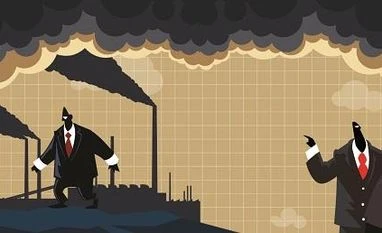
Illustration
Illustration: Binay Sinha
Nitin Desai
6 min read Last Updated : Nov 22 2021 | 11:17 PM IST
Consider a riverside village that has been informed by authorities that it could see a flood in a few days. What would you expect the villagers to do? In any traditional society they would get together and work cooperatively to protect themselves and help those inhabitants who are more vulnerable. There might also be higher level authorities who provide the warning, and identify, when relevant, the perpetrators of actions that created the threat and require them to assist in the management of the flood.

There are four elements in this response that are important —first, the credibility of the warning; second, the sense of emergency shared by the residents of the village; third, the social and political norm of joint responsibility; and fourth, a higher authority capable of enforcing restraint and liability on those most responsible for the risk.

Does the global village have a comparable response mechanism for the threat of climate change? A little over 30 years ago, the 200 or so nations who constitute this global village, set up two mechanisms for this purpose — a scientific body for building a consensus on the facts and projections about climate change, the Intergovernmental Panel on Climate Change (IPCC) and a negotiating process aimed at deciding what each nation should do that led to a global treaty, the UN Framework Convention on Climate Change (UNFCCC). How successful have these two initiatives been in terms of the four elements of response outlined earlier? 

When it comes to the first element, the credibility of the warning, one can say that each of the five assessments that the IPCC has so far presented and early indications of the sixth assessment have strengthened the scientific consensus on the facts and the projections. Doubts about the reliability of the projections of temperature and scepticism about the anthropogenic impact on climate are now limited to fringe groups, generally associated with those who have a commercial interest in fossil fuels. The IPCC reports and the growing evidence of the adverse impact after 1°C temperature rise that we have seen so far, have certainly raised awareness not just in scientific circles, but also among those whose commercial interests will be affected by actions taken to address climate risk and the general public, particularly young people.

Has this rising awareness and the growing consensus on the facts and the projections led to a sense of emergency that is sufficiently strong to lead to urgent actions? One sometimes gets this impression for a short period before and after the annual meetings like the recent Glasgow Conference of Parties (COP). But the reality is that the most drastic consequences of temperature rise are so far in the future that they cannot really influence sufficiently the decision-making of either democracies or dictatorships, which are generally dominated by short-term considerations. This absence of a sense of emergency can be seen in the blithe declarations of net-zero emissions decades ahead but very little on what will be done now.

The third element of joint responsibility is reflected in the commitment to “common but differentiated responsibility” embodied in the climate treaty. The problem is that the principles of climate justice that should govern the differentiation of responsibility have never been spelt out. There is also no agreement on whether the term responsibility should be interpreted as culpability or as duty. Since the risk of climate change depends on the cumulative emissions of greenhouse gases, the crucial issue here that has never been resolved is the extent to which the Western nations should be held liable for past emissions. Differentiation by capacity is now more widely accepted even in rich countries. However, unless the issue of differentiation by culpability is adequately resolved, countries will hold back on their commitments.

Illustration: Binay Sinha
The fourth element of a higher authority capable of enforcing differentiation of actions based on liability and capacity is entirely missing in the global climate response process. We have to rely on the voluntary acceptance of liability by those responsible for the greater part of the accumulation of greenhouse gases. This, given the costs involved, is not politically saleable and, if attempted by some Western politician, will simply lead to the emergence of Trump-type leaders who will move to an even more intransigent position on global climate commitments.

The lack of a consensus on climate justice and the absence of a supra-national authority have led to a negotiating process driven largely by the articulation of narrow national interests. The influence on the outcome is shaped by how important the country’s participation is, given its current and likely future emissions.  The past is history and ignored altogether in the process. This has led to a three-part power structure in the climate negotiations. The first part includes the two big emitters, China and the US, whose participation is a pre-condition for an effective agreement. This G-2 dimension is now clearly evident in the separate agreement that these two countries presented before and during the 2015 Paris COP meeting and the 2021 Glasgow COP meeting. The second part consists of 18-20 countries, each one of which accounts for 1 per cent or more of the global carbon emissions, who matter but, individually, they do not have the de facto veto power that the two big emitters have. The third part consists of about 180 countries that are at the receiving end of what the big players decide. The only modest impact on the big emitters to look beyond national interest comes from the public influence of scientific organisations and global activist groups.

The climate of the earth is the same for all humans and all living beings. It is a global public good and the anthropogenic impact on it has to be treated as a joint responsibility. Such a sense of joint responsibility cannot come unless there is a consensus on the principles of climate justice that would define each country’s and each individual’s duty. In the absence of such a “climate dharma” we may get some modest progress with small improvements in commitments in COP after COP. The growing commercial interest in carbon-saving technologies may also help. But it will not be enough to contain the impending crisis. For that, we have to spell out joint responsibility in terms of an agreed principle of climate justice. 

Consider a simple principle of climate justice, like equal per capita emission of carbon, averaged over the years between now and 2050, and consistent with the estimates of cumulative carbon emissions for the 1.50C goal. This will require most big emitters to bring forward their net-zero target dates. The quantum change required will not come unless countries reconsider their stated net-zero date and specify a credible action plan from now onwards at the 2022 COP meeting. That goal, along with an independent national mechanism in every country for ensuring credibility and accountability, is what climate activists must now pursue.
nitin-desai@hotmail.com

One subscription. Two world-class reads.

Already subscribed? Log in

Subscribe to read the full story →
*Subscribe to Business Standard digital and get complimentary access to The New York Times

Smart Quarterly

₹900

3 Months

₹300/Month

SAVE 25%

Smart Essential

₹2,700

1 Year

₹225/Month

SAVE 46%
*Complimentary New York Times access for the 2nd year will be given after 12 months

Super Saver

₹3,900

2 Years

₹162/Month

Subscribe

Renews automatically, cancel anytime

Here’s what’s included in our digital subscription plans

Exclusive premium stories online

  • Over 30 premium stories daily, handpicked by our editors

Complimentary Access to The New York Times

  • News, Games, Cooking, Audio, Wirecutter & The Athletic

Business Standard Epaper

  • Digital replica of our daily newspaper — with options to read, save, and share

Curated Newsletters

  • Insights on markets, finance, politics, tech, and more delivered to your inbox

Market Analysis & Investment Insights

  • In-depth market analysis & insights with access to The Smart Investor

Archives

  • Repository of articles and publications dating back to 1997

Ad-free Reading

  • Uninterrupted reading experience with no advertisements

Seamless Access Across All Devices

  • Access Business Standard across devices — mobile, tablet, or PC, via web or app

More From This Section

Disclaimer: These are personal views of the writer. They do not necessarily reflect the opinion of www.business-standard.com or the Business Standard newspaper

Topics :Climate ChangeBS OpinionIPCC report

Next Story



