Deborah Baker's 'Charlottesville' reveals essence of the new American right

The new American right is a Hydra-headed monster. Mr Trump isn't its cause, but its distilled essence
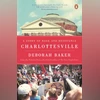
Charlottesville A study of rage and resistance
Shreekant Sambrani
5 min read Last Updated : Jun 30 2025 | 11:40 PM IST
Charlottesville: A study of rage and resistance
by Deborah Baker
Published by Penguin Random House
442 pages ₹1,299 
Charlottesville in the Commonwealth of Virginia is a city of about 50,000, evenly divided among white and black residents.  It is among the oldest cities in the state, with great historical significance.  Monticello, the estate of Thomas Jefferson, one of the founding fathers of the United States and its third President, is just outside the city.  Jefferson’s successor as President, James Madison, the “father of the Constitution,” and the author of the Virginia Compromise, which equated electorally five freed slaves to three white persons, was from the nearby town of Orange.  The Confederate General Robert E Lee was also a Virginian.  He commanded the Army of North Virginia, which included Charlottesville. Yet, Charlottesville was a city where nothing much happened.  Post-civil war Reconstruction quickly gave way to Jim Crow legislation, which left the freed slaves as poor as before and confined to a ghetto.  The razing of the Vinegar Hill district in Charlottesville in the name of redevelopment further cramped the black neighbourhoods. The segregated Lee Memorial Park with statues of Lee and Johnny Reb stuck out as reminders of the hateful past.
 
That changed quickly on August 12, 2017.  The “beautiful ugly city” as author Deborah Baker of the book under review called Charlottesville, attracted national headlines because a race riot in the city resulted in a car running berserk in a no-drive zone killing one person. That would not have meant much as race riots go, but this was something else. The Ku Klux Klan and its many variants garbed in their signature white-sheet-and-hood attire had gathered in the town to “take back” what was theirs, namely the park and the statues.
 
Donald J Trump, who had become the 45th President of the US in January 2017, pronounced that there had been very fine people on both sides in Charlottesville.  Ms Baker, who hails from the town, felt that “a Rubicon had been crossed … People won’t stand for that …but life continued as before.”  She started reading and researching and meeting people to understand what had happened and why.  The result is a thoroughly researched long book, naming names and quoting the good and the bad.  Nearly 80 pages of references, sources and notes attest to the depth of research.  For lay readers, especially the non-Americans, it is an exhausting but harrowing read. Things had started stirring in the first decade of this century.  The black population, led by a 15-year-old schoolgirl Zyahna Bryant and activist black clergy, started demanding a name change for the park and shifting the offending statues.  Eventually, in 2017, the area was renamed Emancipation Park and the Lee statue was placed on the list of removals. This put Charlottesville in the lens of numerous white racist groups , leading first to a torch march on Mother’s Day in May and the vicious Klans rally of August that year.
 
Diligence and thoroughness do not do full justice to Ms Baker’s enterprise.  She covers an enormous canvas, spatially and temporally.  She traces the antecedents of most activists on both sides.  She analyses the ambivalence of Jefferson on the race issue.  Despite his libertarian leanings, he owned a number of slaves (whom he freed) and sired at least one child from his house slave Sally Hemmings when she was 14.  The University of Virginia and its long programmes of research on eugenics resembling those of Adolf Hitler are examined.  Ezra Pound, the admirer of Benito Mussolini who had declared admiringly that Jefferson was a fascist, is scrutinised.  He was in residence at the university after his release from asylum. In an ironic twist of fate, Mr Trump just last week got the current president of the university to “resign” because of its stress on diversity, equality and inclusion (DEI). 
 
What emerges from this churn?  The new American right manifests as a Hydra-headed monster, with names such as Proud Boys and the Oathkeepers.  They are seemingly independent, but united in their espousal of the “combustible mix of fascism, Nazism, white supremacy,  homophobia, and Lost Cause defiance.” Mr Trump is not the cause of it, but is the distilled essence of it.  The author says she failed to anticipate the January 6, 2020 insurrection on the Capitol, but she calls it Charlottesville 2.0.  She would surely think of the happenings of anti-ICE demonstrations in Los Angeles and Mr Trump’s recourse to the National Guards and the Marines as Charlottesville 3.0. Ms Baker despairs: She quotes Dr Jeffrey Pugh, a white ordained minister on the cusp of retiring in Charlottesville, “I don’t know another way of saying it.  We’re in the sxxt.  America is Charlottesville now.  Everywhere is Charlottesville.”
 
One only has to look at the diktats Mr Trump has let loose on America: Jettisoning DEI mandates, attempting to force universities, including the holiest of the holies, Harvard, to bend to his will; selective immigration controls, among other things. Those who had always seen America as the shining city on the hill would fervently want to believe that its moral fibre is resilient enough to withstand another 1,300 days of the abomination that passes for its leadership.
 
       
The reviewer is a Baroda-based economist
 

One subscription. Two world-class reads.

Already subscribed? Log in

Subscribe to read the full story →
*Subscribe to Business Standard digital and get complimentary access to The New York Times

Smart Quarterly

₹900

3 Months

₹300/Month

SAVE 25%

Smart Essential

₹2,700

1 Year

₹225/Month

SAVE 46%
*Complimentary New York Times access for the 2nd year will be given after 12 months

Super Saver

₹3,900

2 Years

₹162/Month

Subscribe

Renews automatically, cancel anytime

Here’s what’s included in our digital subscription plans

Exclusive premium stories online

  • Over 30 premium stories daily, handpicked by our editors

Complimentary Access to The New York Times

  • News, Games, Cooking, Audio, Wirecutter & The Athletic

Business Standard Epaper

  • Digital replica of our daily newspaper — with options to read, save, and share

Curated Newsletters

  • Insights on markets, finance, politics, tech, and more delivered to your inbox

Market Analysis & Investment Insights

  • In-depth market analysis & insights with access to The Smart Investor

Archives

  • Repository of articles and publications dating back to 1997

Ad-free Reading

  • Uninterrupted reading experience with no advertisements

Seamless Access Across All Devices

  • Access Business Standard across devices — mobile, tablet, or PC, via web or app

Topics :Donald TrumpBook readingBOOK REVIEWBS ReadsUS politics

Next Story



