Six years on, has PM-Kisan lived up to its promise of farmer relief?

The programme, meant to give a helping hand to small farmers, is the world's largest direct benefit transfer scheme and unarguably the Modi-led government's most ambitious
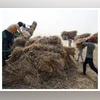
farmers, wheat
One way to ensure that benefits of government schemes including income support programmes like PM-Kisan reach the intended beneficiaries is to legalise tenancy because identification of tenant farmers is tricky otherwise. | Photo: Bloomberg
Sanjeeb Mukherjee New Delhi
8 min read Last Updated : Mar 18 2025 | 3:39 PM IST
Last month, PM-Kisan, billed as the world’s largest Direct Benefits Transfer (DBT) programme and one of the Modi government’s most ambitious schemes for farmers, completed six years of operations. Under the scheme, the Central government transfers a cash benefit of Rs 6,000 per year in three equal instalments, into the Aadhaar seeded bank accounts of farmers through the DBT mode. The scheme is meant to supplement the financial needs of farmers and help them purchase critical agricultural inputs ahead of sowing.
 
Launched just days ahead of the 2019 general elections, the programme, some policy watchers say, was meant to mitigate the electoral setback that the ruling BJP had suffered in the three north Indian states of Madhya Pradesh, Rajasthan, and Chhattisgarh a few months earlier.
 
Distress in rural India due to falling prices of major commodities was cited by many experts as being one of the key reasons for the poll losses for the ruling BJP in the three states. The Centre was, thus, seen as course-correcting that by announcing PM-Kisan.
 
The scheme was initially meant to cover almost all of the country's 13.8 crore farmers, based on the 2015-16 agri-census. However, over the years, this has been pared to about 9.8 crore after several ineligible beneficiaries were detected. Aadhar-seeding of PM-KISAN list and strict monitoring also led to the weeding out of ineligible beneficiaries.
 
The budgetary allocation, too, has dropped from roughly Rs 75,000 crore in the first few years to almost Rs 60,000 crore in the past few years. Initially, West Bengal was not part of the scheme but it, too, joined the scheme later. Several states have also topped up PM-Kisan with their own funds to provide additional benefits.
 
So far, as per government estimates, around Rs 3.70 trillion has been transferred to millions of farmers across India over the past six years through the scheme.
 
PM-Kisan and its many exclusions
 
However, the scheme has had its own share of controversies. There have been several reports of ineligible beneficiaries getting benefits. The guidelines state that farmer families in which one or more member is a regular employee of a local body, central or state government departments, including state or Central Public Sector undertakings, or is a retired government servant drawing a monthly pension of Rs 10,000 or more won’t be eligible.
 
Additionally, if one or more family members of the applicant is a doctor, engineer, lawyer, chartered accountant, or architect, s/he is deemed disqualified.
 
A small and marginal farmer family is defined as “a family consisting of husband, wife and minor children who collectively own cultivable land up to 2 hectares as per land records of the concerned state or union territory.
 
The guidelines also state that if one or more members of a farmer family has paid income tax in the last assessment year, the concerned farmer would also be excluded from the programme.
 
Families of former and present members of Parliament, members of legislative assemblies, and even the chairperson of a district Panchayat are also deemed ineligible.
 
However, family members among pensioners and government servants in a certain category (multi-tasking staff, or Class 4 and Group ‘D’) are exempt.
 
The guidelines also say that state governments can allow self-declaration of the beneficiary for exclusion, but the entire income support transferred to him is liable to be recovered and penal action initiated if the declaration is incorrect.
 
Land owned by temples or other institutions are also excluded from the scheme. The guidelines also state if the spouse of a farmer falls within the exclusion criteria, he will not be considered eligible.
 
Cases where transfer of ownership of cultivable land has happened due to any reason, such as purchase, succession, will, gift, etc., between December 1, 2018 and January 31, 2019, shall be eligible for benefits under the scheme.
 
Impact on tenant farmers
 
A big drawback of the scheme has been that it excludes tenant farmers from its fold. According to the National Statistical Office’s (NSO) ‘Situation Assessment of Agricultural Households’ survey for 2018-19, 17.3 per cent of the total estimated 101.98 million operational holdings (i.e., farms) in rural India were on leased land, while the share of such leased-in lands in the total area used for agricultural production was 13 per cent.
 
In previous surveys, NSO had pegged the share of leased-in holdings at 11.3 per cent and 6.5 per cent respectively. This suggests that while the share of leased land in India’s total estimated operational holdings has been rising over the years, ignoring such a large portion of cultivators from any DBT calculation would be imprudent.
 
However, several experts say the NSO numbers are grossly under-estimated. The actual number of tenant holdings or leased holdings is much higher, they say, because most of these leases are agreed upon verbally and do not have recorded details.
 
For example, in Telangana, the NSO survey of 2018-19 says around 17.5 per cent of total operational holding in the state is under tenancy, but private studies and findings by NGOs have found that number to be as high as 35 per cent.
 
Former chairman of the Commission for Agricultural Costs and Prices, the late Tajmul Haque, had in a study done a few years ago shown that almost 57 per cent of the leased land in kharif season and 54 per cent in the rabi season was on short-term leases that did not have tenurial security or stability.
 
The way ahead  
 
One way to ensure that benefits of government schemes including income support programmes like PM-Kisan reach the intended beneficiaries is to legalise tenancy because identification of tenant farmers is tricky otherwise.
 
But legalising and liberalising tenancy is easier said than done as land falls within the domain of state governments, which are more often than not reluctant to legalise tenancy.
 
Also, being a highly emotional issue, most landlords desist from entering into legal tenancy agreements with growers for fear of losing control over their land.
 
A NITI Aayog working paper on 'Indian agriculture in the Amritkaal' by member and eminent agriculture economist Ramesh Chand recognised this problem. It said due to various issues relating to tenancy, the land lease market operates in an informal setting, which deprives both the lessor (landowner) and the lessee (tenant) farmers of various benefits and opportunities.
 
“States must liberalise the lease of agricultural land to encourage land owners to rent out their land formally without any fear of losing title or control of land,” the paper said.
 
It also suggested that India should plan for skill development and employment opportunities for part-time farmers, so they can get work opportunities in non-agriculture activities near their home, besides operating their small farms.
 
Benefits of PM-Kisan
 
Though only a few independent studies and reports have been done to analyse the benefits of PM-Kisan, the Central government had in a Parliamentary reply a few months ago said that an independent study conducted by the International Food Policy Research Institute (Ifpri) in 2019 has found that the funds disbursed under the scheme have acted as a catalyst in rural economic growth, aided in alleviating the credit constraints of farmers, and increased investments in agricultural inputs.
 
Further, the scheme has enhanced farmers’ risk-taking capacity, leading them to undertake riskier but comparatively productive investments. The funds received by recipients under PM-Kisan have not only helped them with their agricultural needs, but have also helped out with other expenses such as education, healthcare, marriage, etc.
 
Another paper by a government-run institute done a few years back had found that around 64 per cent of the PM-Kisan amount was used by farmers in agriculture while the rest was used in non-agricultural sectors.
 
Within the agriculture sector, around 40.82 per cent was spent on ploughing, followed by 23 per cent and 21 per cent on fertilisers and seeds, respectively. Pesticides, irrigation, machinery, labour and other charges accounted for 15.48 per cent of the total agriculture fund under the PM-KISAN Scheme.
 
It has also been seen that out of total amount used in unproductive purposes, the bulk was spending on healthcare (39 per cent), followed by 27.02 per cent, 20.25 per cent, 9.53 per cent, and 3.90 per cent on social obligations, purchase of non-agricultural assets, construction of homes and others, respectively, during 2020-21. 

One subscription. Two world-class reads.

Already subscribed? Log in

Subscribe to read the full story →
*Subscribe to Business Standard digital and get complimentary access to The New York Times

Smart Quarterly

₹900

3 Months

₹300/Month

SAVE 25%

Smart Essential

₹2,700

1 Year

₹225/Month

SAVE 46%
*Complimentary New York Times access for the 2nd year will be given after 12 months

Super Saver

₹3,900

2 Years

₹162/Month

Subscribe

Renews automatically, cancel anytime

Here’s what’s included in our digital subscription plans

Exclusive premium stories online

  • Over 30 premium stories daily, handpicked by our editors

Complimentary Access to The New York Times

  • News, Games, Cooking, Audio, Wirecutter & The Athletic

Business Standard Epaper

  • Digital replica of our daily newspaper — with options to read, save, and share

Curated Newsletters

  • Insights on markets, finance, politics, tech, and more delivered to your inbox

Market Analysis & Investment Insights

  • In-depth market analysis & insights with access to The Smart Investor

Archives

  • Repository of articles and publications dating back to 1997

Ad-free Reading

  • Uninterrupted reading experience with no advertisements

Seamless Access Across All Devices

  • Access Business Standard across devices — mobile, tablet, or PC, via web or app

Topics :Direct Benefit Transferwelfare schemesfarmerIndia Prime Minister

Next Story



