With the 2024 Lok Sabha election fast approaching—the first phase of polling set for April 19—it is worth remembering how India carried out its first election in 1951. This historic event was marked by Prime Minister Jawaharlal Nehru's resounding cry, "Naya Hindustan Zindabad (glory to the new India)."
A mere few years after gaining independence, India undertook its first general election, conducted between October 1951 and February 1952. The sheer scale and diversity of the country made this election a topic of great interest both domestically and internationally.
As we gear up for the upcoming polls, let's delve into the challenges and triumphs of India's first democratic exercise.
Registering voters
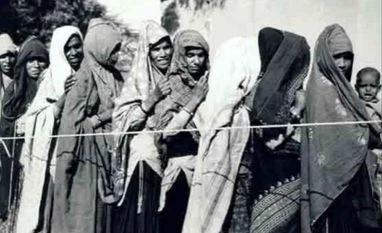
The Election Commission of India (ECI) was established on January 25, 1950, with Sukumar Sen, an Indian Civil Services (ICS) officer, appointed as its chief in March of that year. Shortly after Sen's appointment, Prime Minister Nehru announced the election would be held in the spring. This posed a significant challenge as neither the government nor the people had prior experience with such an undertaking. Furthermore, India adopted adult suffrage, granting all adult citizens the right to vote without discrimination based on caste, colour, creed, or religion.
Despite initial reservations, the Constituent Assembly embraced adult suffrage, recognising its inherent challenges. Sen and his team embarked on a door-to-door campaign to register voters. However, due to strict guidelines, nearly 2.8 million women, primarily from Bihar, Uttar Pradesh, Madhya Pradesh, and Rajasthan, were excluded from the electoral rolls for failing to disclose their proper names.
In total, 173.2 million voters, excluding Jammu and Kashmir, were registered, with women constituting 45 per cent of the electorate.
Ballot boxes and party symbols
Given the high illiteracy rate, the ECI faced the challenge of ensuring voters could easily identify their choice. To address this, specific symbols were assigned to each party contesting the election. For instance, the Congress, led by Nehru, got the election symbol of a pair of oxen carrying a yoke, while the All India Forward Bloc, associated with Netaji Subhas Chandra Bose, used the hand symbol.
Initially, the ECI considered using different coloured ballot boxes for each candidate but ultimately settled on a separate box for each candidate, with the candidate's symbol affixed. Approximately 1.9 million steel ballot boxes were manufactured for this purpose. Additionally, 620 million ballot papers were printed, each the size of a Rs 1 currency note, with "Election Commission India" printed on them.
The voters were instructed to place the ballot papers in the box assigned to a particular candidate, and the ballot was secret.
The first vote
After numerous delays, voting for the first election commenced in October 1951, spanning 68 phases. The first votes were cast in the tehsils of Chini and Pangi in Himachal Pradesh. Subsequent voting took place across the country, with the residents of Thiruvalla and Thrissur Lok Sabha constituencies in Travancore-Cochin (present-day Kerala) casting their votes on December 10,1951.
The next state in the electoral cycle was Bilaspur.
In Travancore-Cochin, Orissa, Madhya Pradesh, Hyderabad, and Punjab, polling began in December 1951. The rest of the states went to the polls in January 1952. Polling in the northern hilly areas of Uttar Pradesh occurred in the latter half of February 1952, after the snow had melted.
The voter turnout varied, with the highest recorded in the Kottayam parliamentary constituency in Kerala at 80.5 per cent, and the lowest in Shahdol in present-day Madhya Pradesh at 18 per cent. Despite high levels of illiteracy, the overall voter turnout for the country was 45.7 per cent.
Results and reflection
Counting commenced after the election, culminating in the declaration of results on April 2,1952. The Congress emerged victorious, securing 364 of the 489 Lok Sabha seats. Key figures like Nehru and the Bharatiya Jan Sangh's Syama Prasad Mookerjee won, while Morarji Desai suffered a defeat in Bombay. Notably, BR Ambedkar lost to his former personal assistant, Narayan Sadoba Kajrolkar, in the Bombay North Central seat.
Communist candidate Ravi Narayan Reddy received the largest majority, surpassing even Nehru.
India's first election, costing Rs 10.45 crore, was hailed as a monumental success by Chief Election Commissioner (CEC) Sen, who termed it the "biggest experiment in democracy in human history."
Nehru, echoing this sentiment, expressed newfound respect for the supposedly "illiterate voter," solidifying his belief in adult suffrage in India.

 "Remembering India's first general election: Challenges, triumphs, and more")


 Connect with us on WhatsApp