Decoded: How the probe against Justice Yashwant Varma will unfold

The move follows a Supreme Court in-house inquiry - set up by the then chief justice of India, Justice Sanjiv Khanna - which found Justice Varma guilty
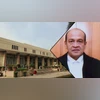
Justice Yashwant Varma
Once MPs moved a valid impeachment motion, the Speaker was required by law to set up a three-member committee.” | Photo: Delhi HC
Bhavini Mishra New Delhi
4 min read Last Updated : Aug 17 2025 | 11:50 PM IST

Don't want to miss the best from Business Standard?

Lok Sabha Speaker Om Birla has  constituted a three-member committee to investigate allegations against Justice Yashwant Varma in the  “cash-at-home” controversy, after admitting a motion signed by 146 MPs calling for his removal.
 
The panel comprises Supreme Court judge, Justice  Aravind Kumar; Madras High Court Chief Justice Manindra Mohan Shrivastava; and senior advocate B V Acharya of the  Karnataka High Court. Birla said the committee would deliver its report “as early as possible”, and that the removal motion would remain pending until then.
 
What prompted the need for a new panel?
 

Also Read

The move follows a Supreme Court  in-house inquiry — set up by the then chief justice of India, Justice Sanjiv Khanna — which found Justice Varma guilty.  The case centres on the alleged recovery of unaccounted cash from premises linked to the former Delhi high court judge. Justice Varma came under scrutiny after the discovery on March 14 of burnt cash in an outhouse of his official residence in the national capital. He was subsequently transferred to the Allahabad High Court, and an internal inquiry was initiated. 
That in-house process, however, was limited to fact-finding and carried no binding effect on Parliament, according to experts. 
They pointed out that a fresh parliamentary committee became a constitutional requirement once the impeachment motion was admitted.
 
“Under the Judges (Inquiry) Act 1968,  the only constitutionally valid route to remove a sitting judge is via Parliament, and not an internal judicial process,” said Alay Razvi, managing partner at Accord Juris. “The Supreme Court’s in-house inquiry, while 
administratively valid, cannot itself remove a judge. 
 
Once MPs moved a valid impeachment motion, the Speaker was required by law to set up a  three-member committee.” 
What will the parliamentary panel examine?
 
The Lok Sabha committee will now conduct a full-fledged inquiry: Framing definite charges, examining witnesses and documents, and giving Justice Varma the chance to mount his defence. “Its findings are statutory and  decisive,” said Tushar Agarwal, founder of C.L.A.P. Juris. “The in-house panel is advisory, while the Lok Sabha committee’s report forms the legal basis for any impeachment proceedings.” If the panel upholds the charges, both Houses of parliament will need to pass the removal motion with a two-thirds majority before Justice Varma can be formally removed. If it finds the charges unsubstantiated, the process lapses regardless of the Supreme Court’s earlier recommendation.
 
Impeachments are rare in India
 
Judicial impeachments in India are exceptionally rare. Since Independence, only a handful of judges have faced such proceedings. 
In 1993, Justice V Ramaswami of the Supreme Court became the first judge to face an impeachment motion, but it failed in the Lok Sabha after then ruling Congress abstained.
 
In 2011, the Rajya Sabha voted overwhelmingly in favour of removing Justic Soumitra Sen of the Calcutta High Court, but he resigned before the motion could reach the Lok Sabha. Proceedings were also initiated against P D Dinakaran of the Sikkim High Court and C V Nagarjuna Reddy of the Andhra Pradesh High Court, but both stalled before completion.
 
No judge in India, so far, has ever been successfully and formally removed by Parliament.
 
What happens next? 
With the committee in place, the process will depend on the timeline of its inquiry. If its report establishes “proved misbehaviour or incapacity” as required under Articles 124(4), 217 and 218 of the Constitution, the motion for removal will move to Parliament for a vote. Only after it is passed by both Houses with the prescribed special majority can the President issue an order formally removing Justice Varma.
 
Until then, the impeachment motion remains in abeyance.
 
“If the parliamentary committee’s report does not find substantiated charges, the process ends, regardless of the in-house panel’s views,” Razvi said.

One subscription. Two world-class reads.

Already subscribed? Log in

Subscribe to read the full story →
*Subscribe to Business Standard digital and get complimentary access to The New York Times

Smart Quarterly

₹900

3 Months

₹300/Month

SAVE 25%

Smart Essential

₹2,700

1 Year

₹225/Month

SAVE 46%
*Complimentary New York Times access for the 2nd year will be given after 12 months

Super Saver

₹3,900

2 Years

₹162/Month

Subscribe

Renews automatically, cancel anytime

Here’s what’s included in our digital subscription plans

Exclusive premium stories online

  • Over 30 premium stories daily, handpicked by our editors

Complimentary Access to The New York Times

  • News, Games, Cooking, Audio, Wirecutter & The Athletic

Business Standard Epaper

  • Digital replica of our daily newspaper — with options to read, save, and share

Curated Newsletters

  • Insights on markets, finance, politics, tech, and more delivered to your inbox

Market Analysis & Investment Insights

  • In-depth market analysis & insights with access to The Smart Investor

Archives

  • Repository of articles and publications dating back to 1997

Ad-free Reading

  • Uninterrupted reading experience with no advertisements

Seamless Access Across All Devices

  • Access Business Standard across devices — mobile, tablet, or PC, via web or app

Topics :Om BirlaSupreme CourtImpeachment

Next Story



