12 years of NDA: A mixed record in foreign trade, tariffs and FTAs

While services exports have expanded sharply over the past decade, India's share of global merchandise exports has remained largely unchanged despite multiple trade policy reforms

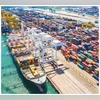
Container port
Representative Image (Image: Shutterstock)
TNC Rajagopalan
3 min read Last Updated : Jun 14 2026 | 10:42 PM IST
Last week, Narendra Modi became the longest continuously serving elected Prime Minister of India. As expected, the occasion brought tributes to his leadership and policies, and reminders of unfinished work. For exporters and importers, his government’s record is mixed: Neither as impressive as admirers claim, nor as disappointing as critics suggest.
 
In 2015, better targeted schemes such as the Focus Product Scheme and Focus Market Scheme were replaced with the Merchandise Exports from India Scheme (MEIS). 
 
A WTO panel ruled that MEIS was inconsistent with WTO disciplines. Although the government appealed to the dysfunctional WTO Appellate Body, it eventually withdrew MEIS and introduced the Remission of Duties and Taxes on Exported Products scheme. Similarly, the Served from India Scheme gave way to the Services Exports from India Scheme, which was discontinued after 2019.
 
The numbers tell a sobering story. From 2013-14 to 2025-26, merchandise exports rose from about $313 billion to $442 billion. Merchandise imports rose faster, from about $451 billion to $775 billion. More importantly, India’s share in global merchandise exports remained stuck around 1.8 per cent.  
Services did much better. Services exports rose from about $152 billion to $418 billion, while services imports increased from about $79 billion to $204 billion. India’s share in global services exports is now about 4.3 percent. In short, goods exports underperformed, while services exports gained strength. Meanwhile, the rupee weakened from ₹58.6 to ₹95.4 per dollar, making the dollar about 63 per cent costlier in rupee terms.
 
On imports, the government raised tariff and non-tariff barriers to protect domestic capacity and reduce import dependence. The simple average applied tariff is now around 15.8 per cent. Anti-dumping, safeguard and countervailing duties were imposed on hundreds of items. Quality control orders, minimum import prices, import licensing and registration requirements were used more frequently. Such measures helped some large domestic producers but hurt downstream user industries, especially MSMEs, by raising input costs for them — a poor policy choice.GST was a major structural reform that simplified refund procedures for exporters. Refund of IGST paid on export goods and services, and refund of unutilised input tax credit on exports under LUT/bond, became more system driven.  
Yet exporters also faced avoidable costs because of the pre-import condition in advance authorisations and restrictive conditions for rebate of GST paid on export goods. The reform helped, but implementation was not always trade friendly. The PLI scheme in 14 sectors was another important intervention. It has worked in electronics, particularly mobile phones. However, results in several other sectors are modest. Even in electronics, domestic value addition remains around 18 to 20 percent. Apparently, assembly has grown faster than deeper manufacturing. 
The government invested heavily in roads, railways, dedicated freight corridors, ports and airports. Official estimates now place logistics costs at about 8 percent of GDP, below the commonly cited earlier figures of 13-14 percent. After walking out of RCEP, the mega trade deal in East Asia, the government pursued FTAs with richer countries aggressively. However, their outcomes remain uneven; utilisation by exporters is limited, while imports under preferential routes have grown faster in several agreements. The next phase must move from protection to competitiveness: lower input costs, simpler procedures, credible FTA monitoring, faster refunds, and predictable regulation. India cannot build export strength by making imports costly; it must make domestic production competitive.
   

One subscription. Two world-class reads.

Already subscribed? Log in

Subscribe to read the full story →
*Subscribe to Business Standard digital and get complimentary access to The New York Times

Smart Quarterly

₹900

3 Months

₹300/Month

SAVE 25%

Smart Essential

₹2,700

1 Year

₹225/Month

SAVE 46%
*Complimentary New York Times access for the 2nd year will be given after 12 months

Super Saver

₹3,900

2 Years

₹162/Month

Subscribe

Renews automatically, cancel anytime

Here’s what’s included in our digital subscription plans

Exclusive premium stories online

  • Over 30 premium stories daily, handpicked by our editors

Complimentary Access to The New York Times

  • News, Games, Cooking, Audio, Wirecutter & The Athletic

Business Standard Epaper

  • Digital replica of our daily newspaper — with options to read, save, and share

Curated Newsletters

  • Insights on markets, finance, politics, tech, and more delivered to your inbox

Market Analysis & Investment Insights

  • In-depth market analysis & insights with access to The Smart Investor

Archives

  • Repository of articles and publications dating back to 1997

Ad-free Reading

  • Uninterrupted reading experience with no advertisements

Seamless Access Across All Devices

  • Access Business Standard across devices — mobile, tablet, or PC, via web or app

Topics :Narendra Moditrade policyExports

Next Story