As renewables replace coal, India's Viksit Bharat target faces energy test

Changes in energy mix will majorly impact the growth in coal demand, mining activity, and associated employment
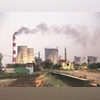
Engineering conglomerate Larsen & Toubro (L&T) on Tuesday informed the exchanges that it has received a ‘limited notice to proceed' (LNTP) from NTPC for setting up thermal power plants worth over Rs 15,000 crore.
Rising electricity demand driven by India's goal to become a developed country will prevent a decline in absolute coal consumption by 2047, a new analysis finds
Anvesha AdhikariNavyaAnjali GoyalDr Anandajit GoswamiRakesh Kacker
5 min read Last Updated : Sep 01 2025 | 3:33 PM IST
India aims to be a developed country (Viksit Bharat) by 2047 and achieve its net zero emissions goal by 2070. A $30-trillion economy in 2047 on a net-zero pathway to 2070 implies rising demand for electricity, with significant increase in the share of renewable energy in the electricity generation mix and reduced coal dependence. 
The current share of steam-based electricity is more than 70 per cent in the generation mix. Currently, 75 per cent of India’s domestic coal and a significant share of imported coal is consumed by thermal power plants. ACPET, through its empirical-based regression framework backed by artificial intelligence and machine learning models, has generated several possible trajectories of coal required for electricity generation towards 2047. 
Multiple scenarios with varying shares of manufacturing, gross domestic product (GDP) growth, and increasing share of renewable energy sources (REs) comprising wind, solar, small hydro, and biomass (excluding large hydro) in the generation mix are being considered in the model. The inference is that coal’s share in electricity generation may decrease only beyond 2047 but absolute consumption of thermal coal will not decline. 
Coal demand
 
In 2023-24, out of the 909 million tonnes (MT) of non-coking coal dispatched, 859.34 MT went to the power sector (utilities and captive plants). According to the National Electricity Plan 2022-32, the projection for electricity demand is likely to be 1907.8 billion units (BU) for 2026-27 and 2473.7 BU for 2031-32. Thus, steady growth is projected for electricity demand in the coming decades, with corresponding rise in coal demand, though India will move towards a Net Zero pathway in the long term by 2070.
 
Using a sector-based regression analysis, ACPET’s model — backed by robustness and accuracy checks of estimation — studies how GDP growth of 7 per cent per annum till 2047, with reference to Niti Aayog’s IESS model, will impact electricity demand under varying sectoral shares of agriculture, manufacturing, and services in GDP. Added are scenarios of increasing REs share to determine impact on coal demand for electricity generation towards 2047. Results indicate Viksit Bharat will witness a surge in electricity demand, crossing 7,000 BU by 2047, to meet the requirements of manufacturing-led GDP growth, improved living standards and employment.
 
In the accompanying tables, projections have been duly adjusted for reduced transmission/ distribution losses, improved efficiency across all sectors, including CUF (capacity utilisation factor) of REs. Manufacturing being the most energy-intensive sector, alternate scenarios have been suggested using levers of change in the sectoral share of manufacturing in GDP and REs in the generation mix to derive steam (coal)-based electricity generation required by 2047. A combined share of nuclear and large hydro at 15 per cent of generation mix is retained till 2047.  Table 1 
 
In a 30 per cent share of manufacturing in GDP scenario, steam-based electricity generation required could vary from 2083 BU with REs share at 60 per cent in the generation mix to 4,582 BU with 30 per cent REs share in the generation mix.
 
Table 2 reflects projections for coal demand required for electricity generation by 2047 under various scenarios, corresponding to Table 1.  Table 2 
 
Even if REs’ share increases to 50 per cent in the generation mix, overall rise in demand for electricity in a Viksit Bharat 2047 scenario will dictate an increase in coal demand in absolute terms, ranging from 1.71 billion tonnes to 1.80 billion tonnes, just for electricity generation. If REs’ share remains at 15 per cent in the generation mix against surging electricity demand from the three economic sectors, coal required for electricity could rise to 3.6 billion tons, a threefold increase from current levels.
 
The results endorse the India government’s policy of expanding domestic coal production for energy security and faster development. However, installed capacity of thermal power plants also needs to be ramped up. Thermal power capacity required may range from 400 Gigawatt to 1000 GW under a Viksit Bharat scenario, depending on how REs share in generation mix grows. A desired REs share of 50 per cent in generation mix implies installed REs capacity of more than 1200 GW, with corresponding pumped/ battery storage.
 
Parallel investment planning for transmission and distribution is an imperative, backed by pollution control measures for coal-based thermal power generation to keep India on a net-zero pathway. A backup of adequate thermal power capacity will ensure India’s development goals are not compromised, given the gestation period and scale of investment required in creating REs capacity, transmission and distribution infrastructure.
 
The coal sector is highly labour-intensive. It is estimated that over 13 million people are directly or indirectly employed in the coal-based ecosystem. In mining districts, communities have evolved over generations around coal operations, with limited alternative economic opportunities. For such regions, a transition away from coal is not merely an environmental policy shift — it represents a profound socio-economic transformation.  Strategic plan
 
Changes in energy mix will majorly impact the growth in coal demand, mining activity, and associated employment. A coal phase-down could lead to loss of livelihoods for a significant number of workers, which can also impact their overall well-being. Understanding the trajectory of coal demand in the coming decades is crucial for timely planning towards a people-centric just energy transition.
 
India needs a strategic plan to repurpose coal-based assets, retrain and reskill workers, create new employment avenues, and ensure human resource redeployment in clean energy sectors such as solar and wind to provide for the welfare of such a large coal-based community. 
 
Anvesha Adhikari and Navya are junior research associates at Ashoka Centre for People Centric Energy Transition (ACPET); Anjali Goyal is consultant, ACPET; Dr. Anandajit Goswami is research fellow, ACPET, and Rakesh Kacker is senior consultant, ACPET

One subscription. Two world-class reads.

Already subscribed? Log in

Subscribe to read the full story →
*Subscribe to Business Standard digital and get complimentary access to The New York Times

Smart Quarterly

₹900

3 Months

₹300/Month

SAVE 25%

Smart Essential

₹2,700

1 Year

₹225/Month

SAVE 46%
*Complimentary New York Times access for the 2nd year will be given after 12 months

Super Saver

₹3,900

2 Years

₹162/Month

Subscribe

Renews automatically, cancel anytime

Here’s what’s included in our digital subscription plans

Exclusive premium stories online

  • Over 30 premium stories daily, handpicked by our editors

Complimentary Access to The New York Times

  • News, Games, Cooking, Audio, Wirecutter & The Athletic

Business Standard Epaper

  • Digital replica of our daily newspaper — with options to read, save, and share

Curated Newsletters

  • Insights on markets, finance, politics, tech, and more delivered to your inbox

Market Analysis & Investment Insights

  • In-depth market analysis & insights with access to The Smart Investor

Archives

  • Repository of articles and publications dating back to 1997

Ad-free Reading

  • Uninterrupted reading experience with no advertisements

Seamless Access Across All Devices

  • Access Business Standard across devices — mobile, tablet, or PC, via web or app

Topics :SupplementsBS OpinionBS Specialbs eventsinfrastructureEmissions

Next Story



