Thank you, Mr Trump: Why India has changed its mind on trade deals

With the UK, EFTA deals already in the bag, EU on the way, almost every member of RCEP except China signed up, and even restrictions on China being lifted, India has changed its mind on trade

Trump Tariffs, Tariffs, Indian export, trade
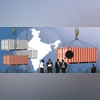
Trump’s trade brinkmanship may hurt India in the short run, but it has jolted Delhi into its boldest reform push in decades — proving crisis can be a catalyst. | Illustration: Ajaya Mohanty
Shekhar Gupta
7 min read Last Updated : Jan 10 2026 | 9:30 AM IST
There’s one part of me that wants to say: “Thank you Donald Trump for keeping that trade deal with India somewhere in your bottom drawer if not deep freeze”. Because if you hadn’t, the flurry of substantive economic reform, not seen since 1991, would not have come. Think of the audacity of the new labour Codes, for example. 
An early deal, even one by July last year — the period US Commerce Secretary Howard Lutnick is referring to — between the US-UK deal (June 16) and US-Vietnam deal (July 2) would have India smugly declare victory and sit back in comfortable cruise control. This hadn’t been a government showing the stomach for any risky reform yet. And the few it tried, it retreated from without a fight. Think the new land acquisition Bill, farm laws, all withdrawn and labour Codes simply put on the back burner in subsequent  risk aversion. 
There was some reform on economic governance, including the cleaning of public sector banks’ balance sheets, consolidation, and the bankruptcy regime. But this period also saw the return of the big state with its mai-baap protection. Duties (more fashionable as tariffs now) grew and a new regime of quality control orders (QCOs) came up as a humongous non-tariff protective wall. One sector of Indian industry after another lobbied and collected these. 
Only a deep state with the brilliance of Indian civil services could’ve designed these. These are probably what Mr Trump kept referring to as India’s “obnoxious” non-tariff barriers. Their time is over. These are now being rolled back in the kind of alacrity, if not panic, that seizes school kids if the teacher walked in after a loo break and caught them watching Netflix on their phones. A civil servant as powerful, experienced and trusted as former cabinet secretary Rajiv Gauba, now positioned in the NITI Aayog to drive reform, is leading this rollback project. More power to him. 
But again, thank you Donald Trump. Thank you for not being less nasty, thank you for being such an egomaniac as to blow a most consequential strategic relationship over whether somebody called you or not. And thank you also for continuing to speak your mind, and thank you for having a team that speaks similarly on your behalf. Mr Lutnick is the latest. Straight talk is better than old-fashioned diplomacy— say one thing, mean another. 
If not for Mr Trump, this trade-averse BJP establishment, which reads much more from its own ideological scriptures than Atal Bihari Vajpayee’s, would not have rediscovered the magic of trade deals. This, after it had spent nearly a decade burning up what it inherited, as also the Bilateral Investment Treaties (BITs). Now, with trade deals with the UK and EFTA (European Free Trade Association) already in the bag, the EU on the way, almost every member of the RCEP (Regional Comprehensive Economic Partnership) except China signed up, and even restrictions on China being lifted, India has changed its mind on trade. Thank you, Mr Trump — yet again. 
Anything less direct and offensive, less than Trump at his worst, and we’d risk our self-congratulatory establishment going into complacent chill. Seven per cent growth with negligible inflation combined with hard Hinduised nationalism and efficient welfare delivery makes for a killer combo electorally. So why risk rocking your own boat? This government was chasing 272 in five years and batting at 180 for one in its second year — until Mr Trump started to bowl from the Pennsylvania Avenue end and reminded us: Playing it safe is no option, survival is tough, so score, whatever the risk. 
There was always an expectation that Mr Trump would use trade as an instrument of policy. But India failed to anticipate the use of tariffs as his new weapon of mass destruction (WMD). To be fair, so did the rest of the world. It is just that India had been the most complacent and trade-averse and probably believed that strategic interest would drive this relationship in Mr Trump’s second term. That strategic aspect, on the contrary, turned on us as Pakistan returned to the White House after Operation Sindoor. Any residual goodwill between Mr Modi and Mr Trump vaporised in the “where’s my Nobel Prize heat.” 
India surely could not have recommended him for the Nobel, but saying thank you for facilitating the ceasefire by drumming sense in these “stupid Pakistani heads” before we broke them, was worth thinking about. Counting on deeper security interests to override this was a strategic error. 
There’s also the other side of me that acknowledges the damage this continuing crisis is doing to the millions of jobs it might potentially incinerate in low-wage, mass-employment sectors like fisheries, garments, hosiery, and gems and jewellery-making. So far these sectors have survived with some state help and some lingering momentum from the past. But another three months, and you are looking at mass layoffs in these sectors. India, therefore, cannot carry on like this for too long. Solutions have to be found. 
That doesn’t mean however that India play supplicant to Mr Trump in public as he expects from every leader except Xi Jinping and Vladimir Putin. But, India can be more flexible in several areas sensitive for Mr Trump. His farm lobby, for example. I know that the instinctive opposition in India comes from a fear this would wipe out Indian agriculture or bring in a flood of GM products that India still bans (unwisely in my long-held view). 
There are ways around this without being offensive or rigid. See how the US embassy in Dhaka is celebrating the arrival of just 58,000 tonnes of American corn. That’s chicken feed, literally. India is a net corn importer, mostly for poultry. What is the problem with importing a sizeable amount of corn, if only to squeeze it for ethanol and chicken feed? Don’t tell me we cannot feed our poultry GM feed. GM cotton seed husk is already integral to our cattle feed. And oil drawn from it has been in our food chain for 23 years. 
The world is finding ways of dealing with Mr Trump. At least by now you know his method and style. You will need to give him some harmless wins, without fawning publicly. There is some clamour to go and lock horns as Indira Gandhi did with Richard Nixon. That, however, was a different time and context. The Cold War raged and Indira Gandhi had the Soviet Union, at the peak of its power, as a treaty-bound ally. It is a different world and new India. You could ignore Nixon’s fulminations, but not Mr Trump’s now when India is economically and strategically so integrated with the US and global systems. 
Meanwhile, as you wait for the moves as Sergio Gor takes office as US Ambassador next week, keep pushing the hard reforms because this is a once-in-a-generation crisis. 
Postscript: Two stories from India-US trade negotiations folklore. The first, on Rajiv Gandhi’s meeting with Ronald Reagan at the Oval Office in 1987. As Rajiv picked an almond from the bowl to munch, Reagan asked, “Prime Minister, what will it take for American almonds to be sold in India?” Tells you something about the Republicans and their concern for their farmer base.
The second is a story that the late Abid Hussain, commerce secretary and later ambassador to Washington, used to tell. Once, he said, he told his minister V P Singh: “Sir, let’s give our country a slogan — export or perish.” “Do no such thing, Abid Sahib,” VP Singh said, “or this country may just decide to collectively perish.” I wrote this in a National Interest while they were around and got laughs from both. 
We’ve demolished many phobias in the four decades since. The fear of free trade should be next. 
By special arrangement with ThePrint

One subscription. Two world-class reads.

Already subscribed? Log in

Subscribe to read the full story →
*Subscribe to Business Standard digital and get complimentary access to The New York Times

Smart Quarterly

₹900

3 Months

₹300/Month

SAVE 25%

Smart Essential

₹2,700

1 Year

₹225/Month

SAVE 46%
*Complimentary New York Times access for the 2nd year will be given after 12 months

Super Saver

₹3,900

2 Years

₹162/Month

Subscribe

Renews automatically, cancel anytime

Here’s what’s included in our digital subscription plans

Exclusive premium stories online

  • Over 30 premium stories daily, handpicked by our editors

Complimentary Access to The New York Times

  • News, Games, Cooking, Audio, Wirecutter & The Athletic

Business Standard Epaper

  • Digital replica of our daily newspaper — with options to read, save, and share

Curated Newsletters

  • Insights on markets, finance, politics, tech, and more delivered to your inbox

Market Analysis & Investment Insights

  • In-depth market analysis & insights with access to The Smart Investor

Archives

  • Repository of articles and publications dating back to 1997

Ad-free Reading

  • Uninterrupted reading experience with no advertisements

Seamless Access Across All Devices

  • Access Business Standard across devices — mobile, tablet, or PC, via web or app

Topics :Donald TrumpTrump tariffsUS India relations Trade dealsNew Labour CodesEconomic reformsBS Opinion

Next Story