Home / World News / Why Asim Munir's third US trip may cost him support of Pakistanis
Why Asim Munir's third US trip may cost him support of Pakistanis
Pakistan's military chief Asim Munir is expected to travel to Washington for a third time in six months, amid discussions on a proposed US-backed force to stabilise Gaza
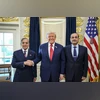
President Donald Trump during a meeting with Pakistan Prime Minister Shehbaz Sharif and Field Marshal Asim Munir at the White House.(File Photo: PTI)
3 min read Last Updated : Dec 17 2025 | 4:38 PM IST
Pakistan’s military chief Asim Munir is expected to visit Washington in the coming weeks for his third trip to the United States in six months, according to a Reuters report. The visit is likely to include a meeting with US President Donald Trump and discussions on contributing Pakistani troops to a proposed Gaza stabilisation force, the report said.
Analysts cited in the report said the move could trigger domestic backlash in Pakistan, as Munir, the country’s most powerful military leader in decades, faces growing scrutiny over his expanding authority and foreign policy role.
Trump’s reported 20-point Gaza plan includes a force drawn from Muslim countries to oversee a transition period focused on reconstruction and economic recovery in the war-ravaged Palestinian territory. The mission would also involve efforts to demilitarise Islamist terror group Hamas, a prospect that has made several Muslim countries cautious due to the risk of being drawn into the conflict and angering their pro-Palestinian citizens, the report said.
Munir builds closer ties with Trump
Recently, Munir has been at the forefront of rebuilding Pakistan-US ties, which had been strained since Trump's first presidency. In June, he was hosted for a White House lunch, which marked the first time a US president met Pakistan’s army chief alone without civilian leaders.
“Not contributing could annoy Trump, which is no small matter for a Pakistani state keen to remain in his good graces, especially to secure US investment and security assistance,” said Michael Kugelman, senior fellow at the Atlantic Council, as quoted by Reuters.
Munir's tough test
Pakistan, the world’s only Muslim-majority nuclear-armed country, has a battle-hardened military shaped by three wars with India and its role in the Afghanistan war. Pakistan’s Foreign Minister Ishaq Dar said last month that Islamabad could consider contributing troops for peacekeeping purposes, but added that disarming Hamas was “not our job”.
Munir was elevated to the rank of field marshal after the India-Pakistan military standoff in May this year. Earlier this month, he was appointed chief of the defence forces, placing the air force and navy under his command, and was granted an extension until 2030. Constitutional amendments passed by Pakistan’s civilian government also granted him lifetime immunity from criminal prosecution.
“Few people in Pakistan enjoy the ability to take risks more than Munir. He now has constitutionally protected, unbridled power,” Kugelman said, adding that decisions on participation in any Gaza mission would ultimately rest with him.
Munir faces risks on the home front
In recent weeks, Munir met military and civilian leaders from Indonesia, Malaysia, Saudi Arabia, Turkey, Jordan, Egypt and Qatar, engagements that Reuters said appeared linked to consultations on the Gaza proposal.
At home, however, the prospect of deploying Pakistani troops under a US-backed plan risks fuelling protests by Islamist parties opposed to the United States and Israel. Some of these groups retain major street mobilisation capacity, despite recent crackdowns, including the banning of a hardline anti-Israel Islamist organisation and arrests of its leaders and supporters.
Munir also faces political hostility from supporters of former prime minister Imran Khan, who has been jailed since his public fallout with Pakistan's powerful military.

 "Why Asim Munir's third US trip may cost him support of Pakistanis")

