


Jinnah's tragedy
The discussion of Kashmir in the book is, however, very brief and almost cryptic notwithstanding that Jinnah was at the helm of affairs in Pakistan for a significant part of the first Kashmir War
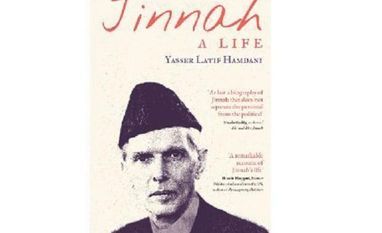 "The argument that Jinnah’s journey from being a national leader to a Muslim leader was forced on him by Nehru, Gandhi and the Congress has been made before")
premium
The argument that Jinnah’s journey from being a national leader to a Muslim leader was forced on him by Nehru, Gandhi and the Congress has been made before
Catastrophic events incubate their own revisionist histories. The partition of India — its attendant bloodbath, the portfolio of unresolved issues and legacy of mistrust and hostility — is a case in point. Earlier narratives were linear: The two-nation theory of the Muslim League led to the partition. In Pakistan this was intrinsic to its founding ideology — that Muslims had always sought a separate homeland and Qaid-i-Azam Muhammad Ali Jinnah was the leader who steered this aspiration to its destiny in the form of separate nationhood. The partition debate and the Jinnah debate were, and are, therefore, inseparable. Ayesha Jalal’s 1985 book, The Sole Spokesman, undermined to an extent this prevailing orthodoxy with its argument that Jinnah was not taking an ideological position with regard to the two-nation theory but was a tactician manoeuvring for position. Partition happened because the Congress did not do what politicians must do — negotiate and compromise. Jalal’s conclusion, thus, was: “It was Congress that insisted on partition. It was Jinnah who was against partition”. If many boggled at this, it is useful to remember that all revisionist accounts stretch themselves and the evidence, often unduly, to challenge prevailing orthodoxies.