Cloud migration is distinctly harder than cloud adoption, says the study. “Megacloud environments are not built optimally for all applications. New apps can be designed to run on these horizontally scaling environments in micro service-based architectures, but existing workloads have structural incompatibilities with these platforms. Force fitting a ‘lift and shift’ approach to migrating some apps, particularly mission critical ones, often results in firms choosing between cost and performance,” adds the study, based on a global survey of 500 IT decision makers at businesses with 500-plus employees. It notes that almost half of the cloud migrators questioned are utilising more than one cloud platform, and also that “many are finding out that each platform has both strengths and weaknesses, and some apps are a better fit for one platform over others”.
Only 32 per cent respondents relied on a single megacloud vendor for migration. The migration of mission critical apps to the cloud continues to grow. Organisations engaged in active cloud projects have migrated 44 per cent of their apps. By 2019, this is likely to reach 62 per cent. Besides, 49 per cent firms want the ability to scale resources and costs up and down. Further, 53 per cent are migrating to the cloud to free up time to focus on their own core differentiators, and 52 per cent have embarked on cloud migration for cost savings.
Deep learning will be critical for best-in-class predictions
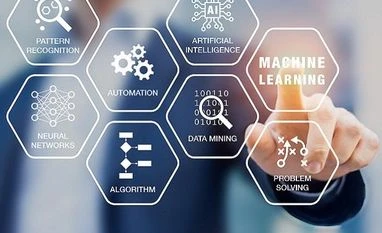
Deep learning, a variation of machine learning (ML), represents the major driver towards artificial intelligence (AI). As deep learning delivers superior data fusion capabilities over other ML approaches, Gartner, Inc. predicts that by 2019, deep learning will be a critical driver for best-in-class performance for demand, fraud and failure predictions. “Deep learning is here to stay and expands ML by allowing intermediate representations of the data,” said Alexander Linden, research vice-president at Gartner. “It ultimately solves complex, data-rich business problems. Deep learning can, for example, give promising results when interpreting medical images in order to diagnose cancer early. It can also help improve the sight of visually impaired people, control self-driving vehicles, or recognise and understand a specific person’s speech.”
Deep learning also inherits all the benefits of ML. Several breakthroughs in cognitive domains demonstrate this. Baidu’s speech-to-text services are outperforming humans in similar tasks; PayPal is using deep learning as a best-in-class approach to block fraudulent payments and has cut its false-alarm rate in half, and Amazon is also applying deep learning for best-in-class product recommendations.
Today, most common use cases of ML through deep learning are in image, text and audio processing — but increasingly also in predicting demand, determining deficiencies around service and product quality, detecting new types of fraud, streaming analytics on data in motion, and providing predictive or even prescriptive maintenance. However, ML and AI initiatives require more than just data and algorithms to be successful. They need a blend of skills, infrastructure and business buy-in.


 "artificial intelligence")