


From farm to kitchen, Nestle opens the doors to Maggi's production
Maggi has regained much lost ground and Nestle believes the time is ripe for further engaging with consumers
 "Maggi")
premium
Whether in lunch boxes or during a late night-binge, Maggi has been a constant companion for many. But, the method of preparing the two-minute instant noodles was kept a secret, even when Maggi was banned in 2015, raising speculation over the quality of ingredients in its production.
Not any more. As the iconic brand turns 35 this year, maker Nestlé has opened the lid. Now, Maggi lovers can watch the entire process of these are prepared in the factory, moving Nestlé a step further towards engaging with consumers by highlighting the safety aspect. The firm has launched a campaign that aims to explain the noodles’ journey, from farm to kitchen.
To begin, there are two promotional videos. The first is a proposed television campaign, kuch achha pak raha hai (something good is getting cooked). The second one takes consumers through a Maggi production unit, where the instant noodles pass through eight stages before getting packed in the retail form.
In 2015, questions were raised over alleged use of carcinogenic elements in the Maggi masala (tastemaker). A video to be released soon will apparently open the secret.
It is a big change. A firm that had kept the doors of its Maggi factories closed for years, opened these for the first time to this publication in December 2015, after Maggi was back on retail shelves. Since then, Maggi has regained much lost ground and Nestlé believes the time is ripe for further engaging with consumers.
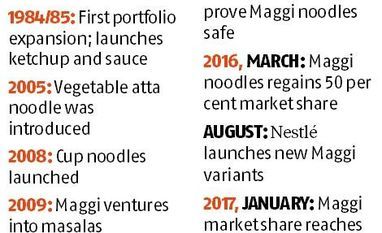
Many, including Nestlé India’s current chairman and managing director, Suresh Narayanan, believe the ban was a crucial point in Maggi’s journey since 1983. It also had wider implications for the instant noodles market. According to data from the World Instant Noodles Association, the world’s fifth-largest market had shrunk 40 per cent in 2015.
Not any more. As the iconic brand turns 35 this year, maker Nestlé has opened the lid. Now, Maggi lovers can watch the entire process of these are prepared in the factory, moving Nestlé a step further towards engaging with consumers by highlighting the safety aspect. The firm has launched a campaign that aims to explain the noodles’ journey, from farm to kitchen.
To begin, there are two promotional videos. The first is a proposed television campaign, kuch achha pak raha hai (something good is getting cooked). The second one takes consumers through a Maggi production unit, where the instant noodles pass through eight stages before getting packed in the retail form.
In 2015, questions were raised over alleged use of carcinogenic elements in the Maggi masala (tastemaker). A video to be released soon will apparently open the secret.
It is a big change. A firm that had kept the doors of its Maggi factories closed for years, opened these for the first time to this publication in December 2015, after Maggi was back on retail shelves. Since then, Maggi has regained much lost ground and Nestlé believes the time is ripe for further engaging with consumers.
Many, including Nestlé India’s current chairman and managing director, Suresh Narayanan, believe the ban was a crucial point in Maggi’s journey since 1983. It also had wider implications for the instant noodles market. According to data from the World Instant Noodles Association, the world’s fifth-largest market had shrunk 40 per cent in 2015.