


India Cements is repositioning itself to meet new demands of industry
Market expansion, exports and specialty cements are at the heart of the company's repositioning
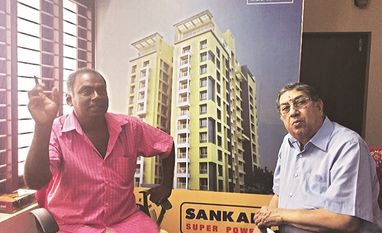 "Vice-chairman N Srinivasan (in picture) and his marketing team have been meeting stockists and dealers to understand the impact of note ban and educate them on using digital modes for transactions")
premium
Vice-chairman N Srinivasan (in picture) and his marketing team have been meeting stockists and dealers to understand the impact of note ban and educate them on using digital modes for transactions
Last Updated : Jun 12 2017 | 12:01 AM IST
India Cements Ltd is repositioning itself to meet modern-day requirements of the industry, with focus on market expansion, exports and specialty cements as key strategies based on its belief that the category has transformed from a commodity business into one driven by brand and quality.
With consolidation of capacity and intense competition in the marketplace, cost leadership is going to be the biggest differentiator, says company vice-chairman N Srinivasan. As one of the leading players, India Cements has to remain strong and efficient to enjoy a command over the market competition. Quality and consistency, along with differentiation are the points in focus that would serve as the company’s USP, he adds. Also, the company feels one cannot compete on pricing anymore but focus on improving product quality, packaging and service engagements with dealers. Therefore, debt recast and reduction, higher capacity utilisation and dealer connect initiatives are also focus areas.
India Cements is refocusing on its core business and related fields such as power and coal. As it wants to restructure or exit non-core businesses, its infrastructure division will not take up any new projects after completing ongoing ones. India Cements Capital will surrender its registration for non-banking finance company to the Reserve Bank of India. “We want to focus on our core business, which is cement and which we are good at,” stresses Srinivasan.
India Cements consolidated its capacity with the merger of two subsidiaries, Trinetra Cement (having 1.5 million tonnes per annum capacity and a 20 Mw power plant at Banswara in Rajasthan) and Trishul concrete products (making ready-mix concrete) with plants in the south. The merger has now come through following the approval from the National Company Law Tribunal.
With the merger, all cement assets have come under India Cements which now has an annual production capacity of 16 million tonnes from eight integrated cement plants, besides two grinding units in Chennai and Parli, Maharashtra. The Banswara plant will raise the overall capacity utilisation (it went up from 63 per cent in 2015-16 to 70 per cent in 2016-17).
The company has also identified speciality cements a growth segment, and introduced a range aimed to improve capacity utilisation and the bottom line. “These will give better margins,” says Srinivasan.
It produces Coromandel SRC (sulphate-resistant cement), a blended cement meant for construction in environs like coastal areas, oil-well cement used for cementing works in the drilling of oils where they are subject to high temperature and pressure.
For oil-well cement, manufactured at Vishnupuram plant in Telangana, India Cements has received the certificate from the American Petroleum Institute (API). This gives it the right to use the official API monogram on the oil-well cement (specific grades) manufactured in Vishnupuram.
It has also launched a range of innovative building material products to improve business prospects of its dealers. These include Coromandel Duralite Autoclaved Aerated Concrete blocks as a substitute for clay bricks, Coromandel White Cement, Sankar Super and Coromandel Super Wall Putty based on white cement.
To safeguard against uncertainties in Tamil Nadu and other southern states, in the last few years the company has ventured into new markets, supported by its facilities in Rajasthan. It had acquired Trinetra, formerly Indo Zinc, earlier.
Even as the market awaits a jump after a double-digit growth clocked 10 years ago, as a proactive marketing initiative, Srinivasan and his marketing team have been meeting stockists and dealers across India. He visited nearly 100 stock points to understand the impact of note ban and educate dealers on using digital modes for transactions.
A key reason behind the company’s increase in capacity utilisation is exports. During 2016-17, overall sales including clinker and cement export of 4.8 lakh tonnes was 110.39 lakh tonnes, registering a growth of 10 per cent over the previous year. In the previous year, it exported 3.25 lakh tonnes. Its export drive will continue, and based on its perfomance, India Cements has been accorded two-star export house status by the Director General of Foreign Trade for five years.
The company is also pursuing a plan to bring down debt level to improve liquidity. In the last two years, it has reduced debt by Rs 500 crore, says Srinivasan. During 2016-17, debt was pared from Rs 3,155 to Rs 2,921 crore. On consolidated basis, including all subsidiares the total debt came down by Rs 196 crore last year. It has also restructured Rs 1,100-crore debts through refinancing over 12 years. This has helped to cut interest by one per cent. It is also expecting ratings upgrade.
Binod Modi, a research analyst at Reliance Securities, says with the group restructuring, India Cements is likely to harness its ready-made concrete business and Trinetra’s cement division in a better way.
Further, recent uptick in realisation and likely demand recovery will bring it healthy traction. Considerable reduction in interest cost with loan repayment/refinancing augurs well for ICL in medium to long-term.
“We believe consistent endeavours to cut its finance cost by reducing debt level and through opting for other means like issuing CPs and rating upgrades will aid India Cements to improve its profitability.”
Further, recent spike in realisation and improving demand outlook will drive a stellar 76 per cent CAGR in its earnings growth through FY17-FY19E,” says Modi.
The risk he foresees is government failure to revive activities in infrastructure and any significant deterioration in the pricing environment and substantial rise in input costs.
Shift in focus to meet new demands
- Vice-chairman N Srinivasan (in picture) and his marketing team have been meeting stockists and dealers to understand the impact of note ban and educate them on using digital modes for transactions
- India Cements is refocusing on its core business and related fields such as power and coal, and restructure or exit non-core businesses
- It has identified speciality cements as a growth segment, and introduced a range aimed to improve capacity utilisation and the bottom line