


ONGC-HPCL merger: A related-party transfusion with its own set of issues
The merger boosted govt coffers but ended the upstream oil major's status as a debt-free company
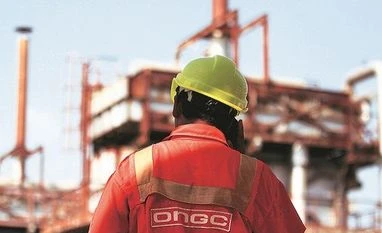 "ONGC-HPCL merger: A related-party transfusion with its own set of issues")
premium
ONGC
A day before the Union Budget for 2018-19 was to be presented, the state-owned Oil and Natural Gas Corporation (ONGC) completed the takeover of Hindustan Petroleum Corporation (HPCL) by buying out the central government’s 51.1 per cent stake in the company. In one stroke, Rs 369.15 billion was added into the government kitty for 2017-18, almost Rs 14 billion more than what the government added in the whole of 2016-17 through the sale of minority stakes in more than a dozen companies.
The strategic sale of HPCL to another state entity enabled the government to avoid all the potential political controversies that surround privatisation of public sector undertakings (PSUs). This safe playing almost resembles the bail-out of Gujarat State Petroleum Corporation when ONGC bought the Gujarat government company’s Deendayal Upadhaya block for Rs 77.38 billion, circumventing the need for an open bid through which private companies, too, could have participated.
In the case of HPCL, the intra-promoter sell-off also means avoiding legislative changes, since the company was formed through nationalisation of private companies over time through an Act of Parliament. For a government struggling on the fiscal front, there was nothing easier than exiting a company completely and handing over its reigns to ONGC, the biggest state-owned company in the same sector, and the largest PSU by market capitalisation after Coal India.
But the deal has consequences for ONGC, too. Six months after the Union government’s in-principle approval of the sale, the ONGC board on January 19, 2018 decided to make a cash purchase of Rs 473.97 per share with a total acquisition cost of Rs 369.15 billion. This deal added a Rs 249.91 billion loan on the books of ONGC which was, till then, a debt-free company on a standalone basis. Moreover, the remaining portion of the pay-out to the government came from the company’s own resources, nearly wiping out its surplus. ONGC had cash reserves of Rs 130.13 billion as on March 31, 2017 and it gave Rs 119.24 billion to the government from these reserves.
How significant is this? “The company has the ability to raise money in future so taking a loan along with almost using its entire surplus should not be a major concern going forward. ONGC can liquidate loan by selling its crossholding in other companies at a later date,” says A K Srinivasan, a former director (finance) at ONGC. Srinivasan was with the company when the government approved the sale in July 2017 and was involved in the structuring of the deal till he retired in October 2017.
The strategic sale of HPCL to another state entity enabled the government to avoid all the potential political controversies that surround privatisation of public sector undertakings (PSUs). This safe playing almost resembles the bail-out of Gujarat State Petroleum Corporation when ONGC bought the Gujarat government company’s Deendayal Upadhaya block for Rs 77.38 billion, circumventing the need for an open bid through which private companies, too, could have participated.
In the case of HPCL, the intra-promoter sell-off also means avoiding legislative changes, since the company was formed through nationalisation of private companies over time through an Act of Parliament. For a government struggling on the fiscal front, there was nothing easier than exiting a company completely and handing over its reigns to ONGC, the biggest state-owned company in the same sector, and the largest PSU by market capitalisation after Coal India.
But the deal has consequences for ONGC, too. Six months after the Union government’s in-principle approval of the sale, the ONGC board on January 19, 2018 decided to make a cash purchase of Rs 473.97 per share with a total acquisition cost of Rs 369.15 billion. This deal added a Rs 249.91 billion loan on the books of ONGC which was, till then, a debt-free company on a standalone basis. Moreover, the remaining portion of the pay-out to the government came from the company’s own resources, nearly wiping out its surplus. ONGC had cash reserves of Rs 130.13 billion as on March 31, 2017 and it gave Rs 119.24 billion to the government from these reserves.
How significant is this? “The company has the ability to raise money in future so taking a loan along with almost using its entire surplus should not be a major concern going forward. ONGC can liquidate loan by selling its crossholding in other companies at a later date,” says A K Srinivasan, a former director (finance) at ONGC. Srinivasan was with the company when the government approved the sale in July 2017 and was involved in the structuring of the deal till he retired in October 2017.