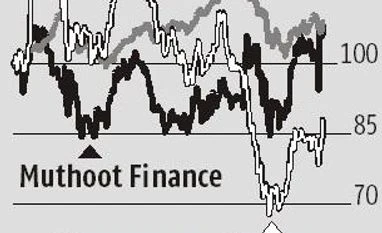
Gold financiers typically lend for up to one year and reliance on short-term commercial paper does not pose a funding challenge to them, compared to some of the other NBFCs and housing companies, where the loan period is typically higher. While Muthoot has over 12 per cent share of commercial papers in its total borrowings as of September 2018, Manappuram has over 25 per cent in the same period. Also, they have satisfactory asset-liability management for up to one year.
This should help Muthoot and Manappuram to shore up their loan book, given the rise in gold prices, and improving demand from the rural economy, among others. While gold prices are up over 4 per cent, sequentially, so far in the December quarter, they have surged by around 11 per cent year on year (YOY). As of September, assets under management (indicating size of loan book) of these lenders rose by 17-25 per cent, YoY.
Not only gold loan book but an expected traction in non-gold advances such as micro-finance and vehicle finance, should also push up the overall asset growth, say analysts. But the caveat is increasing borrowing costs. According to Phillip Capital, the management of Muthoot expects 50 basis points rise in average cost of funds in the remaining period of 2018-19 because of 100 bps rise in funding costs in the December quarter. This could take some sheen away. But again, short tenure of the loan book should help these companies protect their margins as they can pass on the additional costs quickly.
This, along with lower-expected credit cost (provisioning as percentage of average loan book), amid improvement in asset quality, improves earnings potential of the gold financiers, observe analysts. Overall, the stocks look attractive with lower valuation of below two times the one year forward book value.


 "Graph")