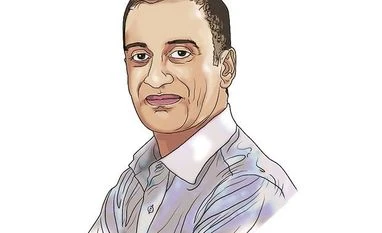
Two years later, Krishnaswamy, the vice-chancellor of the National Law School of India University, has been named among the 20 global members of the Oversight Board, whose job will be to examine content taken down from Facebook and Instagram. In due course, the board will also look at content removal requests in real time.
Krishnaswamy’s appointment is significant given that India is Facebook’s largest user market with over 328 million users per month, and he understands the local context. However, more important is the fact that he is considered among the most respected people in his field, admired by colleagues and former students as a person with impeccable credentials and clarity of thought.
“Sudhir is one of the best choices. He has a mind of his own, has done a lot of research, and is very well respected in the fraternity. I took one of his classes while I was in law school and we really looked forward to those,” said a policy professional who has followed Krishnaswamy's work. A former Rhodes Scholar, Krishnaswamy has taught law at universities in the United Kingdom, India, Australia, and at the Columbia Law School in the United States. In 2019, Krishnaswamy became the youngest vice-chancellor of NLSIU, his alma mater. He has written on a wide range of subjects, including Indian constitutional law, Dalit rights, intellectual property law, and judicial corruption.
Talking to Business Standard, Krishnaswamy said the candidates selection was an “elaborate and multi-stage process”, which took over 18 months, including about four-and-a-half months of talking and interviewing potential candidates. He added that the board comprises of a diverse set of people with different political leanings, which makes it representative of different viewpoints.
“Sudhir always has a fair view of relevant factors to consider when making decisions. The two adjectives that stand out for him, in my mind, are that he’s a pragmatic and articulate person. He can frame complex problems very clearly. He is generally more liberal than conservative. His earlier works have focused on constitutional law and theory; though he has also developed as a public intellectual on policy matters,” said Neeraj Grover, assistant professor at Azim Premji University’s School of Policy and Governance, where he worked with Krishnaswamy, when the latter was its director.
Without pausing to think, Krishnaswamy explained how he sees the issue: “Companies are driven by many motives, including the profit motive... People are also not happy with state regulation because of overreach... Early manifestos of the Internet were all formed on these regulations...what binds these two platforms (Facebook and Instagram) does not apply to the Internet as a whole. So it is a bold experiment... It’s exciting, and has a good chance of succeeding,” he said. The board will make a decision on taken down content within 90 days. Board members have agreed that there might be conflicts, but the goal is to figure out how they will reach an acceptable decision.
In a conflict situation, says another former co-worker, who did not wish to be named, Krishnaswamy is very calm. “So, it is very tough to gauge him. But he has ways in which he shows his displeasure — he lowers his voice even more.”


 "Sudhir Krishnaswamy")