


Will ex-Maruti Suzuki MD Jagdish Khattar's Carnation Auto bloom again?
Former Maruti managing director Jagdish Khattar's first entrepreneurial venture is under corporate insolvency proceedings. A look at what went wrong
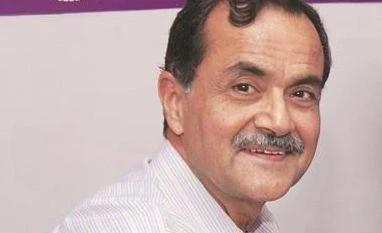 "Jagdish Khattar")
premium
Jagdish Khattar
Jagdish Khattar retired from the position of managing director at country’s largest car-maker Maruti Suzuki in October 2007. At age 65, few would venture into setting up a new business at that age. However, a year later Khattar launched an entrepreneurial venture, Carnation Auto, a multi-brand automobile service network also dealing in used car business.
Almost a decade later, Khattar’s venture struggles to find a profitable road. Carnation was started as a company-owned company-operated network. Upon reaching a number of 24 such outlets, spanning Amritsar in Punjab to Cochin in Kerala, the company realised that that was not the best approach. Car makers were not very keen to make spare parts available in the open market, outside their own workshops. This was another challenge for Carnation. Khattar wanted to have a play between company authorised workshops and local garages by offering car owners a choice between the two, especially in cost.
“The main model business failed. We came at a time when real estate prices were very high. The same locations are today available at 50 per cent rent. We got into them at a peak with the clause for an annual increase. Our monthly rent alone was Rs 10 million. We hired manpower from regular workshops at higher salaries as it was a multi brand model and wider skills were needed. Even though our cost was high but we were substantially affordable compared to workshops of car manufacturers,” said Khattar. The company had set up a showcase facility in Gurgaon with a capacity of 60 bays, paying a rent of Rs 1.5 million a month. The capacity utilisation never reached its potential and this also had to be shut down.
Realising the high risk and low reward associated with this model, Carnation opted to go for the franchisee route in the year 2015. The company-owned outlets were closed after settling all dues and liabilities. The investors -- Premji Invest and Gajaa Investment -- supported the company in this transition.
Almost a decade later, Khattar’s venture struggles to find a profitable road. Carnation was started as a company-owned company-operated network. Upon reaching a number of 24 such outlets, spanning Amritsar in Punjab to Cochin in Kerala, the company realised that that was not the best approach. Car makers were not very keen to make spare parts available in the open market, outside their own workshops. This was another challenge for Carnation. Khattar wanted to have a play between company authorised workshops and local garages by offering car owners a choice between the two, especially in cost.
“The main model business failed. We came at a time when real estate prices were very high. The same locations are today available at 50 per cent rent. We got into them at a peak with the clause for an annual increase. Our monthly rent alone was Rs 10 million. We hired manpower from regular workshops at higher salaries as it was a multi brand model and wider skills were needed. Even though our cost was high but we were substantially affordable compared to workshops of car manufacturers,” said Khattar. The company had set up a showcase facility in Gurgaon with a capacity of 60 bays, paying a rent of Rs 1.5 million a month. The capacity utilisation never reached its potential and this also had to be shut down.
Realising the high risk and low reward associated with this model, Carnation opted to go for the franchisee route in the year 2015. The company-owned outlets were closed after settling all dues and liabilities. The investors -- Premji Invest and Gajaa Investment -- supported the company in this transition.