


Home / India News / Bullet train logo to have a cheetah? Panel picks NID student's entry
Bullet train logo to have a cheetah? Panel picks NID student's entry
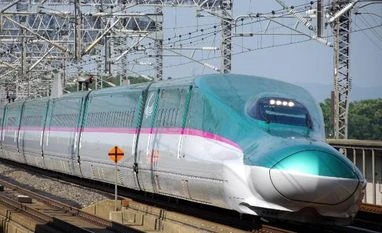
The logo incorporates the outline of a cheetah on a locomotive engine
 "(Photo courtesy: NHSRCL)")
premium
(Photo courtesy: NHSRCL)
Last Updated : Oct 24 2017 | 11:23 AM IST
As Prime Minister Narendra Modi and his Japanese counterpart Shinzo Abe launched the country's first bullet train between Ahmedabad and Mumbai last month, the logo of the train with a cheetah on it has also been reportedly finalised.
According to The Indian Express, a three-member screening committee headed by renowned painter and architect Satish Gujral selected a logo designed by a student of the National Institute of Design (NID) in Ahmedabad from a contest. Apart from Gujral, the committee included a Niti Aayog member and an official from the National High Speed Rail Corporation Limited (NHSRCL).
The contest received an overwhelming response. "The dates for submitting the applications were between April 19 and May 18, and around 100 entries were received by the committee from various states,” The Indian Express quoted a Railway official as saying.
The logo
1. The logo incorporates the outline of a cheetah on a locomotive engine.
2. Blue, red and grey colour are used in the logo.
3. The cheetah reportedly represents speed, while the red and blue lines symbolise calm and reliability
Here are the highlights of the bullet train:
1. The Centre is confident of starting the Ahmedabad-Mumbai bullet train on August 15, 2022, to commemorate the 75th year of India's Independence, a year ahead of its schedule.
2. The bullet train would run at an average speed of 320 km per hour and at a maximum speed of 350 km per hour.
3. It will stop at 12 railway stations on the route but only for 165 seconds each.
4. A 21-km-long tunnel will be dug between Boisar and BKC in Mumbai, of which seven km will be under water.
5. The railways will only require around 825 hectares of land for the project as 92 per cent of the route will be elevated, six per cent would go through tunnels and only the remaining two per cent would be on the ground.
6. The railways would run about around 35 bullet trains when it starts operation with about 70 trips per day. The number of trains would be increased to 105 trains in 2050.
7. The bullet train would have two categories of seats — executive and economy — with the prices comparable with the base AC 2-tier fare of the Rajdhani Express.
8. Initially, the train would have 10 coaches with a seating capacity of 750 passengers. Later, it is proposed to have 16 coaches with a seating capacity of 1,250 passengers.