


Davos 2019 is all about 'Globalization 4.0.' So what is that?
The world has been pursuing some sort of globalization -- the integration of economies through the exchange of goods, people and ideas -- since the dawn of time
 "World Economic Forum 2019")
premium
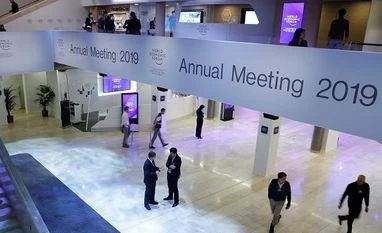
World Economic Forum (WEF) annual meeting for 2019. Photo: Reuters
The organizers of this year’s World Economic Forum have done their traditional best to introduce another buzz phrase as the theme for the annual gathering in the Swiss Alps. So just what is “Globalization 4.0”?
First, a bit of economic history.
The world has been pursuing some sort of globalization -- the integration of economies through the exchange of goods, people and ideas -- since the dawn of time. But economic historians tend to posit we’ve seen three phases of globalization so far.
The first, dating from 1820-1914 came alongside the advent of steam power and the industrial revolution while the second lasted from the end of World War 2 to roughly 1990. That’s when we entered the latest era – a period of what some have dubbed “hyperglobalization” coinciding with the advent of the internet, the fall of the Berlin Wall and the rise of emerging economies such as China and India.
Which brings us to the fourth wave of globalization, which some argue we are now entering.
The simplest way to think about it: If all previous waves were about the trade in goods then the next one is about digitally-enabled services. Or, put in a darker way, if in the rich world the last surge of globalization was about lost blue-collar jobs this one is coming for the white-collar workers.
“That’s what the future of globalization will be and that’s what Globalization 4.0 is,” said Richard Baldwin, whose new book “The Globotics Upheaval’’ offers a sobering take. “It’s the opening of service sectors in rich countries to competition from poor countries with all the pluses and minuses in the service sector that we saw in the manufacturing sector.”
First, a bit of economic history.
The world has been pursuing some sort of globalization -- the integration of economies through the exchange of goods, people and ideas -- since the dawn of time. But economic historians tend to posit we’ve seen three phases of globalization so far.
The first, dating from 1820-1914 came alongside the advent of steam power and the industrial revolution while the second lasted from the end of World War 2 to roughly 1990. That’s when we entered the latest era – a period of what some have dubbed “hyperglobalization” coinciding with the advent of the internet, the fall of the Berlin Wall and the rise of emerging economies such as China and India.
Which brings us to the fourth wave of globalization, which some argue we are now entering.
The simplest way to think about it: If all previous waves were about the trade in goods then the next one is about digitally-enabled services. Or, put in a darker way, if in the rich world the last surge of globalization was about lost blue-collar jobs this one is coming for the white-collar workers.
“That’s what the future of globalization will be and that’s what Globalization 4.0 is,” said Richard Baldwin, whose new book “The Globotics Upheaval’’ offers a sobering take. “It’s the opening of service sectors in rich countries to competition from poor countries with all the pluses and minuses in the service sector that we saw in the manufacturing sector.”