


How a leaderless anti-CAA stir is mobilising volunteers, doctors & lawyers
Everything from a stage microphone to speakers to posters has been crowd-sourced
 "anti CAA protest")
premium
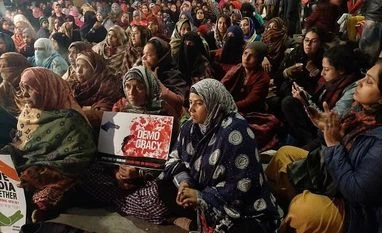
A sit-in protest at Delhi’s Shaheen Bagh, where women have been leading the protest since December 15. Photo: Somesh Jha
Students running to safety in a fog of tear gas, police swinging lathis on them, and young men being hustled away into police vans and taken into custody.
These images of hapless students from Delhi’s Jamia Millia Islamia University have now become synonymous with the anti-citizenship law protests that began with the police bursting into the library of the university on December 15.
Days later, when violence broke out in the National Capital’s Daryaganj area as protesters clashed with the police, and dozens of students, including minors, were detained and injured, the word spread quickly.
Twenty nine-year-old lawyer Mishika Singh’s phone went abuzz as messages about protesters being injured and detained poured in from everywhere. By midnight over 50 pro bono lawyers had arrived at the Daryaganj police station, ready to provide legal assistance to those arrested.
“By 7.30 pm, we had got to know that the situation had become bad and I was among the first few lawyers to reach the Daryaganj police station,” says Singh. “The police wasn’t letting us meet the detainees, which is a statutory right.”
By then, Singh had already formed a group on messaging platform WhatsApp by the name “Lawyers for Detainees”, which now has over 250 volunteers.
Driven by a sense of public service, some lawyers went to the house of the metro magistrate, who issued late-night directions to the Daryaganj police station to let detainees meet lawyers, release the minors and to provide medical aid to the injured. Following suit, some other lawyers went to the Seemapuri police station, where too the protests had turned violent, the same night and got a similar order passed from the relevant magistrate at 3 am. They managed to get all minors and some adult detainees released.
In what can be said as a citizen-led crowd-sourced movement, a diverse group of citizens, including lawyers, doctors, civil rights activists, artists and students from across institutions and religious groups have joined hands to drive or aid the anti-citizenship protests, especially in New Delhi.
Since December 19, when Singh-led the “Lawyers for Detainees” communication group was formed, it has been helping out those who have been detained in other parts of the country as well. It has now expanded its role to providing legal aid to bridging the information gap by passing on updates through Twitter and WhatsApp about the instances of violence during protests, particularly in Uttar Pradesh and Bihar.
There are over 250 young lawyers either helping or on standby in New Delhi alone, where hundreds of people have been detained in the past few days. They have been helping victims in filing petitions in courts, accompanying them to police stations in different parts of the city, and, in some instances, even offering monetary support for legal proceedings.
Lawyers though are not the only ones heading into the maelstrom. Doctors, psychiatrists and trauma teams too have pitched in.
These images of hapless students from Delhi’s Jamia Millia Islamia University have now become synonymous with the anti-citizenship law protests that began with the police bursting into the library of the university on December 15.
Days later, when violence broke out in the National Capital’s Daryaganj area as protesters clashed with the police, and dozens of students, including minors, were detained and injured, the word spread quickly.
Twenty nine-year-old lawyer Mishika Singh’s phone went abuzz as messages about protesters being injured and detained poured in from everywhere. By midnight over 50 pro bono lawyers had arrived at the Daryaganj police station, ready to provide legal assistance to those arrested.
“By 7.30 pm, we had got to know that the situation had become bad and I was among the first few lawyers to reach the Daryaganj police station,” says Singh. “The police wasn’t letting us meet the detainees, which is a statutory right.”
By then, Singh had already formed a group on messaging platform WhatsApp by the name “Lawyers for Detainees”, which now has over 250 volunteers.
Driven by a sense of public service, some lawyers went to the house of the metro magistrate, who issued late-night directions to the Daryaganj police station to let detainees meet lawyers, release the minors and to provide medical aid to the injured. Following suit, some other lawyers went to the Seemapuri police station, where too the protests had turned violent, the same night and got a similar order passed from the relevant magistrate at 3 am. They managed to get all minors and some adult detainees released.
In what can be said as a citizen-led crowd-sourced movement, a diverse group of citizens, including lawyers, doctors, civil rights activists, artists and students from across institutions and religious groups have joined hands to drive or aid the anti-citizenship protests, especially in New Delhi.
Since December 19, when Singh-led the “Lawyers for Detainees” communication group was formed, it has been helping out those who have been detained in other parts of the country as well. It has now expanded its role to providing legal aid to bridging the information gap by passing on updates through Twitter and WhatsApp about the instances of violence during protests, particularly in Uttar Pradesh and Bihar.
There are over 250 young lawyers either helping or on standby in New Delhi alone, where hundreds of people have been detained in the past few days. They have been helping victims in filing petitions in courts, accompanying them to police stations in different parts of the city, and, in some instances, even offering monetary support for legal proceedings.
Lawyers though are not the only ones heading into the maelstrom. Doctors, psychiatrists and trauma teams too have pitched in.
Medical volunteers with an ambulance stationed at UP Bhawan earlier this week Photo: Somesh Jha