


Farmers irked as prices of pulses fall below MSP ahead of rabi harvesting
Dabba trading, smuggling of peas contribute to price fall ahead of rabi harvesting
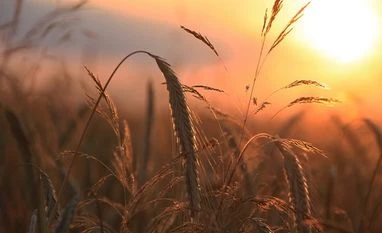 "Early rabi harvest worry on warmer winter")
premium
In its latest report, chana output is forecast to decline by 5.4% to 9.58 mt during the ensuing rabi harvesting season, compared to 10.13 mt of output reported in the previous year.


With rabi harvesting a few weeks away, prices of pulses in select mandis have slipped to trade below their minimum support price (MSP) — the threshold at which the government procures the kitchen staple.
While chana (Bengal gram) in Gadag (Karnataka) is selling at Rs 4,122 a quintal — 11 per cent below its MSP of Rs 4,620 a quintal — prices of moong (green gram) in Nasrullaganj (Madhya Pradesh) slipped to Rs 5,201 a quintal — a staggering 26 per cent below its MSP of Rs 7,050 a quintal.
Similarly, tur (red gram), masur (lentil), and black gram (urad bean) are also selling at substantially subpar MSPs.
The fall in prices of pulses ahead of the rabi harvesting season could prove to be a major blow to farmers anticipating better realisations on lower acreage this year. Experts, however, have divergent views on the price collapse.
“A huge quantity of peas is being smuggled into India by road from Nepal, Bangladesh, and Myanmar. None of these countries cultivates peas. These are imported from Canada and other countries. Since the smuggled quantity evades a massive tax of 50 per cent, importers have room to sell their goods dirt cheap. This is pulling down the prices of pulses in India,” said Bimal Kothari, managing director, Pancham International.
The National Collateral Management Services forecast India’s rabi pulses output to decline by 2.1 per cent to 14.48 million tonnes (mt) this year, compared to 14.8 mt reported in the same season the previous year. Rabi season contributes nearly 60 per cent to India’s pulses output, kharif season contributes the rest.
In its latest report, chana output is forecast to decline by 5.4 per cent to 9.58 mt during the ensuing rabi harvesting season, compared to 10.13 mt of output reported in the previous year.
While chana (Bengal gram) in Gadag (Karnataka) is selling at Rs 4,122 a quintal — 11 per cent below its MSP of Rs 4,620 a quintal — prices of moong (green gram) in Nasrullaganj (Madhya Pradesh) slipped to Rs 5,201 a quintal — a staggering 26 per cent below its MSP of Rs 7,050 a quintal.
Similarly, tur (red gram), masur (lentil), and black gram (urad bean) are also selling at substantially subpar MSPs.
The fall in prices of pulses ahead of the rabi harvesting season could prove to be a major blow to farmers anticipating better realisations on lower acreage this year. Experts, however, have divergent views on the price collapse.
“A huge quantity of peas is being smuggled into India by road from Nepal, Bangladesh, and Myanmar. None of these countries cultivates peas. These are imported from Canada and other countries. Since the smuggled quantity evades a massive tax of 50 per cent, importers have room to sell their goods dirt cheap. This is pulling down the prices of pulses in India,” said Bimal Kothari, managing director, Pancham International.
The National Collateral Management Services forecast India’s rabi pulses output to decline by 2.1 per cent to 14.48 million tonnes (mt) this year, compared to 14.8 mt reported in the same season the previous year. Rabi season contributes nearly 60 per cent to India’s pulses output, kharif season contributes the rest.
In its latest report, chana output is forecast to decline by 5.4 per cent to 9.58 mt during the ensuing rabi harvesting season, compared to 10.13 mt of output reported in the previous year.
Topics : minimum support price farmers Rabi crops