


Risks to macroeconomic stability from trade war
Though the RBI maintained its growth projection for FY19 at 7.4%, it has alluded to risks on account of protectionist measures and further escalation in trade tensions.
 "trade war")
premium
US-China trade war
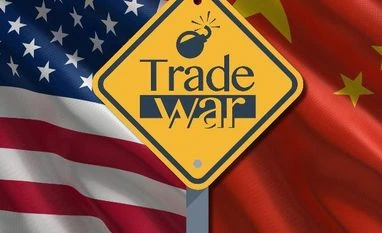
Though the RBI maintained its growth projection for FY19 at 7.4%, it has alluded to risks on account of protectionist measures and further escalation in trade tensions in its policy statement. There are two dimensions to the risks to macroeconomic stability from trade tensions. One dimension, of course, is that if the global economy slows down, it could result in contraction in global trade and hit our export volumes. The second dimension is that of the policy response of central banks globally to counter the effect of trade war i.e. the risk of trade war eventually turning into a currency war. For example, the PBoC has allowed the Yuan to depreciate to mitigate the effect of tariffs imposed by the US. This has resulted in the Rupee strengthening by almost 6% on a relative basis against the Yuan since May. The relative Rupee strength not only makes our exports uncompetitive in the global market but also impinges on our domestic industry on account of import substitution as Chinese imports become cheaper.
In the most recent phase of concerted global growth, our export growth has been tepid. While a part of it can be attributed to demonetization and GST implementation induced challenges, the fact that export growth is still muted points to the fact that Rupee overvaluation has also had a role to play. The elasticity of our exports to the Rupee has increased. The sectors worst affected by Rupee overvaluation would be the ones that export undifferentiated goods as these goods can be easily substituted by exports from other countries such as Vietnam, Bangladesh and Sri Lanka. Rupee overvaluation is, therefore, a significant concern as exports account for roughly 20% of our GDP.