


Home / World News / 2017's supermoons and other moons
2017's supermoons and other moons
The year offers several catchy-named lunar activities for the moongazers
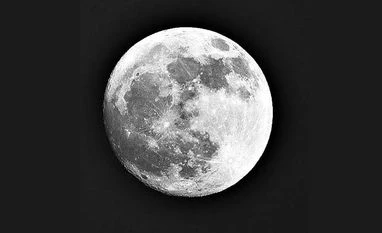 "Supermoon")
premium
Supermoon was actually coined by an astrologer in the 1970s, not by a scientist
Last Updated : Dec 02 2017 | 9:17 PM IST
Shrug off the supermoon. From time to time, the full moon makes a close approach to Earth. But to the casual observer, it probably won’t look much different from a regular full moon. Yet headlines heralding supermoons as some sort of don’t-miss spectacle can be found everywhere.
Supermoons aren’t unique in being sensationalised. Several times every year some sort of catchy-named lunar activity grabs attention, whether warranted or not. That’s how we’ve ended up with must-see events like the blood moon, the black moon, the blue moon, the strawberry moon and the harvest moon, among others.
Though some of these names have historical and cultural origins, many are rooted in folklore and are often overhyped. Below you’ll find an explanation of the science and origins behind some of these events that will let you decide whether they are worth late nights or early mornings of moongazing. Supermoon
The next one is visible on December 3. “The supermoon is a made-up term,” said James Lattis, an astronomer at the University of Wisconsin-Madison. “It’s not an astronomical term, there’s no technical definition of it.”
Supermoon was actually coined by an astrologer in the 1970s, not by a scientist. The term has come to loosely mean a full moon that is at perigee, or when the moon is at its closest position to Earth along its orbit. Now, this definition can vary, which means supermoons can occur multiple times a year, or about once every 14 months, depending on the definition you use. “There’s no fireworks show, no blinking sign that says, ‘Hey, this is the supermoon!’” said Noah Petro, a deputy project scientist for the Lunar Reconnaissance Orbiter mission.
Blood Moon
A total lunar eclipse occurs when the moon moves completely behind Earth’s shadow. Recently, this event has given rise to the sinisterly named blood moon, because the moon becomes a dark reddish-brown as it’s consumed by Earth’s shadow.
“A term like that has a number of problems,” Lattis said. “In the case of a total lunar eclipse, they aren’t always red. The term blood moon not only suggests, it exaggerates.”
Blue Moon
We’ve all heard the saying “once in a blue moon,” but what does that really mean? And how often do they occur? There are two definitions that float around for the elusive blue moon. One refers to the second full moon in a calendar month. Full moons typically occur once every 29.5 days.
The other definition, which is older, says that a blue moon is the third full moon in a season that had four full moons. Typically, a three-month season has three full moons.
So to answer the question, blue moons occur about once every two and a half to three years — most recently on May 21, 2016.
Black Moon
The ominously named twin to the blue moon, a black moon is in some ways the opposite of its brother. It’s the name given to the second new moon in a month. New moons are the first phases of the moon, during which time they are not visible.
The other definition is that a black moon is the third new moon in a season of four new moons.
Similar to blue moons, these typically occur about every two and a half to three years. One that occurred on October 31, 2016 made for the spooky-sounding Halloween black moon. Strawberry Moon
Every month’s full moon has a unique name if you look at The Old Farmer’s Almanac.
It bestows names like full wolf moon, full worm moon, full flower moon, full buck moon, full sturgeon moon and full beaver moon. Folklore has it that those names came from Algonquin Indian tribes and their terms for the full moon during different times of the year. But that might be debated.
“No one knows whether someone made those up in the ’30s or if they go back to real Indian use because there aren’t real records prior to that,” said Gordon Johnston, an Osiris-Rex program executive at NASA who studies moon names as a hobby.
Harvest Moon
The harvest moon, unlike some of the other moons, has an astronomical meaning. It is the closest full moon to the autumnal equinox. Folklore says that farmers would use the light of the harvest moon to collect their crops in the fall. The harvest moon appears in September and shines brightly for a few nights in a row.
©2017 The New York Times News Service