


A few days after going public, Uber fights to get its edge back
The firm is pushing employees to do more with less as its CEO battles scepticism over the ride-hailing firm's business
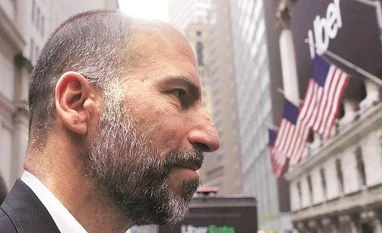 "Dara Khosrowshahi, Uber’s chief executive, has taken more direct control of the company’s day-to-day operations. Photo: Reuters")
premium
Dara Khosrowshahi, Uber’s chief executive, has taken more direct control of the company’s day-to-day operations. Photo: Reuters
A few days after Uber went public in May and its stock fell into a tailspin, the ride-hailing company’s chief executive, Dara Khosrowshahi, sent a rallying message to employees.
“There is one simple way for us to succeed — focus on the work at hand and execute against our plans effectively,” Khosrowshahi, 50, wrote to staff in a May 13 email. “We simply would not be here without you.”
Since then, Khosrowshahi’s message has steadily become tougher.
Faced with questions about whether Uber can make money amid a souring environment for unprofitable tech firms, Khosrowshahi has laid off more than 1,000 workers in three rounds of job cuts. He has ousted some top executives, and board members have left. And in recent emails to employees, he has said Uber’s teams are “too big,” are producing “mediocre results” and that the company “needs to get its edge back.”
Inside Uber, managers are quibbling over expense reports and tighter budgets, according to four current and former employees who declined to be named because they were not authorised to speak publicly. Executives have asked employees to suggest perks they are willing to give up. Some workers have been told they need to stretch themselves even thinner in the wake of layoffs.
Employee frustration over the belt-tightening has been compounded by Uber’s declining stock price, which is about 30 percent below the company’s $45 initial public offering price. That affects how much some workers will reap from their company stock when a so-called lockup period on insider sales of the shares ends on Wednesday.
It all adds up to a difficult few months for the most prominent tech company to go public in 2019. An IPO was supposed to be a crowning moment for Uber, but its tribulations show that the aftermath has been far from easy, putting Khosrowshahi on defence and under pressure to outperform.
Uber faces another test on Monday when it is scheduled to report its latest financial results. The company, which posted a record $5.2 billion quarterly loss and slowing growth in August, is expected to have a $1.5 billion loss this time and about 22 percent revenue growth, according to FactSet. At least one Wall Street analyst has publicly called Uber’s performance a “horror show.”
“They need to show to the market that underneath this pile of massive losses, there’s actually a really attractive business model,” said Mark Mahaney, an analyst at RBC Capital.
“First is, show us the profits. Second, it’s show us the growth.”
Uber declined to comment or to make Mr Khosrowshahi available for an interview, citing a quiet period before earnings.
The challenges have been coming nonstop for Mr Khosrowshahi. When Uber went public on May 10, its stock immediately tanked, in an embarrassment for the heavily hyped offering. At the end of May, Uber reported a quarterly loss of $1 billion, renewing questions about whether the ride-hailing service could ever turn a profit.
In June, Mr Khosrowshahi moved to take more control of Uber’s day-to-day operations. That month, he ousted his chief operating officer, Barney Harford, who he had previously worked with at travel site Expedia and who he had personally recruited to Uber. He also forced out his chief marketing officer, Rebecca Messina.
Two Uber board members — Arianna Huffington and venture capitalist Matt Cohler — stepped down in July. Days later, Mr Khosrowshahi laid off 400 people from marketing, or about a third of the division. That was when he began telling employees to do better, saying in a staff memo, “We can do more to keep the bar high, and expect more of ourselves and each other.”
Mr Khosrowshahi started more directly managing some of Uber’s businesses, including the Uber Eats food delivery division, said two people familiar with the situation. At divisions like Uber Eats and Uber Freight, its shipping business that pairs truck drivers with freight that need to be transported, managers pushed employees to land deals with flagship brands to bolster revenue, current and former employees said.
In August, Uber posted the $5.2 billion loss, which Mr Khosrowshahi called a “once-in-a-lifetime” figure. Afterward, Nelson Chai, Uber’s chief financial officer, sent an email to staff titled “#FindTheMoney.” It asked employees to suggest perks they would part with and congratulated one employee on an idea to cut celebratory balloons from the budget, saving the company’s San Francisco headquarters $200,000. Mr. Chai’s email was earlier reported by Crunchbase News
That same month, Mr. Khosrowshahi told Bloomberg, “We are going to be demanding our employees do even more with less.”
“There is one simple way for us to succeed — focus on the work at hand and execute against our plans effectively,” Khosrowshahi, 50, wrote to staff in a May 13 email. “We simply would not be here without you.”
Since then, Khosrowshahi’s message has steadily become tougher.
Faced with questions about whether Uber can make money amid a souring environment for unprofitable tech firms, Khosrowshahi has laid off more than 1,000 workers in three rounds of job cuts. He has ousted some top executives, and board members have left. And in recent emails to employees, he has said Uber’s teams are “too big,” are producing “mediocre results” and that the company “needs to get its edge back.”
Inside Uber, managers are quibbling over expense reports and tighter budgets, according to four current and former employees who declined to be named because they were not authorised to speak publicly. Executives have asked employees to suggest perks they are willing to give up. Some workers have been told they need to stretch themselves even thinner in the wake of layoffs.
Employee frustration over the belt-tightening has been compounded by Uber’s declining stock price, which is about 30 percent below the company’s $45 initial public offering price. That affects how much some workers will reap from their company stock when a so-called lockup period on insider sales of the shares ends on Wednesday.
It all adds up to a difficult few months for the most prominent tech company to go public in 2019. An IPO was supposed to be a crowning moment for Uber, but its tribulations show that the aftermath has been far from easy, putting Khosrowshahi on defence and under pressure to outperform.
Uber faces another test on Monday when it is scheduled to report its latest financial results. The company, which posted a record $5.2 billion quarterly loss and slowing growth in August, is expected to have a $1.5 billion loss this time and about 22 percent revenue growth, according to FactSet. At least one Wall Street analyst has publicly called Uber’s performance a “horror show.”
“They need to show to the market that underneath this pile of massive losses, there’s actually a really attractive business model,” said Mark Mahaney, an analyst at RBC Capital.
“First is, show us the profits. Second, it’s show us the growth.”
Uber declined to comment or to make Mr Khosrowshahi available for an interview, citing a quiet period before earnings.
The challenges have been coming nonstop for Mr Khosrowshahi. When Uber went public on May 10, its stock immediately tanked, in an embarrassment for the heavily hyped offering. At the end of May, Uber reported a quarterly loss of $1 billion, renewing questions about whether the ride-hailing service could ever turn a profit.
In June, Mr Khosrowshahi moved to take more control of Uber’s day-to-day operations. That month, he ousted his chief operating officer, Barney Harford, who he had previously worked with at travel site Expedia and who he had personally recruited to Uber. He also forced out his chief marketing officer, Rebecca Messina.
Two Uber board members — Arianna Huffington and venture capitalist Matt Cohler — stepped down in July. Days later, Mr Khosrowshahi laid off 400 people from marketing, or about a third of the division. That was when he began telling employees to do better, saying in a staff memo, “We can do more to keep the bar high, and expect more of ourselves and each other.”
Mr Khosrowshahi started more directly managing some of Uber’s businesses, including the Uber Eats food delivery division, said two people familiar with the situation. At divisions like Uber Eats and Uber Freight, its shipping business that pairs truck drivers with freight that need to be transported, managers pushed employees to land deals with flagship brands to bolster revenue, current and former employees said.
In August, Uber posted the $5.2 billion loss, which Mr Khosrowshahi called a “once-in-a-lifetime” figure. Afterward, Nelson Chai, Uber’s chief financial officer, sent an email to staff titled “#FindTheMoney.” It asked employees to suggest perks they would part with and congratulated one employee on an idea to cut celebratory balloons from the budget, saving the company’s San Francisco headquarters $200,000. Mr. Chai’s email was earlier reported by Crunchbase News
That same month, Mr. Khosrowshahi told Bloomberg, “We are going to be demanding our employees do even more with less.”
Topics : Uber