


Nepal plane crash killing 68 further blights its bad air safety record
As many as 20 Nepalese airlines are prohibited from flying to Europe
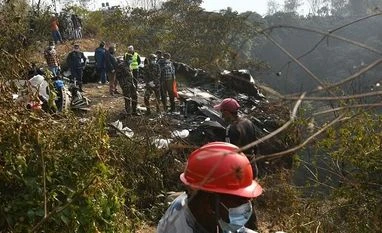 "Nepal plane crash")
premium
Photo: Bloomberg
There’s been yet another disaster in one of the world’s deadliest places to fly.
At least 68 people were killed Sunday after a Yeti Airlines flight crashed when coming in to land in Pokhara, central Nepal, further blighting the country’s notoriously bad aviation safety record. Just last May, 22 people died after a Tara Air flight crashed en route from Pokhara to the trekking base of Jomsom.
Sunday’s was the 11th fatal plane crash in Nepal in as many years, Aviation Safety Network data show. Yeti Airlines was also operating a flight that crashed in 2008 at Lukla’s Tenzing-Hillary Airport, which has a runway that angles down toward a valley and is regarded as one of the world’s most dangerous airports. Eighteen passengers and crew died in that crash. Others include a US-Bangla Airways flight from Dhaka that crashed in Kathmandu in 2018, killing 51 people.
Nepal’s topography and weather patterns make flying harder than in many other places — in 2015, the United Nation’s International Civil Aviation Organization prioritized the country for technical assistance, later saying its “beautiful but rugged terrain makes the safety of air operations more challenging than in other areas of the world.”
At least 68 people were killed Sunday after a Yeti Airlines flight crashed when coming in to land in Pokhara, central Nepal, further blighting the country’s notoriously bad aviation safety record. Just last May, 22 people died after a Tara Air flight crashed en route from Pokhara to the trekking base of Jomsom.
Sunday’s was the 11th fatal plane crash in Nepal in as many years, Aviation Safety Network data show. Yeti Airlines was also operating a flight that crashed in 2008 at Lukla’s Tenzing-Hillary Airport, which has a runway that angles down toward a valley and is regarded as one of the world’s most dangerous airports. Eighteen passengers and crew died in that crash. Others include a US-Bangla Airways flight from Dhaka that crashed in Kathmandu in 2018, killing 51 people.
Nepal’s topography and weather patterns make flying harder than in many other places — in 2015, the United Nation’s International Civil Aviation Organization prioritized the country for technical assistance, later saying its “beautiful but rugged terrain makes the safety of air operations more challenging than in other areas of the world.”
Topics : Nepal airplane crash Accidents Top 10 headlines Airline