


Home / World News / Uber lawsuit highlights the rush to conquer driverless cars
Uber lawsuit highlights the rush to conquer driverless cars
Google started working on driverless cars around the time when Uber was formed
 "automatic car, waymo, google, self-drive technology,")
premium
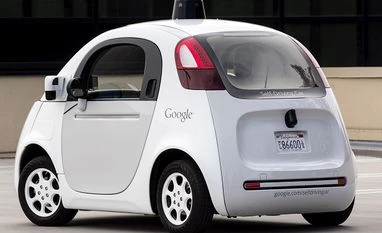
Alphabet’s Waymo has accused Uber of planning to steal its self-drive technology (Photo: Reuters)
Last Updated : Feb 26 2017 | 1:39 AM IST
Late last year, Uber, in defiance of California state regulators, went ahead with a self-driving car experiment on the streets of San Francisco under the leadership of Anthony Levandowski, a new company executive.
The experiment quickly ran into problems. In one case, an autonomous Volvo zoomed through a red light on a busy street in front of the city’s Museum of Modern Art.
Uber, a ride-hailing service, said the incident was because of human error. “This is why we believe so much in making the roads safer by building self-driving Ubers,” Chelsea Kohler, a company spokeswoman, said in December.
But even though Uber said it had suspended an employee riding in the Volvo, the self-driving car was, in fact, driving itself when it barrelled through the red light, according to two Uber employees, who spoke on the condition of anonymity because they signed nondisclosure agreements with the company, and internal Uber documents viewed by The New York Times. All told, the mapping programs used by Uber’s cars failed to recognise six traffic lights in the San Francisco area. “In this case, the car went through a red light,” the documents said.
The description of the traffic violation reflects Uber’s aggressiveness in its efforts around self-driving cars and the ambition of its project leader, Levandowski, who is now at the centre of a lawsuit brought against Uber by Waymo, an autonomous car business. Waymo is Google’s cousin company under their parent entity, Alphabet.
The legal battle also provides a rare glimpse into the high-stakes world of top technology talent, where star engineers like Levandowski, who played a central role in Google’s pioneering autonomous car project, command huge sums of money to try to help define a company’s technological future.
After leaving Google in January 2016, Levandowski formed the self-driving truck company Otto. About six months later, Uber bought Otto for $680 million, and Levandowski became Uber’s vice-president in charge of its self-driving car project. Waymo filed a lawsuit on Thursday in federal court against Uber and Otto, accusing Levandowski and Uber of planning to steal trade secrets.
The suit said Levandowski retrieved information from a highly confidential server with designs of crucial technologies used in its autonomous vehicles in the month before he resigned from Google, where he had spent nine years working on maps and self-driving cars.
Alphabet and Uber view autonomous vehicles as using critical technology that may upend the automobile industry. Google started working on driverless cars around the time when Uber was formed, and Google is eager to prove that, despite its size and past successes, it can still innovate like a start-up. And replacing human drivers with self-driving cars would allow Uber to theoretically provide safer rides around the clock. Robot cars would also allow the ride-hailing service to avoid one of its biggest headaches — its drivers.
“There’s an urgency to our mission about being part of the future,” Travis Kalanick, Uber’s chief executive, said in an interview in August after announcing Otto’s acquisition. “This is not a side project. This is existential for us.”
© 2017 The New York Times News Service