


US, allies attack Syria; Iran warns of regional consequences: Top updates
Reacting to the US-led strikes, Russia's foreign ministry said that the Syrian capital was attacked at the very moment when the country had a chance for a peaceful future
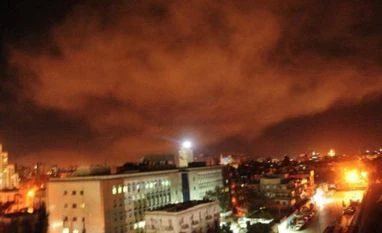 "Lasers and smoke seen over Damascus")
premium
Lasers and smoke seen over Damascus
In a televised address to the nation today, US President Donald Trump announced that US, UK and France have launched an airstrike in Syria in retaliation to the alleged chemical attack on a rebel town by the regime of Bashar Al Assad.
Trump said that the chemical weapons attack on April 7 on the rebel-held town of Douma in which 40 people lost their lives and more than 500 were injured "was a significant escalation in a pattern of chemical weapon use by that very terrible regime". He added, "The purpose of our actions tonight is to establish a strong deterrent against the production, spread and use of chemical weapons. Establishing this deterrent is a vital national security interest of the United States."
Trump also said in his address that the US response will continue until the Syrian regime stops its use of prohibited chemical agents.
France and UK are also participating in the attack on sites that are believed to harbour chemical weapons in Syria.
Trump’s response came days after speculations that the US may get involved militarily in Syria. Donald Trump on April 11 tweeted while warning Russia that the US will launch a strike in Syria.
Here are the top developments around the US-led airstrikes in Syria in response to the alleged chemical attack:
1) Theresa May says no other alternative: British PM Theresa May said that there was "no practicable alternative" to the use of force in Syria as she announced Britain had joined France and the United States in launching strikes against Syria.
"This evening, I have authorised British armed forces to conduct coordinated and targeted strikes to degrade the Syrian regime's chemical weapons capability and deter their use," she said in a statement.
UK's Defence Ministry has confirmed that four RAF Tornado jets took part in the Syria strike along with French and US forces.
2) Second US strike in Syria: Last year on April 4, the Syrian town of Khan Sheikhun was allegedly attacked by chemical weapons. In response to this, the US launched a missile strike on April 7 targeting the Shayrat airbase near Homs from where the attack was reportedly conducted.
The Pentagon had informed that 59 Tomahawk cruise missiles were launched from two US vessels in the eastern Mediterranean. This strike reportedly destroyed 20 per cent of the Syrian Air Force.
This was the first time that the US had directly attacked Syrian forces since the beginning of the civil war in 2011.
3) Huge explosions heard: Several huge explosions were heard in Syria's capital, Damascus, early today, AFP's correspondent there said, as US President Donald Trump announced strikes on the country.
Trump said that the chemical weapons attack on April 7 on the rebel-held town of Douma in which 40 people lost their lives and more than 500 were injured "was a significant escalation in a pattern of chemical weapon use by that very terrible regime". He added, "The purpose of our actions tonight is to establish a strong deterrent against the production, spread and use of chemical weapons. Establishing this deterrent is a vital national security interest of the United States."
Trump also said in his address that the US response will continue until the Syrian regime stops its use of prohibited chemical agents.
France and UK are also participating in the attack on sites that are believed to harbour chemical weapons in Syria.
Trump’s response came days after speculations that the US may get involved militarily in Syria. Donald Trump on April 11 tweeted while warning Russia that the US will launch a strike in Syria.
Here are the top developments around the US-led airstrikes in Syria in response to the alleged chemical attack:
1) Theresa May says no other alternative: British PM Theresa May said that there was "no practicable alternative" to the use of force in Syria as she announced Britain had joined France and the United States in launching strikes against Syria.
"This evening, I have authorised British armed forces to conduct coordinated and targeted strikes to degrade the Syrian regime's chemical weapons capability and deter their use," she said in a statement.
UK's Defence Ministry has confirmed that four RAF Tornado jets took part in the Syria strike along with French and US forces.
2) Second US strike in Syria: Last year on April 4, the Syrian town of Khan Sheikhun was allegedly attacked by chemical weapons. In response to this, the US launched a missile strike on April 7 targeting the Shayrat airbase near Homs from where the attack was reportedly conducted.
The Pentagon had informed that 59 Tomahawk cruise missiles were launched from two US vessels in the eastern Mediterranean. This strike reportedly destroyed 20 per cent of the Syrian Air Force.
This was the first time that the US had directly attacked Syrian forces since the beginning of the civil war in 2011.
3) Huge explosions heard: Several huge explosions were heard in Syria's capital, Damascus, early today, AFP's correspondent there said, as US President Donald Trump announced strikes on the country.
Syrian state television also reported a US attack, in coordination with France and Britain, on Syria.
The strikes carried out by the US-led forces targeted three Syria's chemical weapons arsenal facilities. A research facility close to Damascus was hit, a chemical weapons storage facility around Homs and a command post were the targets of US-led strike.
US defense officials have said that about 100-120 missiles were launched by American forces against the Syrian regime on targets purportedly housing chemical weapons.
The strikes carried out by the US-led forces targeted three Syria's chemical weapons arsenal facilities. A research facility close to Damascus was hit, a chemical weapons storage facility around Homs and a command post were the targets of US-led strike.
US defense officials have said that about 100-120 missiles were launched by American forces against the Syrian regime on targets purportedly housing chemical weapons.