


AU Small Finance Bank: Impressive track record
Assets have tripled as it transformed from unorganised lender to NBFC and then a small finance bank
 "AU Small Finance Bank: Impressive track record")
premium
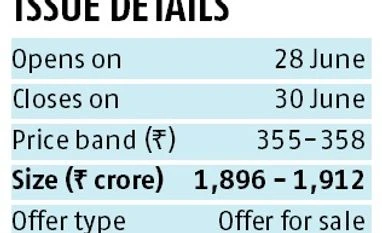
AU Financier, now known as AU Small Finance Bank, drew a lot of eyeballs back in October 2015. It was the only asset-based non-banking finance company (NBFC) among the 10 names which were awarded an SFB or small finance bank licence. The nine other awardees were micro finance institutions. This partly explains the interest around its Initial Public Offer (IPO). What amplifies the interest is AU’s journey from an unorganised financier to a regional NBFC and now to become an SFB.
Operations
A business that commenced in 1996 for financing vehicles was associated with HDFC Bank as its partner in 2005. Since then, it has seen multiple rounds of private equity funding. Motilal Oswal supported it in the early stages; Warburg Pincus, IFC, ChrysCapital and Kedaara pitched in at later growth phases.
With multiple investors coming in, the focus of AU expanded. While catering to the underserved is its stated key principle, small and medium enterprises (SMEs) and micro SMEs are now among its prime focus areas. The average loan is Rs 10-11 lakh for MSME and Rs 2 crore for SMEs. The two businesses have also been the fastest growing avenues for AU, with assets under management (AUM) compounding annually at 55 per cent and 78 per cent, respectively.
The NBFC also had a significant housing loan portfolio; this had to be hived off in 2016 to meet the SFB norms. Going ahead, housing loans would be a new segment the SFB would enter, apart from personal loans and gold loans.
Financials
As the AUMs sharply compounded from Rs 3,704 crore in FY13 to Rs 10,734 crore in FY17, the financials have seen equally exponential growth (see table). What will come handy in aiding growth is the Rs 516 crore of profit it earned from divesting its housing finance business. A combination of this profit and fund raising in 2016 had boosted its capital adequacy to 23.2 per cent as on end-March.
Operations
A business that commenced in 1996 for financing vehicles was associated with HDFC Bank as its partner in 2005. Since then, it has seen multiple rounds of private equity funding. Motilal Oswal supported it in the early stages; Warburg Pincus, IFC, ChrysCapital and Kedaara pitched in at later growth phases.
With multiple investors coming in, the focus of AU expanded. While catering to the underserved is its stated key principle, small and medium enterprises (SMEs) and micro SMEs are now among its prime focus areas. The average loan is Rs 10-11 lakh for MSME and Rs 2 crore for SMEs. The two businesses have also been the fastest growing avenues for AU, with assets under management (AUM) compounding annually at 55 per cent and 78 per cent, respectively.
The NBFC also had a significant housing loan portfolio; this had to be hived off in 2016 to meet the SFB norms. Going ahead, housing loans would be a new segment the SFB would enter, apart from personal loans and gold loans.
Financials
As the AUMs sharply compounded from Rs 3,704 crore in FY13 to Rs 10,734 crore in FY17, the financials have seen equally exponential growth (see table). What will come handy in aiding growth is the Rs 516 crore of profit it earned from divesting its housing finance business. A combination of this profit and fund raising in 2016 had boosted its capital adequacy to 23.2 per cent as on end-March.