


Steel exports still attractive amid hopes of demand revival at home
A prolonged monsoon, weaker demand, tight liquidity and a sharp fall in home prices affected the domestic steel industry in the September quarter
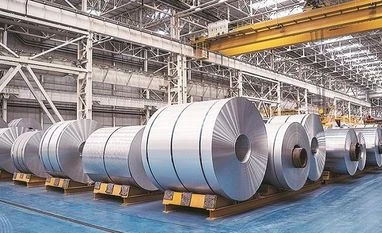 "steel plant, steel, steel factory")
premium
3 min read Last Updated : Oct 26 2019 | 3:24 AM IST
The steel export market continues to look lucrative for primary producers, even if India demand picks up in the second half of the financial year.
“With China closing down inefficient capacities, the common variety of steel is not available in the global market. This is good news, as China was simply dumping this grade across the globe. Due to this, export will continue to look attractive for Indian players,” Sushim Banerjee, director-general at the Institute of Steel Development & Growth, told Business Standard.
At its earnings conference on Wednesday, JSW Steel said its export in the September quarter had surged 68 per cent year-on-year, to 1.09 million tonnes (mt), about 31 per cent of consolidated sales.
China eliminated 140 mt of capacity at 700 small mills and 150 mt of inefficient capacity at larger firms in the past four years. This was part of a move to tighter environmental rules and on supply-side reform.
Russia and Ukraine also dump the common variety of steel but less so than China, say industry officials. They add that newer markets have opened for Indian companies, such as United Arab Emirates, Italy, Belgium and Saudi Arabia.
A prolonged monsoon, weaker demand, tight liquidity and a sharp fall in home prices affected the domestic steel industry in the September quarter.
“Domestic prices have bottomed out and, hence, we see an uptick in the second half (of the financial year), as demand will also pick up in the seasonally strong quarters (November-March),” Jayant Acharya, director, commercial and marketing, at JSW Steel, told reporters at the earnings conference.
The price of hot-rolled coil has fallen to Rs 34,000 a tonne for the first time since August 2016, industry officials said. International prices for the same product are five to six per cent higher.
“The demand picture in India will be clear in the next fortnight, as the ongoing festive season will determine steel requirement from the FMCG (fast moving consumer goods) sector, a strong indicator. November will be crucial and help gauge the demand tone for the rest of the fiscal,” explained Banerjee.
Tata Steel, JSW Steel, Jindal Steel & Power and the two state-owned entities, Steel Authority of India and Rashtriya Ispat Nigam, are the top primary producers.
“We are seeing the government revive some stalled projects, a positive sign for us, as it will move the demand cycle,” said Seshagiri Rao, group chief financial officer at JSW Steel.
“Government budgetary spending should go up now on, as there are only four to five more months (in the financial year). There are no strong indicators so far that there is going to be good steel demand growth in the second half,” said a Mumbai-based analyst, on condition of anonymity.
Of total domestic consumption, about 10 percent comes from the automobile sector; close to 20 per cent is for white and engineering goods. The rest is drawn by infrastructure and construction.
Topics : Exports Steel sector Steel exports