The backstop fulfils a political condition of an Irish unionist party, on which the Conservatives depend for their slender majority in Parliament, but leaves the UK without negotiating powers until the terms of the future relations are finalised. The EU sees the backstop as an optimum solution but the British regard it as undermining the spirit of sovereignty. Parliament voted against Ms May’s deal three times, precipitating her departure and Mr Johnson’s appointment. There is a degree of irony in this position, because businesses were not averse to the backstop on grounds that it guaranteed them some measure of stability while the terms of engagement were being negotiated.
What will no-deal mean in real terms? Doomsday scenarios from various think tanks predict the decimation of the pound sterling, recession, job losses, goods piling up at the ports, and widespread shortages of food, medicine, and other essentials. Some amount of planning against such a contingency has, however, begun. Mr Johnson has pledged £2.1 billion, to be spent on infrastructure at ports, extra border officers, freight capacity, and stockpiling of medicines and public communications to help people and businesses. Working groups focusing on alternative arrangements to avoid a hard Northern Irish border after Brexit have been set up. Their findings have been under wraps, though Mr Johnson claims “abundant solutions”. These solutions involve something called a “trusted trader” scheme, a regulatory and industry assurance scheme, data sharing and a Northern Irish sanitary and phytosanitary zone to track contamination and disease.
The Republic of Ireland has conceded that a hard Brexit would involve authorities initially turning a blind eye to some areas of cross-frontier trade on the assumption that the UK will not diverge from EU regulations and standards overnight. The efficacy or otherwise of all these arrangements and compromises will be evident if no acceptable agreement is reached before October 31. Mr Johnson’s public posturing certainly points to that result: He has said the UK would refuse to pay the £39 billion divorce bill — part of which involves the UK’s unpaid pledged contributions towards the EU Budget — in the event of a no-deal Brexit. The countdown to the UK’s tryst with destiny has begun.


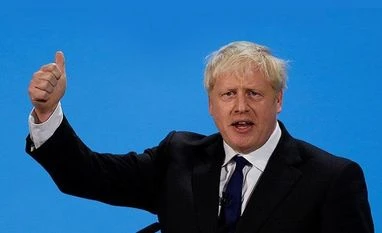 "Boris Johnson. Photo: Reuters")