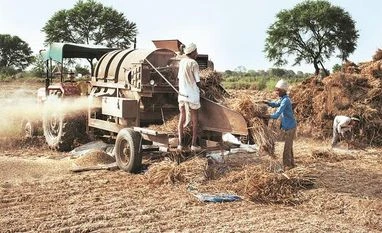
This is not to say that there are no good reasons to examine income transfers as a form of welfare spending. Income support for farmers, for example, would not distort incentives the way current agricultural subsidies do. It would also be compliant with the rules of the World Trade Organisation. But if income support for farmers is used at the same time as fertiliser subsidies, procurement prices and so on, then the burden will become problematic going forward. There is also a categorical difference between such entitlements and one-time policies such as loan waivers. While the latter may have moral hazard problems, cash entitlements can balloon over time. They should be more carefully factored in. Consider the cost of the one rank one pension (OROP) promise to retired servicemen. It is far from clear what the net present value of that promise actually was — but there is no question that it represents a significant proportion of GDP. India must be wary of building up more and more such entitlements without a clear notion of what they will cost in the decades to come.
The universal health insurance plan of the government is revealing. It promises, in effect, a transfer to health care recipients. But there is no clear idea of how costs could balloon over time. Even more crucially, it means that scarce resources could be diverted from the government’s core responsibility to build more public hospitals, staff primary health care centres, and so on. Transfer entitlements cannot be seen as substitutes for the hard work of governance, and the public provision of basic services such as health care and schooling. But the way politics works, increasing transfers will squeeze out government spending on essential services. Meanwhile, there will be no cost control in the private sector. This is a recipe for disaster. A cap on such transfers would force politicians to make the necessary trade-offs. Agricultural income support could then be sold as part of a deal that also reduces fertiliser subsidies — and it would have a natural ceiling. Such a cap would also be in the shared interest of all political parties, who would, as a result, not be forced into a costly arms race of promises.


 "Farmers, Farm sector")